What Is the Best Food for the End of Pregnancy?

Dates, edible sweet fruits, are put to the test in a randomized, controlled trial for cervical ripening.

In the 19th chapter of the Koran, Mary is giving birth to Jesus. I didn’t even know Jesus was in the Koran. The things they don’t teach you in Hebrew school. “And the pains of childbirth drove her to the trunk of a palm tree.” She cries out and is answered by Gabriel, an Archangel and, evidently, an obstetrician. Who knew? Shake the tree, he says, and “it will drop upon you ripe, fresh dates” and you’ll be all better—no epidural necessary.

Do dates really help with labor and delivery? As I explain in my video Best Food for Late Pregnancy, it took a little over 2,000 years, but researchers finally put it to the test. They had some anecdotal evidence that dates might be helpful, but they wanted to know for sure “whether the addition of date fruit for the last few weeks of pregnancy would reduce the need for [labor] induction or augmentation,” which is when drugs are administered to induce uterine contractions to either initiate or accelerate labor. It’s one of the most commonly performed obstetrical procedures in the United States and has increased dramatically over the last few decades—from less than 10 percent of deliveries to now nearly a quarter. There are certainly legitimate medical indications, but they are often done just for “convenience”—and not necessarily the convenience of the patient. The provider may also have perverse financial incentives and other reasons to want to speed things along. Dates might not help with those factors, but might they help foster a normal, spontaneous delivery?

In a prospective study, women either ate six dates a day during their last month of pregnancy or none at all. Those who consumed the fruit had significantly better cervical dilation compared with the non-date subjects and a significantly higher proportion of intact membranes, which is a good thing. And, with significantly fewer drugs administered, “spontaneous labour occurred in 96% of those who consumed dates, compared with 79% women in the non-date fruit consumers.” What’s more, labor for those in the date group was also shorter—about seven hours shorter overall. Therefore, “it is concluded that the consumption of date fruit in the last 4 weeks [of pregnancy] before labour significantly reduced the need for induction and augmentation of labour….The results warrant a randomized controlled trial.” Hold on. The women weren’t randomized? Indeed. In fact, the researchers even commented on how difficult it was to find women who would agree not to eat dates because consuming them “is a part of the cultural beliefs of the population under study.” You can imagine how there may be a variety of differences between the women who ate the dates and those who agreed to go without them that could account for the findings. Maybe the date eaters were more religious, of a higher socio-economic status, or something else completely. Who knows? You could argue you might as well give dates a try since there doesn’t seem to be a downside, but that isn’t good enough for me. I want to know if they actually work, but we didn’t get a randomized, controlled trial until three years later.

Researchers studied the effect of late-pregnancy consumption of date fruit on so-called cervical ripening in first-time mothers. In the last few weeks of pregnancy, hormonal changes cause the cervix, the opening to the uterus, to start to ripen, to soften, so it can more easily dilate open when contractions start. “At this stage, the cervix loses its integrated structure, and therefore, it becomes soft and dilated as soon as strong contractions begin.” Through a ripe cervix, you can push out a baby with about 20 pounds of pressure per square inch. If the cervix isn’t there yet, it can require more like 200 pounds of pressure. So, “cervical ripening before the onset of labor is an important factor” if you want a normal vaginal delivery. “The search for a safe, inexpensive, and easy method of [facilitating] cervical ripening is of great significance.” What happened when a couple hundred women were randomized to eat either six or so dates a day or none at all from around the 37th week of pregnancy until their first contraction?

Cervical ripening is rated with a Bishop score. Normally, a score of 5 or less “indicates an unfavorable cervix,” whereas you’re good to go with a score of 8 or more. The average Bishop score in the women randomized to the date group was significantly higher, closer to 8, whereas the date-free group scored down around 5. And, for those in the date group, their cervix was more dilated, too. The researchers concluded that since date fruit is healthy anyway, “full of energy and nutrients, it is recommended for pregnant women to help with cervical ripening, particularly in the last weeks” of their pregnancy.

What about the effects of dates on spontaneous delivery, premature delivery, labor time, and postpartum bleeding? I cover all of that in my video Best Food for Labor and Delivery.

I love to eat dates as snacks, but I also use them in recipes. Here are two from my How Not to Die Cookbook: Date Syrup and a Balsamic Date Glaze. And, as always, all of my proceeds from book sales are donated to charity.

from NutritionFacts.org https://ift.tt/DzqpeuE
via IFTTT
Oysters Rockefeller

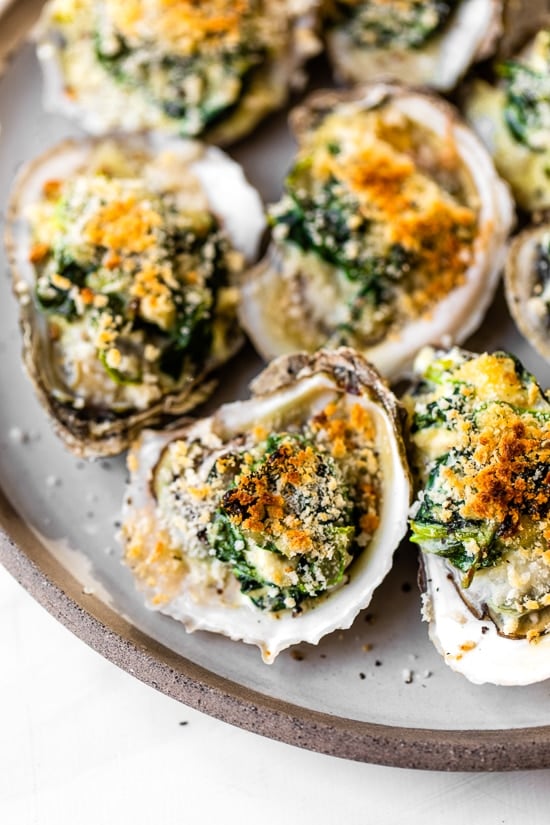
This easy Oysters Rockefeller recipe is always a hit. Topped with creamy spinach and breadcrumbs that get hot and golden under the broiler.

Oysters Rockefeller
Oysters Rockefeller

I have never met an oyster I didn’t love! Even people who don’t like raw oysters love these broiled Oysters Rockefeller which are cooked and delicious. They make a delicious appetizer, or if you want more, eat a larger serving with a salad for a light dinner. For more of my favorite appetizers, try Stuffed Mushrooms with Broccoli Rabe and Sausage, Hot Spinach Dip, and Spicy Crunchy Tuna Tartare.

(more…)

The post Oysters Rockefeller appeared first on Skinnytaste.

from Skinnytaste https://ift.tt/3LadKxM
via IFTTT

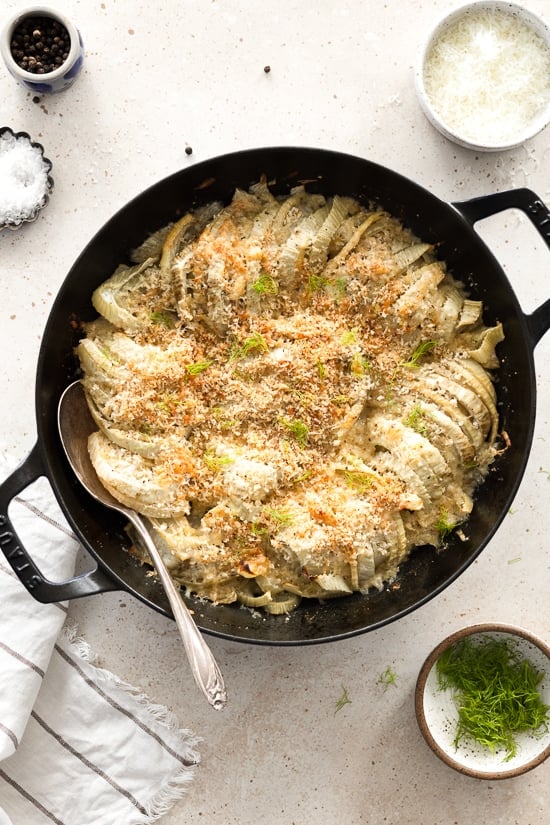
Fennel Gratin

Baked fennel gratin is made with onion and olive oil and topped with Gruyere, Parmesan, panko crumbs, and nutmeg.

Fennel Gratin
Fennel Gratin

Baked fennel pairs so well with Gruyere and Parmesan. In this easy gratin, the fennel wedges are baked with onions and stock and finished with a crisp, golden topping of panko and cheese. It’s the perfect side for a holiday meal if you want to impress! For more fennel recipes, try this Mushroom Fennel Quinoa Stuffing and Grilled Fennel with Parmesan and Lemon.

(more…)

The post Fennel Gratin appeared first on Skinnytaste.

from Skinnytaste https://ift.tt/NbQnwdp
via IFTTT

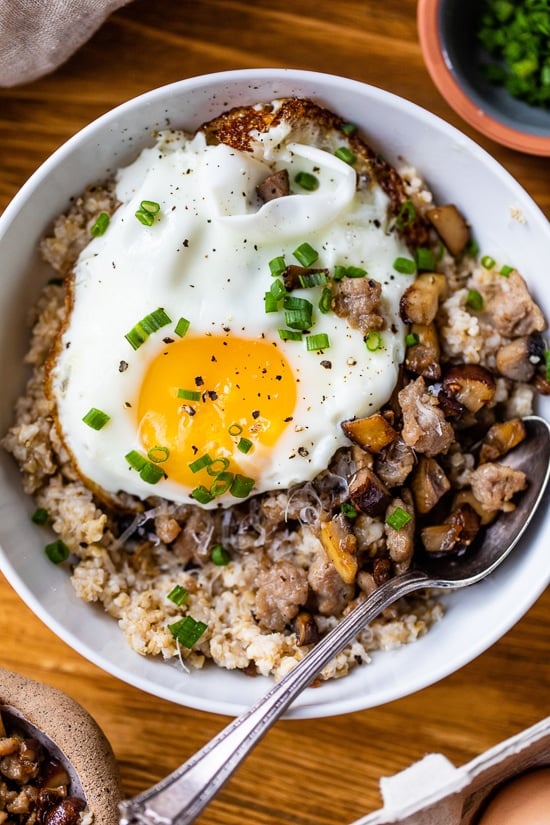
Savory Steel Cut Oatmeal

Savory Steel Cut Oats for breakfast is loaded with protein and provides a good dose of fiber, which will keep you feeling satisfied longer.

Savory Steel Cut Oatmeal Bowl
Savory Steel Cut Oats

If you never had savory oats, think of hearty grits or risotto! This breakfast for one is made with breakfast sausage, mushrooms, Parmesan and a runny egg and can easily be doubled or quadrupled. It’s a delicious alternative to sugary fruit-topped oatmeal, like these Instant Pot Steel Cut Oats, Banana Nut Protein Oats, or this Peanut Butter Oatmeal Bowl.

(more…)

The post Savory Steel Cut Oatmeal appeared first on Skinnytaste.

from Skinnytaste https://ift.tt/1fGPJcp
via IFTTT

7 Day Healthy Meal Plan (Dec 5-11)

A free 7-day, flexible weight loss meal plan including breakfast, lunch and dinner ideas and a shopping list. All recipes include macros and links to WW recipe builder to get your personal points.

7 Day Healthy Meal Plan

I love to bake- so does my mom and my aunt and I am so glad that not only do both my daughters love to bake- but that they love to bake together!! Those are memories that will last a lifetime! As Christmas and holiday season start to draw near,  so do cookie swaps, gingerbreads and one of my favorites- Cranberry Bliss Bars! Or try these chocolate pistachio biscotti. Here is a fun holiday project to do with your kids (young or old!), DIY Gingerbread Tree Ornaments! I promise your house will smell amazing!!
(more…)

The post 7 Day Healthy Meal Plan (Dec 5-11) appeared first on Skinnytaste.

from Skinnytaste https://ift.tt/kcWIwpM
via IFTTT

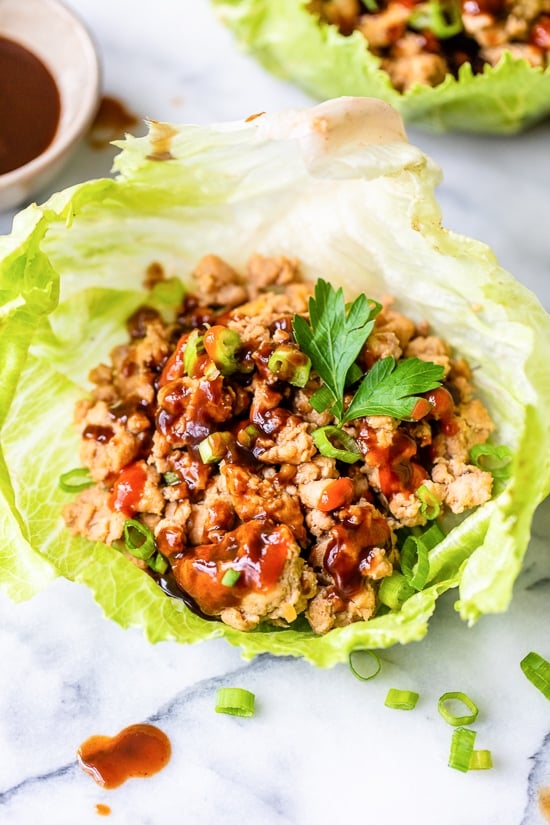
Asian Chicken Lettuce Wraps

Quick and easy Asian Lettuce Wraps are delicious! Made with ground chicken, shiitake mushrooms, water chestnuts with a spicy hoisin sauce.

Asian Chicken Lettuce Wraps
Asian Lettuce Wraps

Some of you probably know how much I love using lettuce leaves as a wrap for everything from Turkey Taco Lettuce Wraps and Buffalo Chicken Lettuce Wraps to BLT Lettuce Wraps and Thai Chicken Peanut Lettuce Tacos. They instantly make the dish low in carbs and calories and don’t interfere with the flavors of the filling. This Asian Lettuce Wrap recipe is no exception. Inspired by the restaurant, PF Chang and so delicious, I can’t wait for you to try them!

(more…)

The post Asian Chicken Lettuce Wraps appeared first on Skinnytaste.

from Skinnytaste https://ift.tt/AGi1sVc
via IFTTT

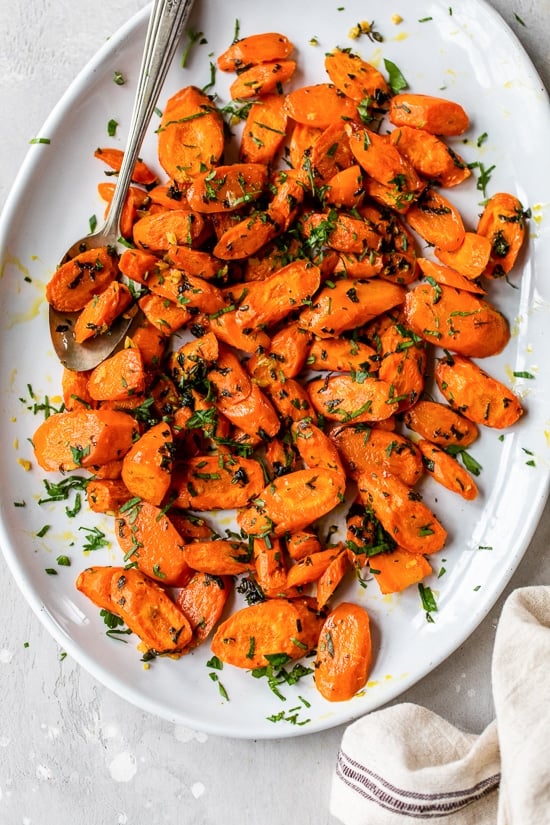
Herb Roasted Carrots

These easy Herb Roasted Carrots bake in the oven with garlic, thyme, and parsley. They’re a healthy side dish that goes well with any protein, like roasted chicken or turkey.

Herb Roasted Carrots

Nothing beats the natural sweetness of oven-roasted carrots, which are elevated by using fresh herbs. They come out savory and delicious! This recipe calls for two pounds of carrots, but you can easily halve it if you need to serve fewer people. A few other carrot recipes you may also enjoy are these Roasted Carrots with Ginger, Spiralized Carrot Salad, and Za’atar Roasted Carrot and Chickpea Yogurt Bowls.

(more…)

The post Herb Roasted Carrots appeared first on Skinnytaste.

from Skinnytaste https://ift.tt/LuyizGm
via IFTTT

Does a Macrobiotic Diet Help with Diabetes?

What happens when you add massive amounts of carbohydrates in the form of whole grains to the daily diet of people with type 2 diabetes?

Why are macrobiotic diets apparently so effective at reducing blood sugar levels in diabetics within just a few weeks’ time? The diet is centered around whole grains—brown rice, barley, and millet—so might the high fiber intake improve the gut microbiome, the friendly flora in our colon, which then leads to a reduction in insulin resistance? Or, perhaps it’s because the diet is also rich in vegetables, so that corrects some kind of low-grade acidosis from the high levels of animal protein in their regular (non-macrobiotic) diets. Regardless of the reason, researchers found a significant difference after just 21 days. Can macrobiotic diets also help with longer term blood sugar control? I examine this in my video Flashback Friday: Benefits of a Macrobiotic Diet for Diabetes.

How about a six-month dietary intervention with wildly out-of-control blood sugars? As you can see at 0:51 in my video, hemoglobin A1c offers a sense of one’s average blood sugars over the previous few months. An A1c level of 5, for example, would mean that your blood sugars have been in the double digits most of the time over the last few months, indicating that your sugars have been at a normal, healthy, non diabetic level. But, an A1c of 6 is prediabetes territory and 6.5 can be a sign of full-blown diabetes; an A1c under 7 is considered controlled diabetes—what diabetics are striving towards with pills and insulin injections—and a level over 7 is considered out-of-control diabetes. In the macrobiotic diet study, the average A1c level started out off-the-charts at 12.6. The subjects had been averaging blood sugars in the 300s for months, despite all having been on insulin injections.

What happened when the study participants were placed on the so-called Ma-Pi 2 diet, a strictly plant-based macrobiotic-style diet centered around whole grains, vegetables, and beans, with some sesame seeds and green tea? After just six months on the diet, their A1c levels dropped from a wildly out-of-control diabetic 12.6 to averaging a non diabetic 5.7. What’s more, although the subjects were getting daily insulin injections when their A1c was an astronomical 12.6, they achieved non diabetic 5.7 on the diet after they had all been able to eliminate their insulin. Within only six months, 100 percent of the study participants started out on insulin with out-of-control diabetes and ended with 0 percent on insulin and averaging non diabetic blood sugars. That’s the power of plants. Also within those six months, three-quarters were off all of their diabetes medications completely. Any side effects? Their bad LDL cholesterol dropped by 20 percent and their triglycerides dropped by nearly 40 percent. (And, of course, let’s not forget that anyone starting a strictly plant-based diet must ensure a regular, reliable source of vitamin B12.)

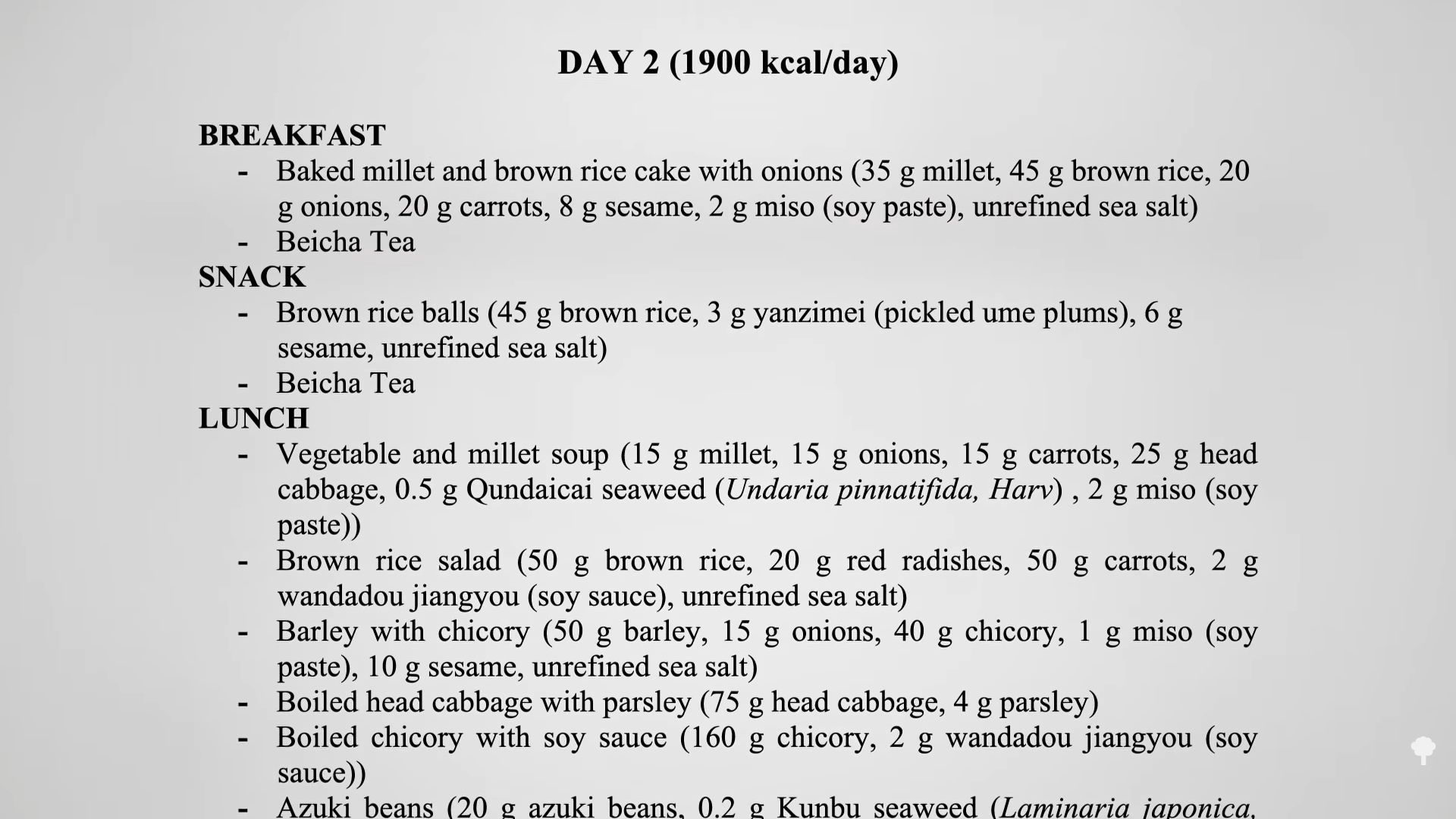
All we needed was a randomized, controlled trial, and we got one: Type 2 diabetics were randomized to the macrobiotic diet versus the recommended American Diabetes Association-type diet. You can see an example of a typical day on the macrobiotic diet below and at 2:59 in my video, which includes a savory whole-grain cake for breakfast; brown rice sesame balls for a snack; a vegetable millet soup with a brown rice salad, a lot of vegetable sides, and adzuki beans for lunch; more whole grain snacks; and, similar to lunch, a dinner of vegetable barley soup with a lot of vegetables and chickpeas; and green tea throughout the day. On the more standard diabetic diet, participants might have low-fat milk and whole-wheat bread for breakfast; a Mediterranean lunch with vegetables and beans; fruit for a snack; and a bean and vegetable soup, whole-grain bread, agretti (a green leafy vegetable), and baked fish for dinner. I have to say, that’s a pretty healthy control diet. The researchers could have compared the macrobiotic diet to a trashy one, but they wanted to stack it up against the diet diabetes groups recommend. So, what happened?

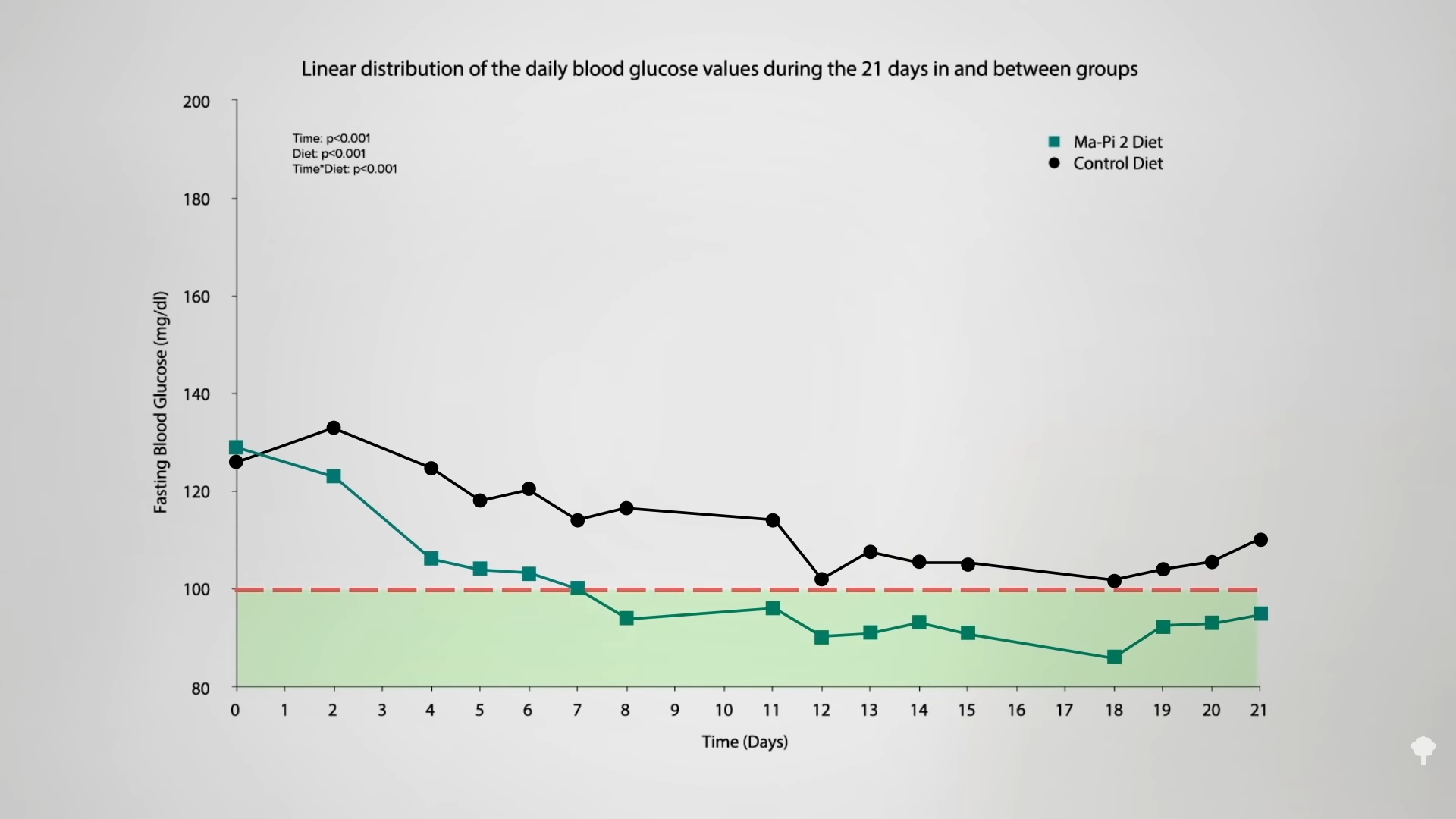
The macrobiotic diet won out on every measure of blood sugar control. You can view the numbers in the graph below and at 4:00 in my video. At the start of the study, participants had fasting blood sugars in the 120s. That’s bad, but they were diabetics, after all. Normal fasting blood sugars, like when you wake up in the morning before having breakfast, should be at least in the double digits and under 100. When subjects were put on the relatively healthy, more standard diabetic diet, their blood sugars got better over the three-week study, dropping from the 120s down into the 110s. (That’s the best the American Diabetes Association-type diet can do.) Compare that to an isocaloric macrobiotic diet, meaning with the same number of calories. On the macrobiotic diet, subjects improved within days and achieved normal fasting blood sugars within a week. A full 100 percent of those on the macrobiotic diet got their fasting blood sugars under 110, whereas less than half of those on the diabetes diet did. And, that was achieved while on fewer drugs. In the control group, one participant was able to reduce their oral hypoglycemic medications, whereas five of the seven on such drugs in the macrobiotic group had to stop taking them. Otherwise, if they had continued taking the drugs, their blood sugars would have fallen too low. So, the macrobiotic diet gave better results on fewer drugs. That’s the power of a really healthy diet.

As an aside, what a poke in the eye with a sharp stick this study was to the low-carb crowd! Researchers took diabetics and put them on a 73 percent carbohydrate diet, adding 100 grams of carbs—in the form of grains, no less—to their daily diet. And what happened? Did their blood sugars skyrocket out of control? No, they got significantly better in a matter of days, with average fasting blood sugars starting out at 129 and falling to 95. And, in just three weeks, their bad LDL cholesterol plummeted down to 62, a nearly 48 percent drop.

Is the macrobiotic diet perfect? No, but I offer some suggestions for improving it in my video Flashback Friday: Pros and Cons of a Macrobiotic Diet.


from NutritionFacts.org https://ift.tt/snm3BKC
via IFTTT

Air Fryer Chicken Thighs

These crispy Air Fryer Chicken Thighs have become a weeknight staple in my house. An easy recipe that you can whip up super fast!

Air Fryer Chicken Thighs

These easy Air Fryer Chicken Thighs take only minutes to prep and are very versatile. You can switch up the spices to change the flavors. This recipe can serve 3 to 6 people, depending on how many thighs you want per serving. To make it a meal I usually serve it with a big salad on the side. More air fryer recipes you may love are these Air Fryer Chicken Nuggets, Air Fryer Chicken Milanese, and Air Fryer Chicken Breast.

(more…)

The post Air Fryer Chicken Thighs appeared first on Skinnytaste.

from Skinnytaste https://ift.tt/nl3QHvJ
via IFTTT

Why Should (or Shouldn’t) We Eat a Macrobiotic Diet?

What happens when you put diabetics on a diet composed largely of whole grains, vegetables, and beans?

The American Medical Association has described macrobiotic diets as “one of the most dangerous dietary regimens, posing not only serious hazards to the health of the individual but even to life itself.” Macrobiotic diets “are predominantly vegetarian with great emphasis being placed on the inclusion of whole-grain cereals.” What’s wrong with that? Well, they also used to tell people that “fluids are to be avoided as much as possible,” which isn’t good, and to avoid fruit so much so that it resulted in modern-day cases of scurvy.

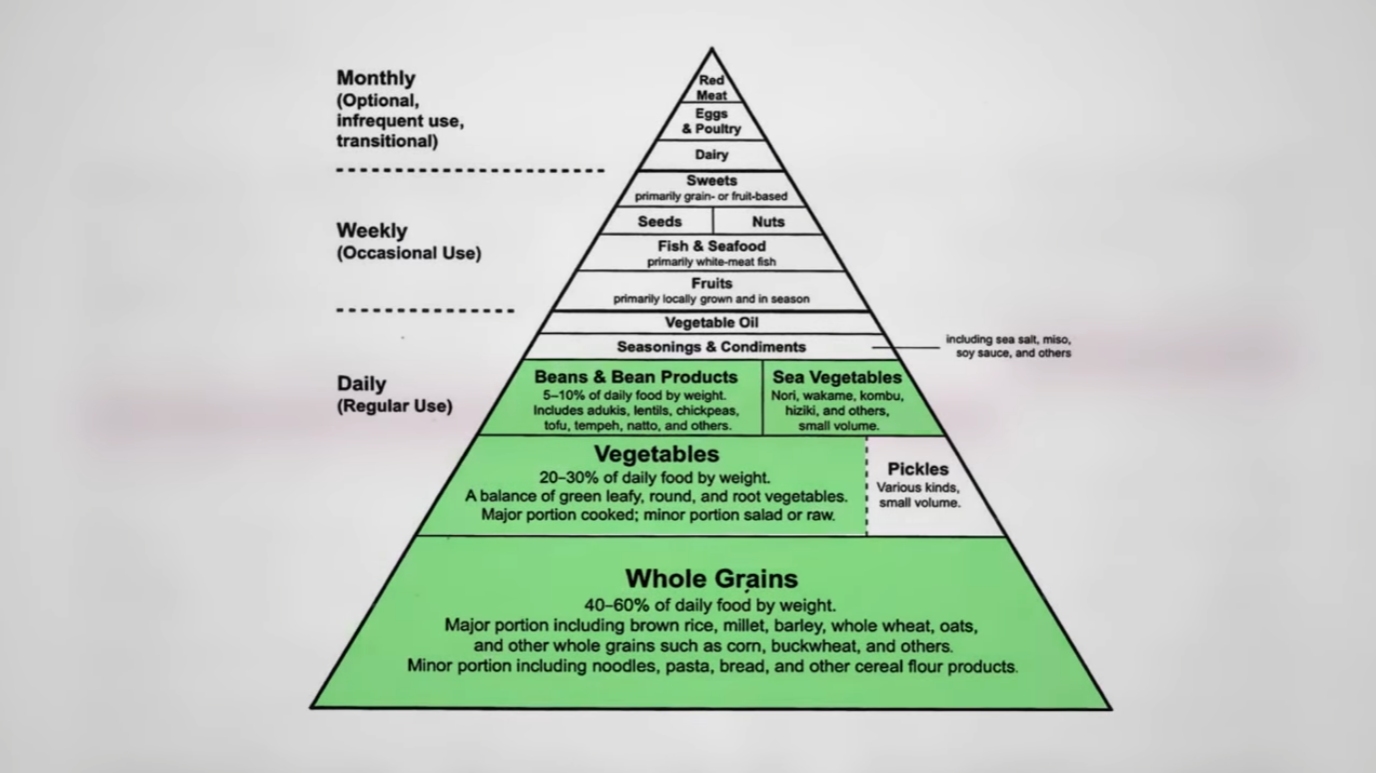
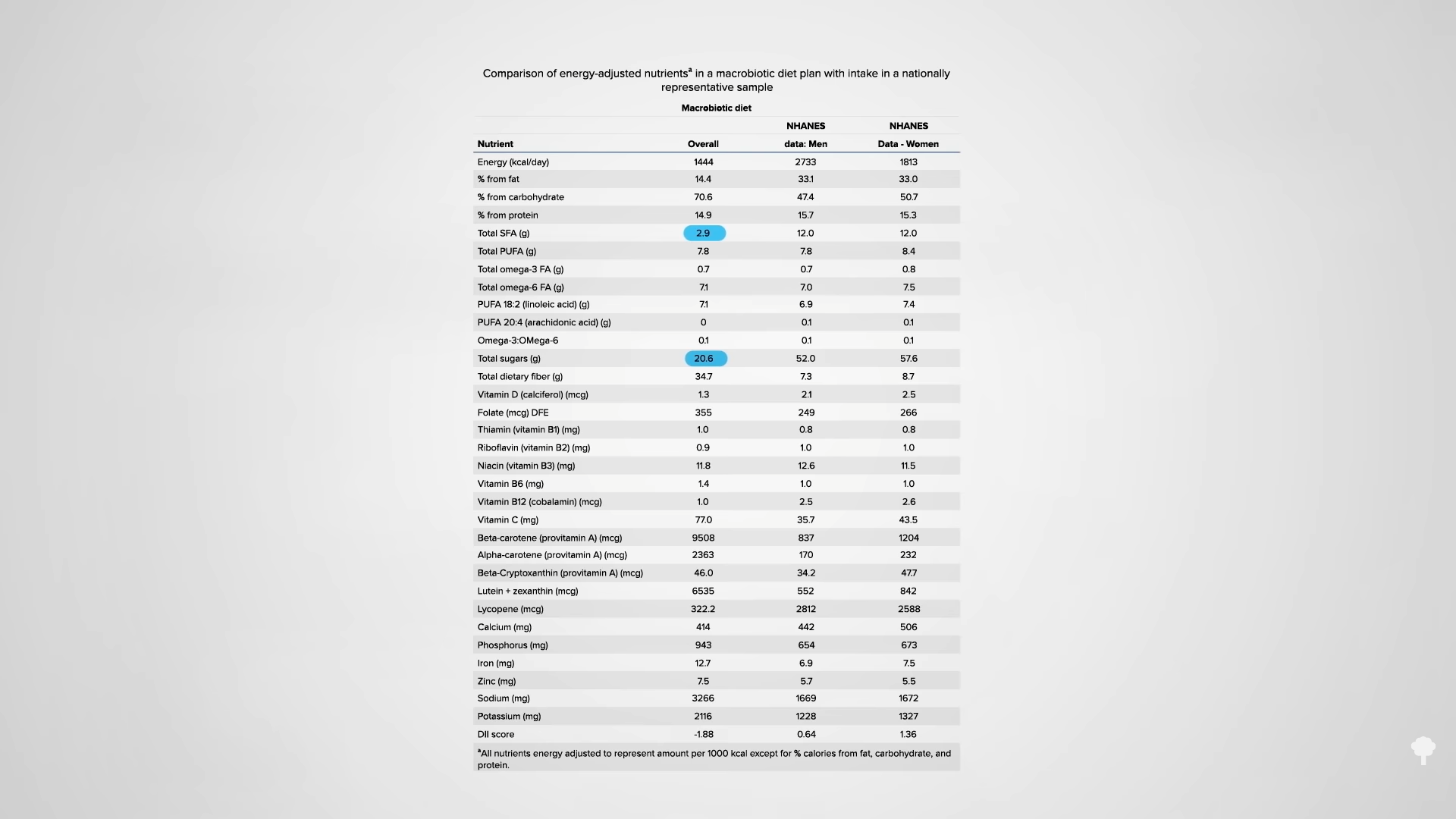
Thankfully, as I discuss in my video Flashback Friday: Pros and Cons of a Macrobiotic Diet, “the macrobiotic diet has evolved over the past 30 years.” As you can see below and at 0:46 in my video, the more contemporary version emphasizes whole grains, vegetables, and beans, and minimizes most meat, eggs, and dairy. I don’t like that it restricts fruits and I don’t like all of the added salt, but compared with the standard American diet, it has a lot going for it, as you can see below and at 1:04 in my video: It has only a quarter of the saturated fat intake, less than half of the sugar intake, and a respectable fiber intake—two and a half times the national average. However, it includes more sodium. It also has a negative Dietary Inflammatory Index score, as opposed to the pro-inflammatory typical American diet. Some of the most anti-inflammatory foods are herbs and spices, so instead of adding sea salt and soy sauce, the macrobiotic diet, which is already anti-inflammatory, could be improved by using natural seasonings instead.

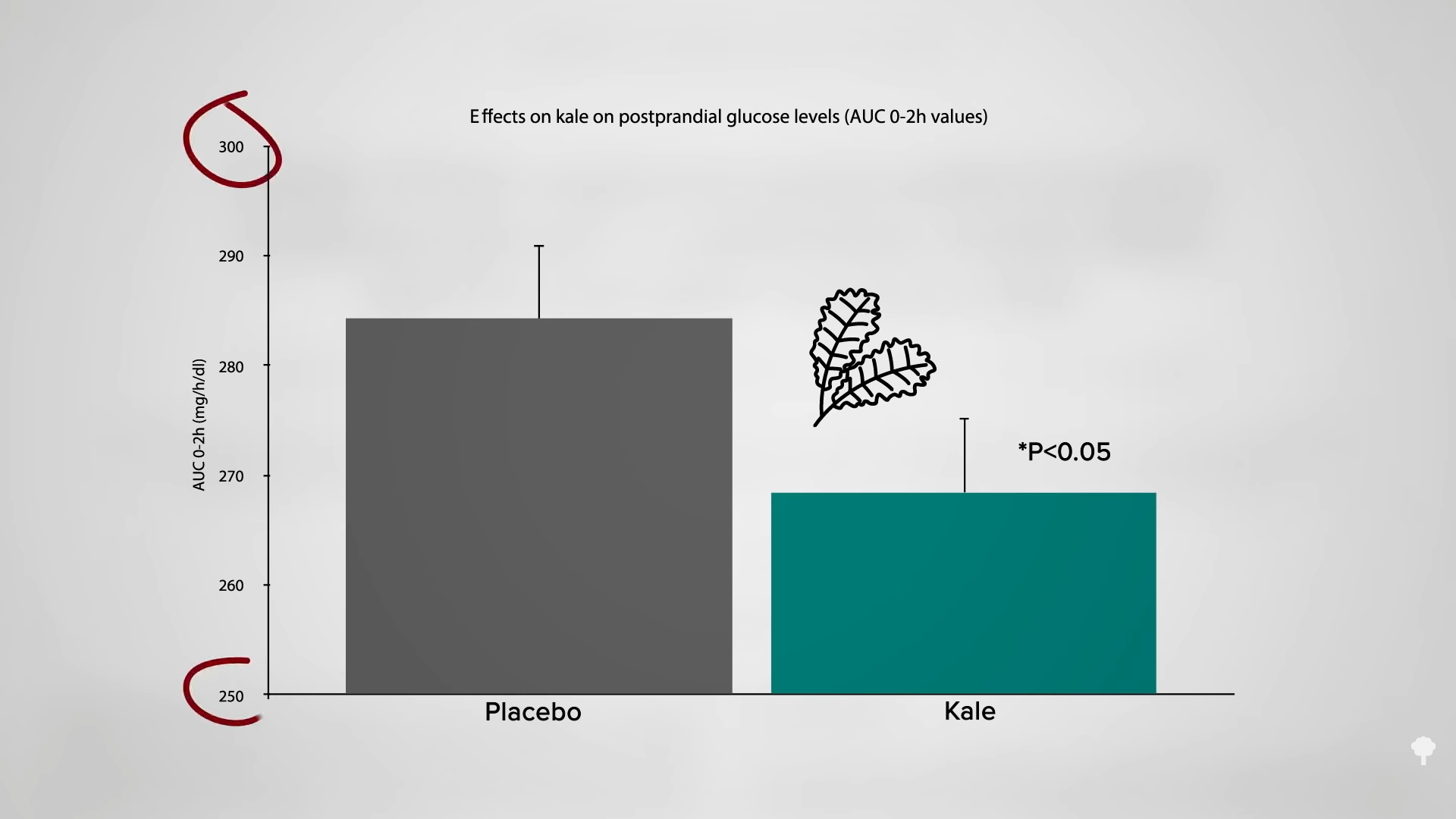
Has the macrobiotic diet ever been put to the test? Yes, it has been for diabetes. Higher plain water consumption is associated with lower risk of type 2 diabetes, yet the macrobiotic diet restricts drinking water. Part of the beneficial link may be because people on a macrobiotic diet drink less soda, though. What about the restriction on fruit intake? That probably isn’t helpful either because “higher fruit or green leafy vegetables intake is associated with a significantly reduced risk of type 2 diabetes.” But, green leafy vegetables is where the macrobiotic diet can really shine: It includes a lot of greens. A randomized, double-blind, placebo-controlled, crossover study of kale show that it suppresses the after-meal increase in blood sugars. As you can see in the graph below and at 2:19 in my video, eating a meal of white rice, chicken, and eggs produces a big spike in blood sugar, though it is significantly less when just a tablespoon of dried kale powder is added to the meal, as opposed to a placebo powder.

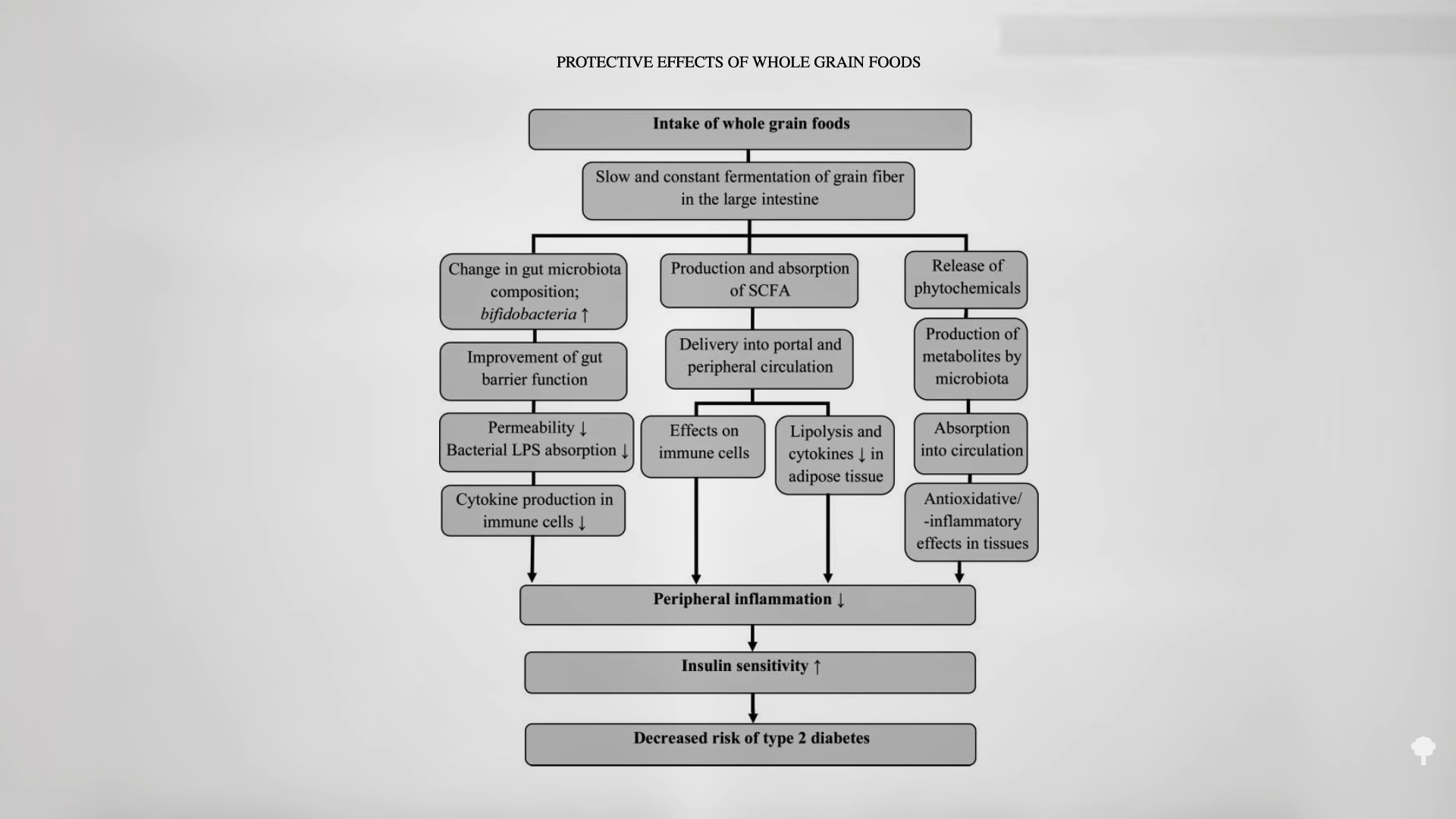
Macrobiotic diets also include whole grains, which can significantly improve insulin sensitivity compared with refined grains, possibly due in part to all of the wonderful things fiber can do to help our good gut bacteria thrive, potentially lowering inflammation and decreasing diabetes risk, as you can see below and at 2:43 in my video. You don’t know, of course, until you put it to the test.

After only three weeks on a strictly plant-based diet composed mostly of whole grains, vegetables, and beans, participants got about a 10 percent drop in blood pressure, a whopping 35 percent drop in bad LDL cholesterol, and a 38 percent drop in fasting blood sugars. Were these changes statistically significant? Yes, the changes were significant in every possible way.

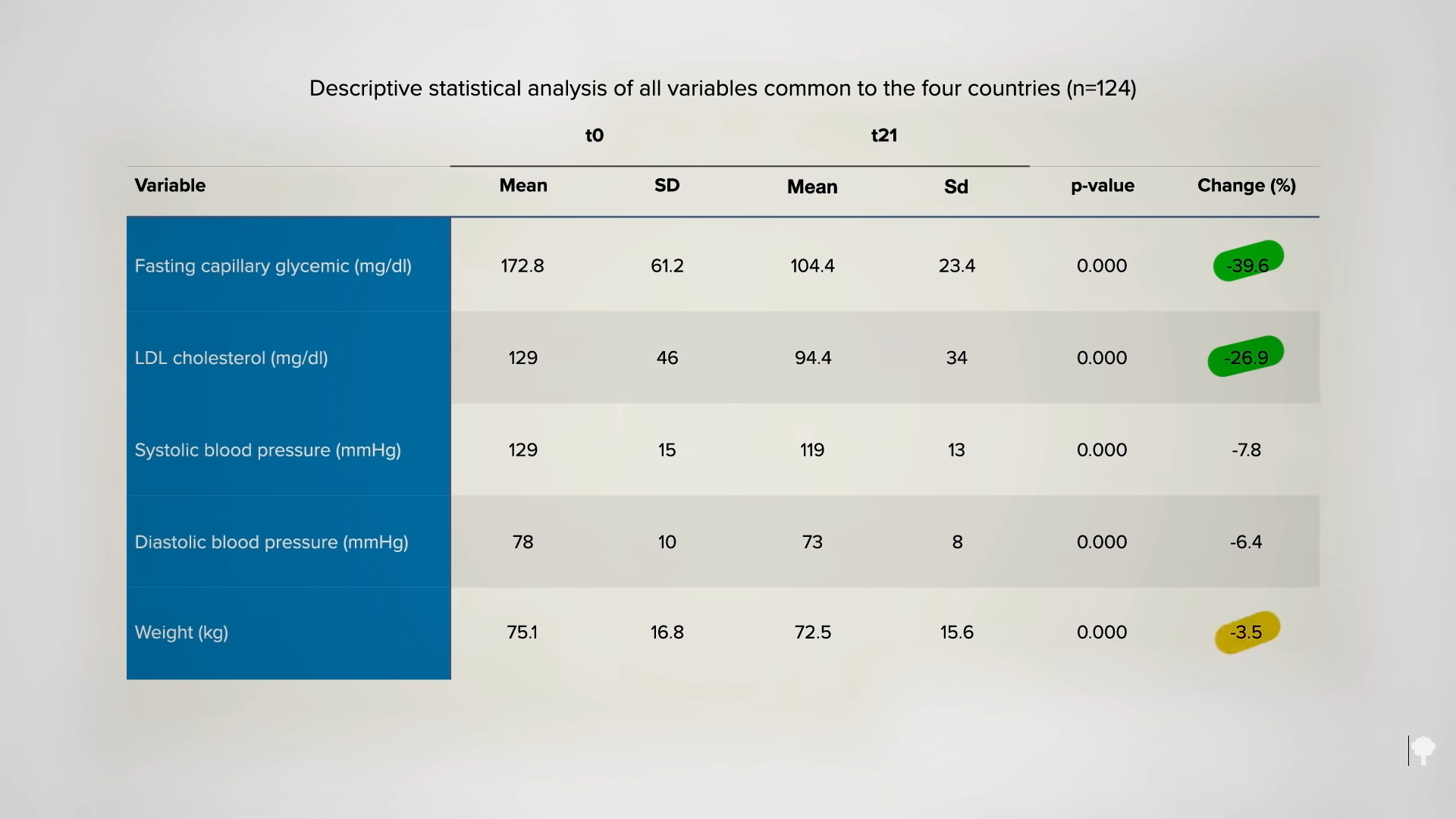
Similarly, short-term interventional studies of people with diabetes on these so-called Ma-Pi 2 macrobiotic diets have been performed across four continents. “Ma-Pi,” named after the person who came up with the diet, Mario Pianesi, is a strictly plant-based diet of mostly whole grains and vegetables, with legumes, some seeds, and decaffeinated green tea as the preferred beverage. As you can see below and at 3:54 in my video, participants in one of these studies had a nearly 40 percent drop in fasting blood sugars and almost a 27 percent drop in LDL cholesterol in just 21 days. The study subjects did lose weight—a few pounds a week—but those kinds of results were much more than one would expect with weight loss. What’s more, that 40 percent drop in blood sugars was after cutting their insulin in half! So, those numbers greatly underestimate the effects. Better results, on fewer drugs—that’s the power of plants. All we need now is a randomized, controlled clinical trial to really seal the deal, which I cover in my next video, Flashback Friday: Benefits of a Macrobiotic Diet for Diabetes.

These pros and cons remind me of a video I did on Flashback Friday: Improving on the Mediterranean Diet & Do Flexitarians Live Longer?

I’ve got dozens of other videos on preventing and treating diabetes with diet. How Not to Die from Diabetes is a good place to start.

from NutritionFacts.org https://ift.tt/PKxzTUr
via IFTTT

Design a site like this with WordPress.com
Get started