Dr. Greger’s Top Takeaways on Parkinson’s, Fibromyalgia, and Tea Tree Oil

Every month, we publish around eight new videos, four Friday Favorites, eight blogs, and four podcasts on NutritionFacts.org. We are bursting at the seams with health and nutrition information! Starting now, we are taking all of that information and wrapping up the juiciest bits into a nice, bite-sized blog as an end-of-month recap in case you missed anything or just want a refresher. So, what were the highlights in February?

Treating Parkinson’s Disease with Velvet Beans and Fava Beans
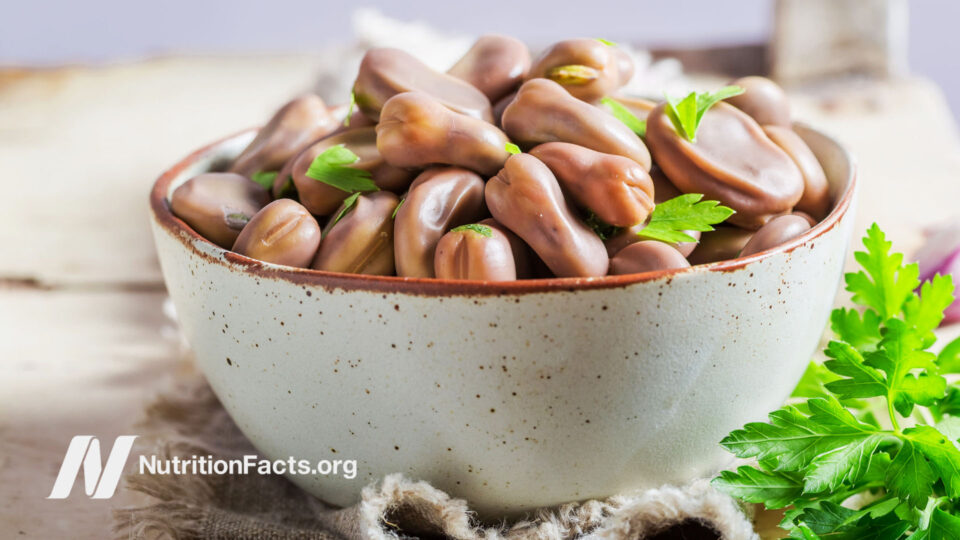
Fava beans in an enameled bowlOur two new videos on Parkinson’s disease released this month addressed the question, If we have known for decades that Parkinson’s is manifested by a dopamine deficiency in the brain, why not eat a dopamine diet? The dopamine in foods can’t actually cross the blood-brain barrier, but its precursor, levodopa (L-dopa), can and is then able to be converted into dopamine. Dr. Greger found interesting data on velvet and fava (or broad) beans, which both contain L-dopa. The information on velvet beans looked promising at first, but there are some hurdles to its use—including its nasty taste.

What about fava beans? They contain less L-dopa than velvet beans, but they are tasty—so you can eat more of them—and can be consumed as a whole food. Substantial clinical improvements were noted in patients after they ate fava beans, similar to that of receiving a standard drug. Overall, the research is ongoing, and, until we know more, Parkinson’s combo drugs like Sinemet should remain the first-line therapy, but adding beans to our diet can only help. Even just one and a half spoonsful’s worth of roasted soybeans (“soynuts”) led to a significant improvement in symptoms as an adjunct treatment.


The Best Diet for Fibromyalgia and Other Chronic Pain Relief
Woman holding upper shoulder as if in painFibromyalgia has long been dismissed as a psychological phenomenon, but it’s now understood to be a disorder of pain regulation and sensitization. If pain is typically caused by inflammation, does an anti-inflammatory diet help reduce the effects of fibromyalgia? A recent study found that on a plant-based diet, perceived pain decreased an average of three points (on a ten-point scale), falling from an average of five or six points down to just two out of ten. The study didn’t have a control group, but there’s no downside to giving healthier eating a try—not only to help with fibromyalgia pain, but for a whole host of other concerns.


Vinegar for Blood Sugar Control and Polycystic Ovary Syndrome (PCOS) Treatment
Gloved hand doing a finger prick on another person’s handVinegar has been shown to help accelerate weight loss, reduce cholesterol, act as a disinfectant, and blunt spikes in blood sugar and insulin after meals. Since insulin resistance has been suggested as one possible cause of polycystic ovaries and we know vinegar can improve insulin resistance, could it also benefit those suffering from PCOS? A tiny study using one tablespoon a day showed improvement for about half of the participants. The jury is still out, but this suggests that vinegar may help, so why not give it a try? Whatever your reason for taking a daily dose of vinegar, remember to never drink it straight, as it can cause second-degree caustic burns down your throat.

It has been suggested that insulin resistance is one of the causes of polycystic ovaries and we know that vinegar can improve insulin resistance, so researchers decided to study the effect of vinegar for PCOS. Seven patients seeking a non-pharmacological treatment for PCOS were given a beverage containing a tablespoon of apple cider vinegar every day for a few months. The insulin resistance did improve in most, but did their cycles return? Yes, in four out of seven. Before the study, they were either having their periods every 50 or so days or not at all, or they were not ovulating, but most resumed within 40 days on the vinegar. Now, this doesn’t prove anything, but it’s at least sufficient to indicate the possibility that it may help. And, what’s the downside? A tablespoon of vinegar would cost less than 10 cents a day. (Another reminder to never drink vinegar straight.)


Dr. Greger in the Kitchen: Groatnola
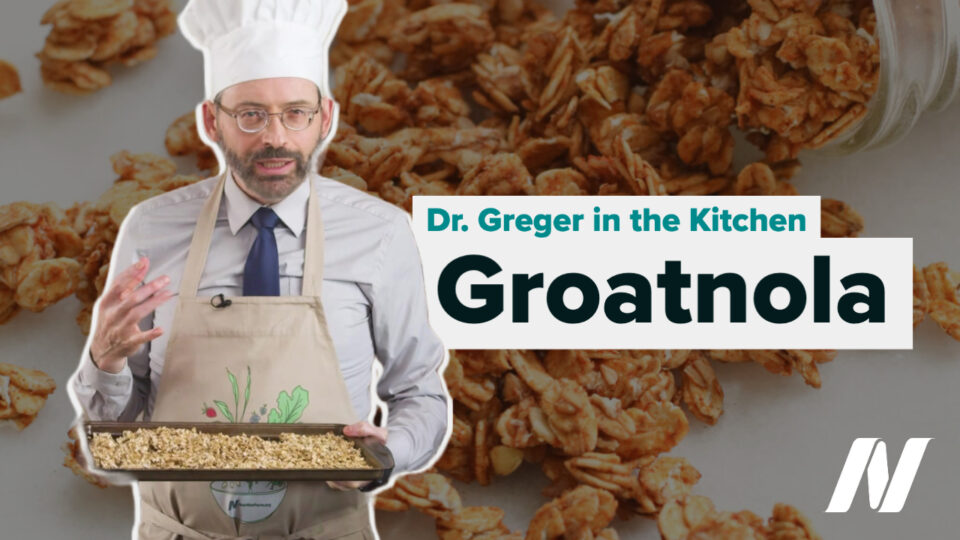
Dr. Greger holding cooking tray with groatnolaTwo years ago, Dr. Greger made a video about his then-favorite breakfast, the Cran-Chocolate Pomegranate BROL Bowl. He still loves it, but with pomegranate season waning once again, he’s on a new kick: groatnola! What’s that? Whole-food granola made with buckwheat groats, sweet potatoes, and spices. Give it a try, and let us know what you think!

 

Tea Tree Oil for Cold Sores and Warts?
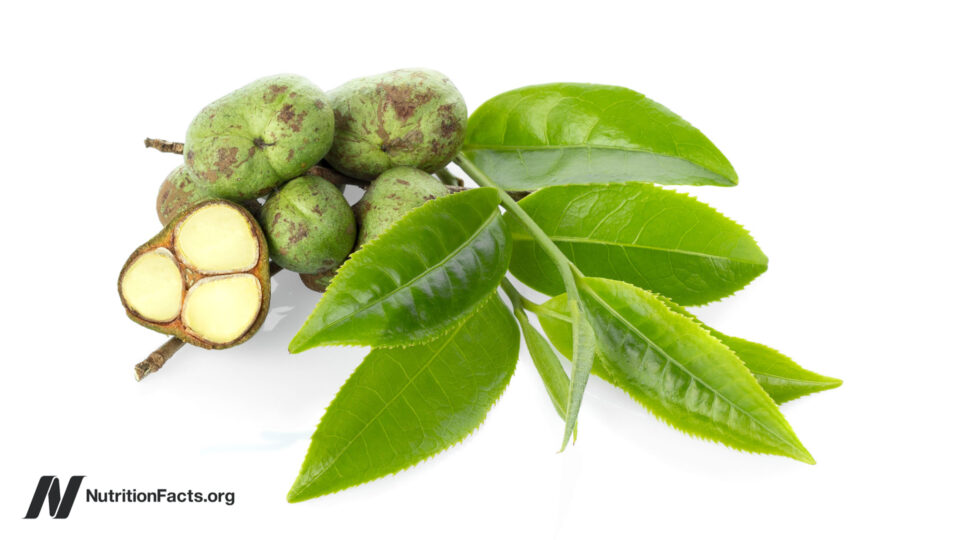
Tea tree oil has antifungal and antibacterial properties, as shown in videos such as Does Tea Tree Oil Work for Dandruff and Athlete’s Foot? and Do Natural and DIY Tea Tree Oil Cleaning Products Disinfect as Well as Bleach?. Warts and cold sores, on the other hand, are caused by viruses, so does tea tree work on those conditions? Maybe on warts (at least in a singular case report), but not on cold sores.


Vegetarian Athletes
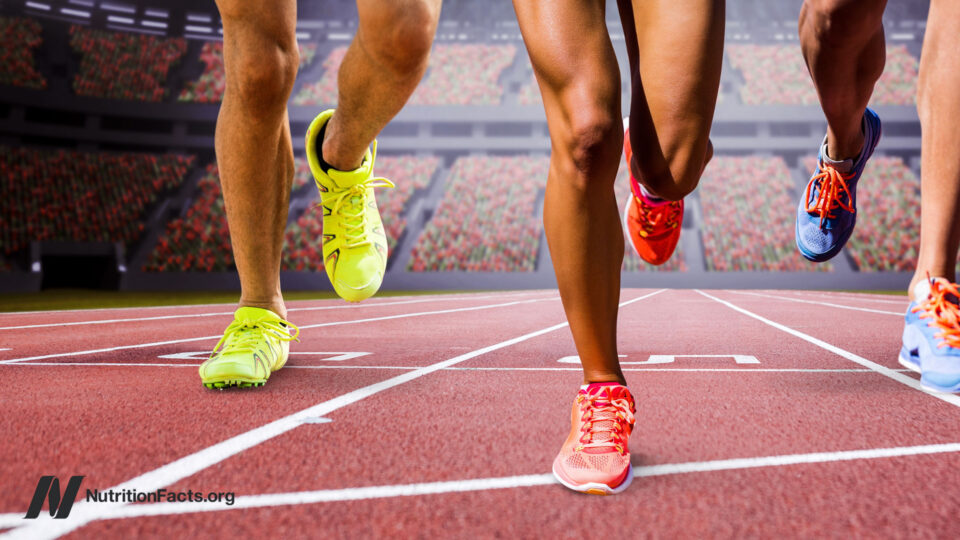
In this three-blog series, starting with What Is the Gladiator Diet and How Do Vegetarian Athletes Stack Up?, Dr. Greger looked at the history of vegetarian athletes and how they stacked up to their omnivorous competition. Top groups of athletes, from ancient Romans and Greeks to modern-day Olympic runners, have been known to eat largely plant-based diets. Overall, most studies have found little difference between vegetarian and omnivore athletes when it comes to cardio or strength fitness. Since extensive research has shown that a plant-based diet has the benefit of greater long-term health outcomes, it seems like a winning choice. 

Healthy Bones

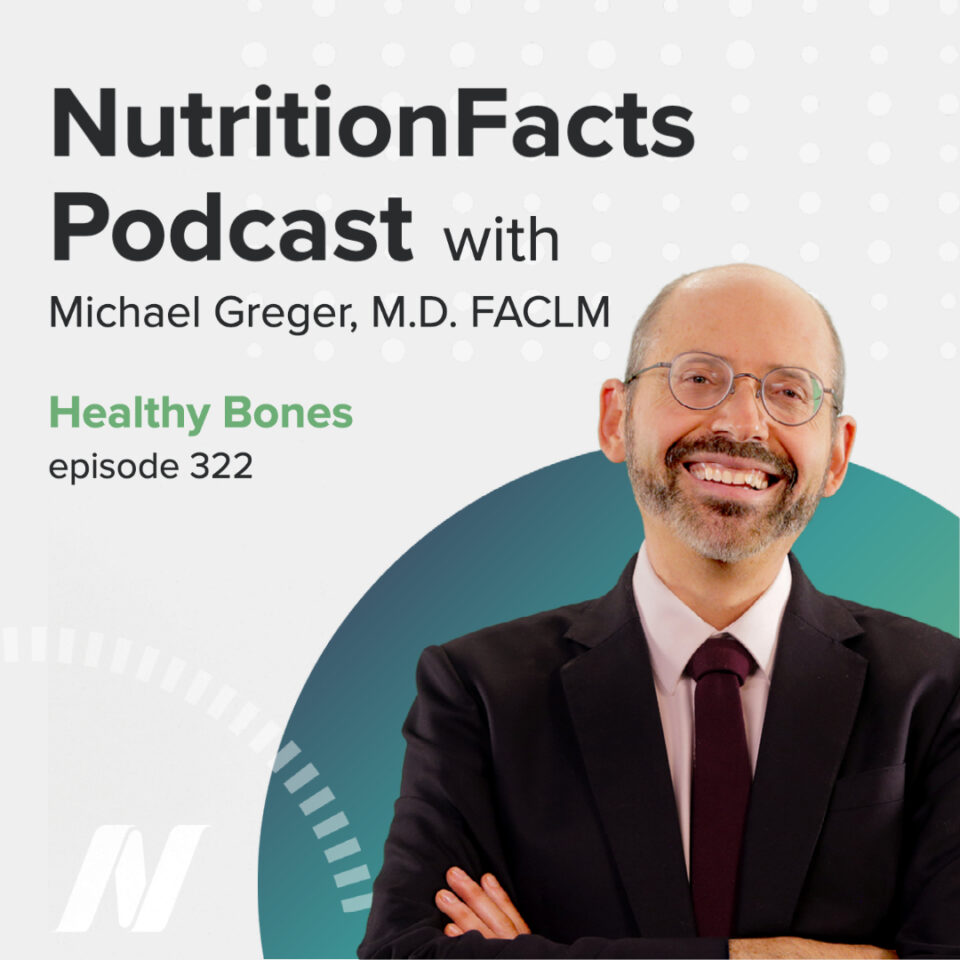
This month’s spotlight is all about bone health. Do people eating plant-based have greater bone loss? Does animal protein intake lead to bone loss? What is the relationship between milk consumption and rates of hip fractures? Check out the podcast for answers to those questions and more. In a nutshell, though, for the strongest bones, eat plenty of phytonutrient-packed plant foods and incorporate weight-bearing exercise.


This has been a wrap-up of just a small sampling of our recent content. To see everything from the past month, be sure to check out the video, blog, and podcast pages.

from NutritionFacts.org https://ift.tt/SNlAICe
via IFTTT
Wild Mushroom and Farro Soup

You’ll love this hearty, healthy and filling wild mushroom and farro soup recipe that eats like a meal! Wild Mushroom and Farro Soup There’s something so cozy about eating soup during the colder months. This lightened up version of Ina Garten’s wild mushroom and farro soup recipe will blow you away. It tastes luxurious and

from Skinnytaste https://ift.tt/6mXafuE
via IFTTT

7 Day Healthy Meal Plan (Feb 27-March 5)

A free 7-day, flexible weight loss meal plan including breakfast, lunch and dinner ideas and a shopping list. All recipes include macros and WW points. 7 Day Healthy Meal Plan For those who observe, I have many Lenten friendly recipes that will appeal to every palate. Some of my favorites are Sheet Pan Baked Feta with Broccolini, Tomatoes and Chickpeas, Roasted Sweet Potato Black

from Skinnytaste https://ift.tt/FbItQV1
via IFTTT

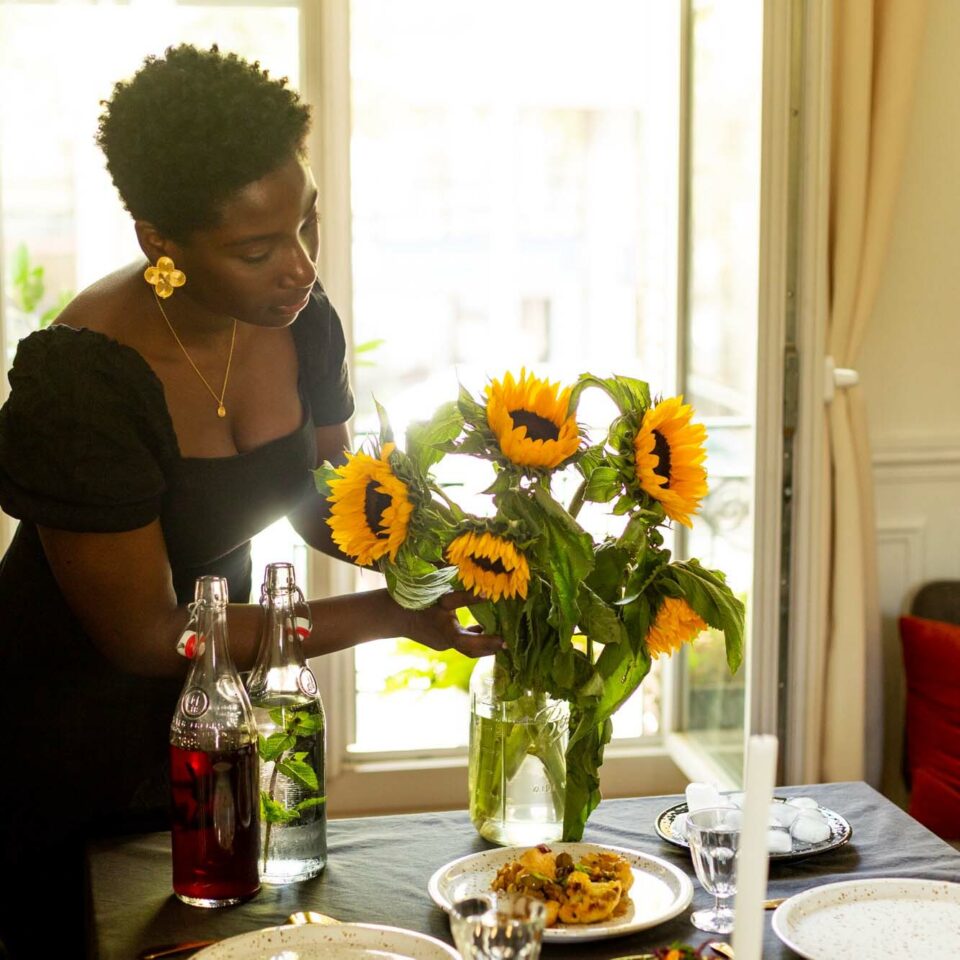
Explore African Cuisines with Chef Marie Kacouchia

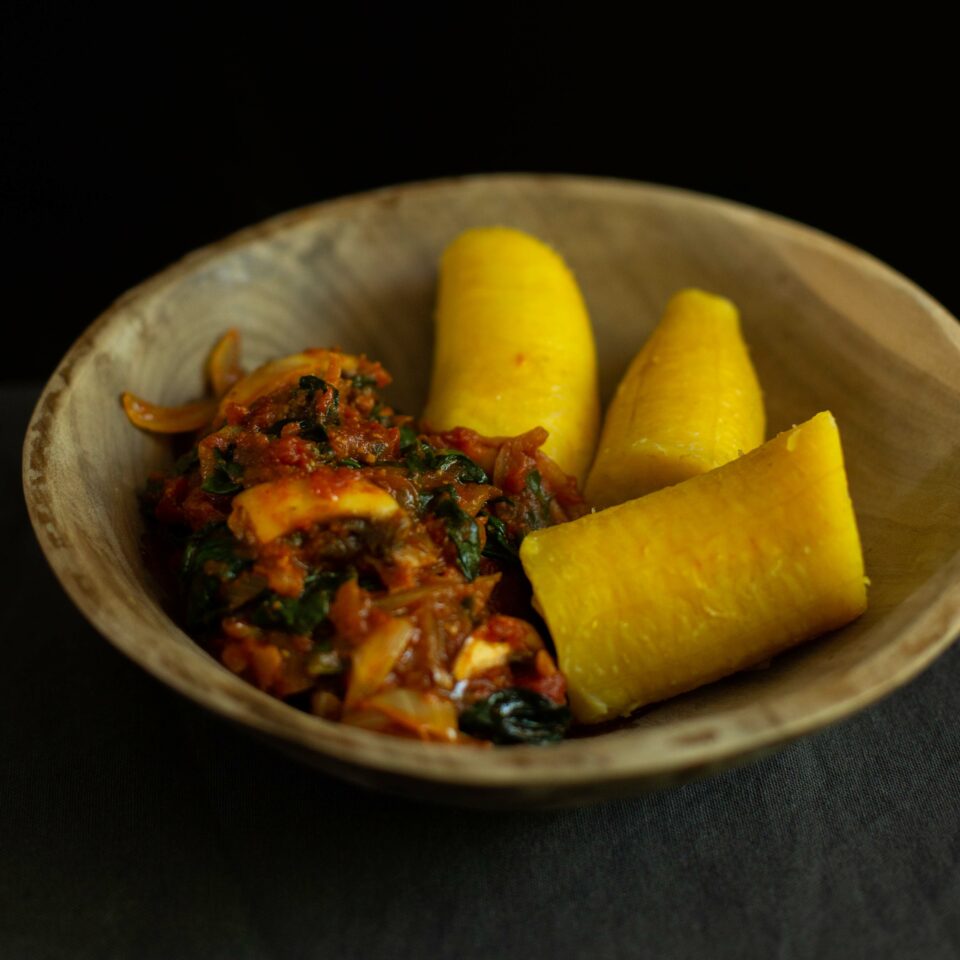
Meet Chef Marie Kacouchia. We had the pleasure of interviewing her about food history, health, culture, and her cookbook, Vegan Africa. Read on and enjoy her recipe for Sautéed Spinach and Mushrooms with Plantains.


In your experience, how have you found food to tell a story and shape culture?

Food is both created by history and creates history. Cuisines are created by history because they mix with invasions and population movements. It shows the movements of people and the introduction of new ingredients, cooking methods, and recipes. Sometimes these cuisines are impoverished–think of the globalization of cuisine and fast foods–but often they come out richer. In my book Vegan Africa, for example, I highlight the Indo-Chinese influence on the cuisine of East Africa and the Lebanese influence on all of West Africa. These result in unique dishes that are consubstantial with the history of these parts of the world.

On a personal level, the way we eat says a lot about who we are, where we come from, and all of the people who came before us.

And, finally, cooking creates history because it brings people together. It creates bridges between people through commonality. In fact, it is often the first introduction we have to another culture.


How do you educate people about the intersection of food, history, health, and culture?

This book is the materialization of my personal journey. As a young adult, I began to question my identity and naturally my relationship with food was at the center of this reflection. I made the work of becoming more intentional about food because it plays such a big part in our lives. I began to ask myself more systematically: Why am I eating what I am eating? How was this food produced? By whom? How can I live fully without inflicting suffering on other beings? And, finally, How can I reclaim my ancestral culinary heritage?

I wanted to share the fruit of my research to shed light on African cuisines and to encourage others to want to know and appreciate them better. I hope to inspire others to see food for what it is: a sacred fuel for our bodies and a central component of our identity.


Please tell us a little bit about your cookbook Vegan Africa. What countries and cultures are highlighted in it?

Africa is a huge continent and the culinary cultures are very diverse. With my book, I humbly wanted to represent the whole continent, from North to South and from East to West. Vegan Africa includes recipes from Ivory Coast, Senegal, Mali, South Africa, Ghana, Kenya, and many other countries! It is, of course, more of an initiation or, as I like to say, an invitation to discover these rich African culinary cultures. During the writing of the book, I had the pleasure of exchanging recipes with many people from different African countries, and they entrusted me with recipes from their countries of origin.

In addition, some of the recipes in my cookbook are my own creations, the result of my travels and my experiments, such as Cassava Tabbouleh with radishes and Herbs and Red Cabbage Salad with Mango and Raw Okra. My book is also full of personal anecdotes, cooking tips, and family cooking secrets.


As a chef, what do you envision as the way forward to encourage people to include more fruits and vegetables into their diets?

Often, fruits and vegetables are seen as boring side dishes. We need to reverse this narrative and really put them back at the center of the plate. I believe this necessarily involves education. We have to make people aware of the need to eat a nutrient-dense diet for good health. I am also convinced that it involves kindness and curiosity. Often, people are resistant to change because they are afraid of changing their routines. That’s why, in my cooking, I make it a point of honor to use ingredients that are accessible everywhere and by nearly everyone. Then I try to show that with a few spices, it is possible to totally transform everyday foods and give them a new dimension. For example, the next time you cook carrots, why not try roasting them instead of boiling them? And have fun with flavors! Try citrus zest, cumin, sumac, cardamom, ginger, or smoked paprika. Open up the field of possibilities.


Please tell us a little bit about your work and career.

By day, I work in the health and wellness sector. I help companies whose mission is to help people take care of themselves to improve their Customer Experience. In addition to this, I run workshops and cooking classes.

I am also occasionally a chef for individuals and companies for very intimate dinners. And on top of that, one thing I never stop doing is developing new recipes that I share on my Instagram account @thespicysoul.

I have a very holistic approach to health, and bringing wellness to others is what motivates everything I do.


Sautéed Spinach and Mushrooms with Plantains

SERVES 4 ✦ PREP TIME: 15 minutes ✦ COOK TIME: 35 minutes

Dishes made with leafy greens are very popular in sub-Saharan Africa, particularly in South and Central Africa. Any leafy green will do—such as taro, cassava, sorrel, or sweet potato leaves—but here I opted for spinach leaves since they’re easy to find in most parts of the world.

2 tablespoons water
1 onion, chopped
4 tomatoes, diced
8 ounces (225 g) button mushrooms, chopped
31⁄3 pounds (1.5 kg) fresh spinach
1 tablespoon curry
1 teaspoon smoked paprika
2 teaspoons garlic powder
Black pepper (to taste)
4 firm plantains, peeled and cut into large chunks


  1. Heat a large pan over medium heat. Add the water and onion, and cook until the onion is translucent, about 5 minutes. 
  2. Add the tomatoes, and cook for about 5 more minutes, stirring regularly.
  3. Add the mushrooms, and stir to combine. 
  4. Gradually add the spinach, stirring until it wilts.
  5. Stir in the curry, smoked paprika, garlic powder, and black pepper (to taste). Bring to a simmer, cover, and cook, stirring occasionally, until thickened, about 10 minutes. If the mixture sticks to the pan, stir in a splash of water.
  6. Meanwhile, place the plantains in a large pot, cover with water, and bring to a boil. Cook until easily pierced with a fork, about 15 minutes.
  7. Serve the spinach and mushrooms along with the plantains.

TIP: The greener the plantains, the less sugar they have. To steam the plantains, make a small cut halfway through each piece. Place in a steamer, and steam until easily pierced with a fork, about 10 minutes.

You can find Chef Marie Kacouchia on Instagram @thespicysoul

from NutritionFacts.org https://ift.tt/2iQqjNZ
via IFTTT

Cabbage Soup with Chicken and Pork

This hearty cabbage soup with chicken, pork and lots of vegetables is a simple one pot meal. Cabbage Soup with Chicken and Pork There’s nothing like a hearty soup in middle of winter. This cabbage soup is perfect comfort food for a cold winter night and loaded with veggies! A few of my other favorite

from Skinnytaste https://ift.tt/1TpxHGk
via IFTTT

The Muscle Power, Strength, and Endurance of Vegetarians

Randomized controlled trials put plant-based eating to the test for athletic performance.

Historical examples of successful plant-based athletes range from the gladiators in ancient Rome to the Tarahumara Indians who run 160-mile races for the fun of it. That’s six back-to-back marathons. But, they weren’t put to the test until the last century or so in a study purporting to show “without reasonable doubt that the flesh-eating group of athletes was very far inferior in endurance to the abstainers, even the sedentary group” of vegetarians—meaning it isn’t that the veg athletes won simply because they had trained harder or something. Indeed, there certainly are advantages to plant-based eating, like more antioxidants to combat exercise-induced oxidative stress and the anti-inflammatory nature of many plant foods that may accelerate muscle repair and strength recovery. But, do you have to eat this way for years, decades, or even your whole life to get these apparent benefits? I discuss this in my video Vegetarian Muscle Power, Strength, and Endurance.

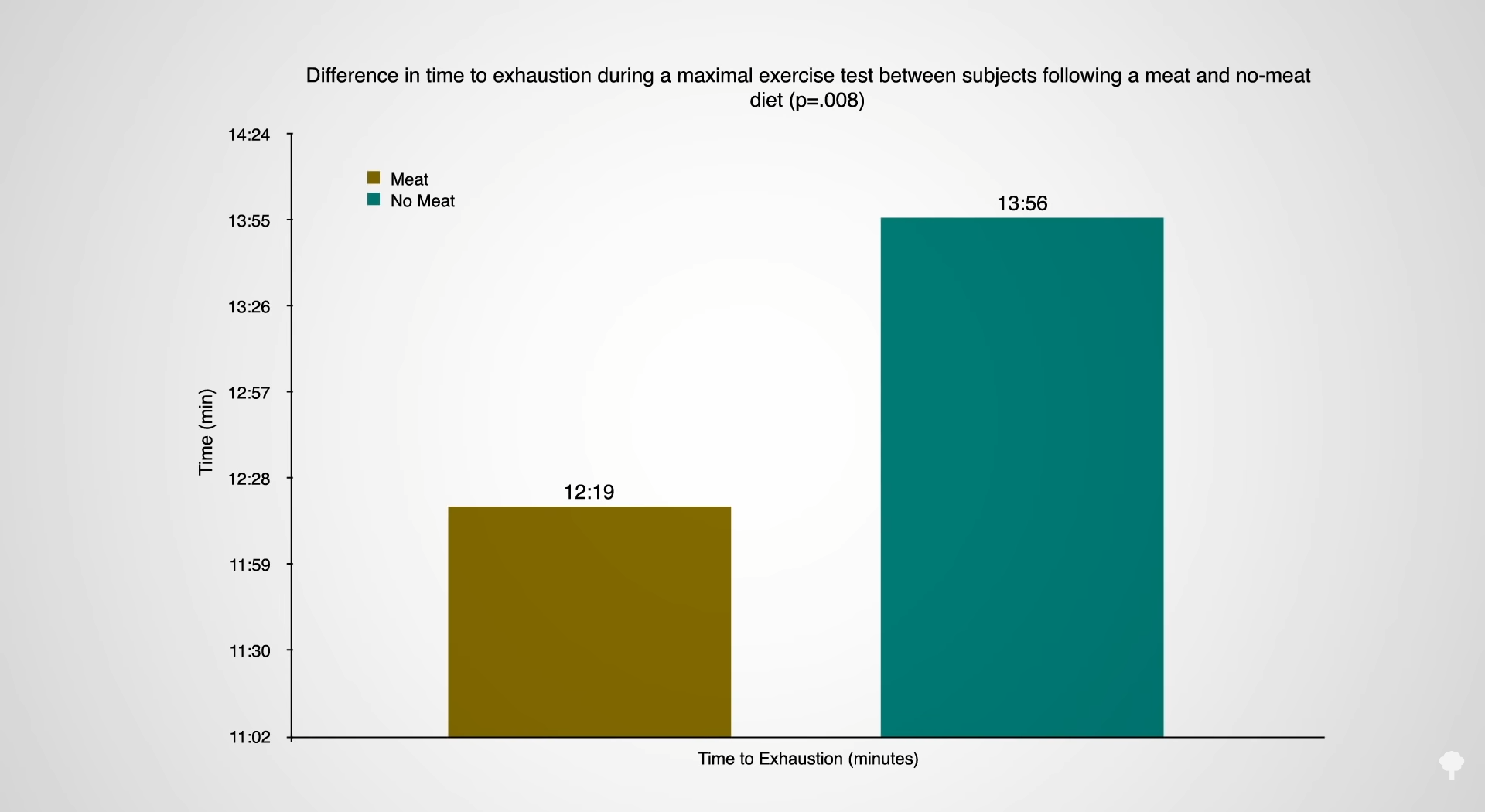
What if you took some Texas men, eating their regular Texan diet, put them through a maximal exercise test, and then asked them to cut out meat for four days. Then, after those four days without meat, you tested them again to measure time to exhaustion, ramping up the treadmill to see how many minutes could they go without collapsing? A researcher did this and found a significant difference favoring the vegetarian diet, which boosted the time to exhaustion by about 13 percent, as you can see at 1:28 in my video. Of the five participants, “each subject had a higher time to exhaustion after following a vegetarian diet.” But there was a fatal flaw to the study. Did you catch it? They were all in the same sequence—meat first, then veg—and any time you take a test a second time, you may do better just because you’re more familiar with it. If the Texans went back to eating meat after being on the vegetarian diet and their performance tanked during a third test, then you might be onto something, but this isn’t very convincing. And, even if the effect is real, it may not be the meat reduction per se, but a function of improved glycogen stores from eating more carbohydrates or something.

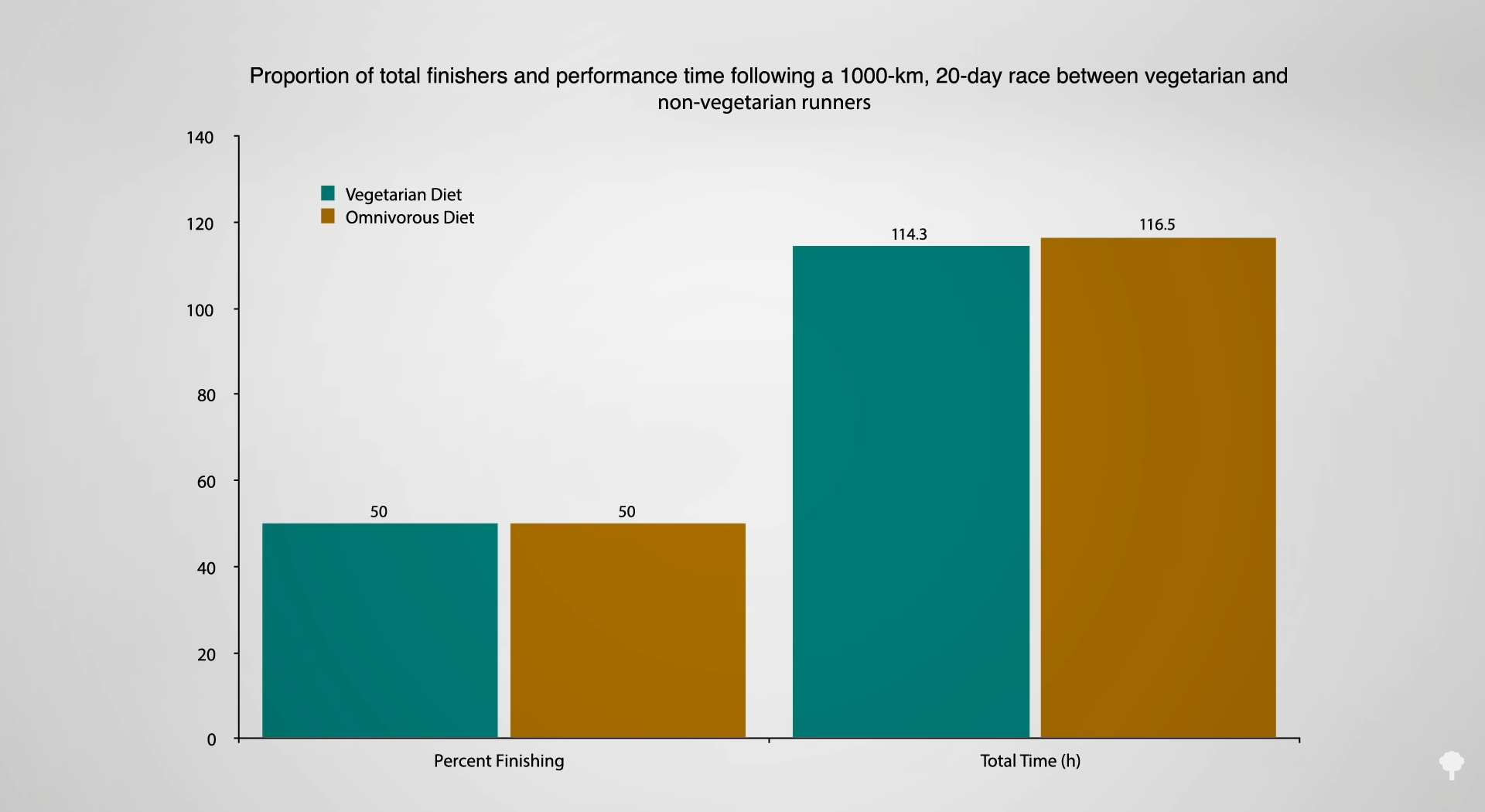
What about putting athletes on a vegetarian versus omnivorous diet before a 621-mile race? (You’ve heard of a 5K? This is a 1,000K!) And, what if you made sure to design the two diets so all of the athletes got about the same percentage of carbs? As you can see at 2:16 in my video, researchers did this and found that the finishing rates of the athletes were identical and their total times were within just a few hours of each other whether on the vegetarian diet or the omnivorous one.

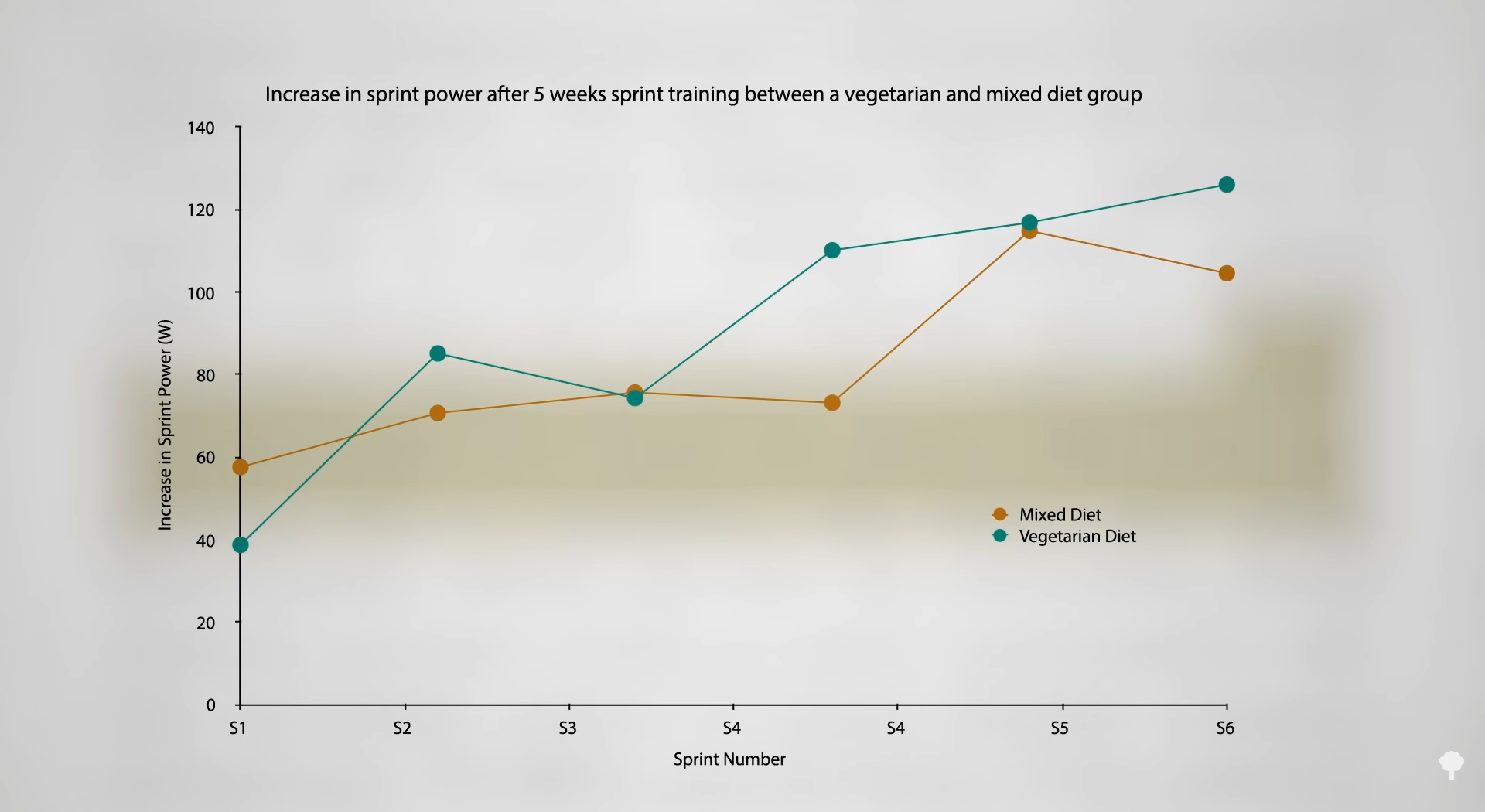
Same with sprinting. As you can see at 2:44 in my video, a study randomized people into vegetarian or mixed diet groups, and there was no significant difference in sprint power between the two groups. The researchers concluded that “acute vegetarianism has no acute adverse effects on adaptations to sprint exercise,” but no apparent performance benefits either.

Same with strength training, too. A study measured maximum voluntary contraction of both biceps and quadriceps before and after each dietary period, and no significant difference was seen either way. When you put together all of the studies that compare physical performance in these kinds of randomized, controlled trials, where you have folks eat more plant-based for just a few days or weeks, “there appeared to be no differences at least acutely between a vegetarian-based diet and an omnivorous diet in muscular power, muscular strength, anaerobic or aerobic performance.” Long-term, though, a plant-based diet can be conducive to both endurance performance and health. “Whereas athletes are most often concerned with performance, vegetarian diets also provide long-term health benefits and a reduction in risk of chronic disease” and are “associated with a reduced risk of developing coronary heart disease”—the number one killer of men and women—“breast cancer, colorectal cancers, prostate cancer, type 2 diabetes, insulin resistance, hypertension, cataracts, and dementia.” Doesn’t matter how you shred if you’re dead.

I was honored to be a scientific consultant for the amazing documentary about diet and athleticism called The Gamechangers. Check it out at http://gamechangersmovie.com/.

from NutritionFacts.org https://ift.tt/GRe6isk
via IFTTT

Spicy Gochujang Tofu Bowl (Vegan, Gluten-Free)

If you want to turn a non-tofu lover into a believer, crumble it up! This vegan Spicy Gochujang Tofu Bowl is loaded with protein, veggies, and tons of flavor! Spicy Gochujang Tofu Bowl Often, the texture of tofu turns people away. However, when crumbled into ground meat-sized pieces, it becomes a perfect canvas for any

from Skinnytaste https://ift.tt/8NEmKqp
via IFTTT

7 Day Healthy Meal Plan (Feb 20-26)

A free 7-day, flexible weight loss meal plan including breakfast, lunch and dinner ideas and a shopping list. All recipes include macros and WW points. 7 Day Healthy Meal Plan So who else loves to throw ingredients in a crock pot in the morning and come home to a meal ready to go after work?? Some of my favorite slow cooker recipes are Slow

from Skinnytaste https://ift.tt/sPidGZS
via IFTTT

Chicken Divan, Lightened Up

This lightened up Chicken Divan made from scratch with no canned soups. Just layers of tender chicken breast and broccoli in a flavorful creamy, cheese sauce topped with golden breadcrumbs. Chicken Divan If you’re looking for a healthier version of this classic casserole dish, look no further! This lighter Chicken Divan is lower in fat

from Skinnytaste https://ift.tt/DOFmAqp
via IFTTT

Design a site like this with WordPress.com
Get started