Is It Safe to Consume Cannabis Edibles?

What do we need to know about the safety of marijuana edibles?

You may recall from my video Smoking Marijuana vs. Using a Cannabis Vaporizer that smoking cannabis can create respiratory problems, so using a vaporizer is an alternative. What about eating it? I discuss that in my video Are Cannabis Edibles Safe?.

“Vaping is likely less harmful than smoking marijuana,” and edibles are another alternative, but they may carry increased risks to children and increased risk of overdosing. I’d add a third risk—to pets. “Since the legalization of recreational marijuana in Colorado in January 2014, edibles comprise almost half of total cannabis sales,” and a “significant correlation” has been found between the rise in use and the rise in marijuana toxicosis cases at veterinary hospitals, thought to have contributed to two dog deaths in the state.

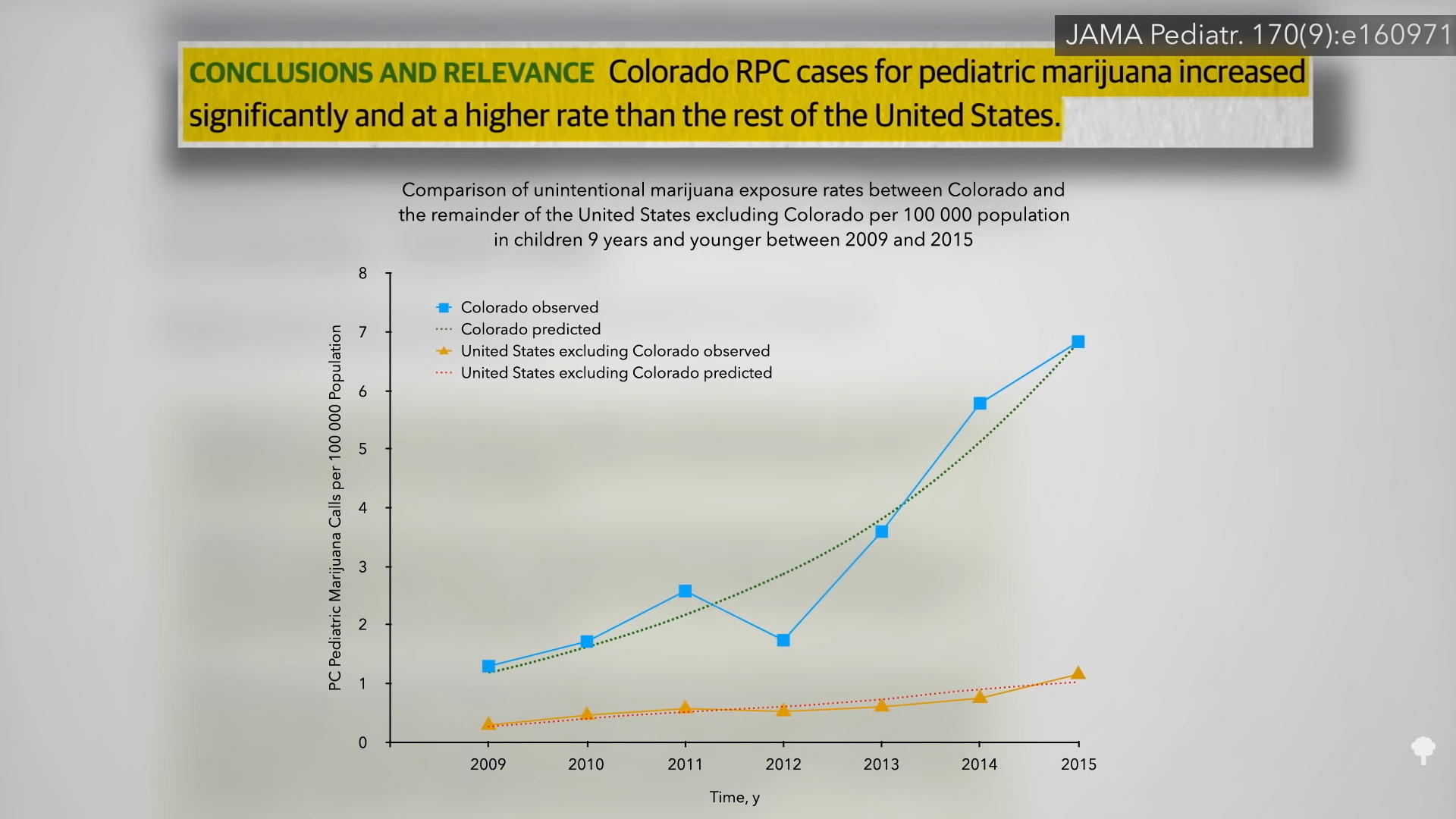
“There have been no reported deaths in young children from marijuana exposure,” thankfully, though some have ended up on life support because an edible marijuana overdose can lead to severe respiratory depression. As you can see in the graph below and at 1:09 in my video, Colorado regional poison control cases increased significantly after recreational pot became legal and at a higher rate than the rest of the United States, which is one reason the American Academy of Pediatrics continues to oppose legalization.
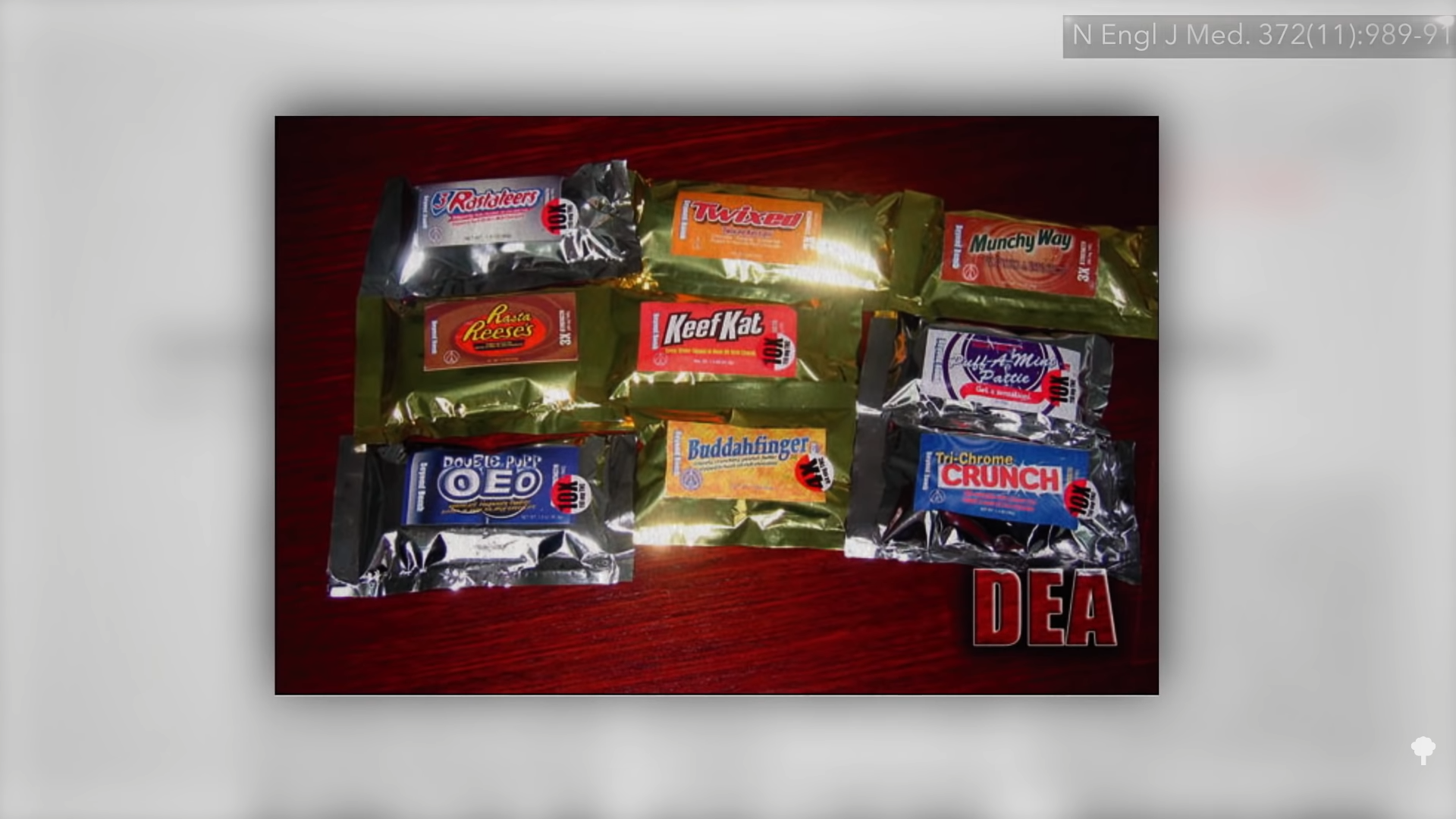
At the very least, cannabis edibles shouldn’t be packaged to look like popular candy, as you can see below and at 1:29 in my video. (Keef Kat, Buddahfinger, and Munchy Way, to name a few.) Some states have since banned selling marijuana-infused candy with that kind of imagery, but, to play it safe, maybe we shouldn’t be making cannabis candy at all.
How big of a problem is this, really? “To put this in perspective, the Rocky Mountain Poison and Drug Center reported…that 2,700 children in Colorado required treatment after accidentally ingesting cosmetics or personal care products, and 739 after eating large amounts of vitamins…Compare that with the dozen or so reports of kids accidentally eating marijuana edibles last year.” And if you want to talk about poisoning deaths, how about alcohol? “More than 2,200 alcohol poisoning deaths occur among adults in the United States every year, or about six per day,” whereas deaths attributed to marijuana are few and far between, though there have been a few.

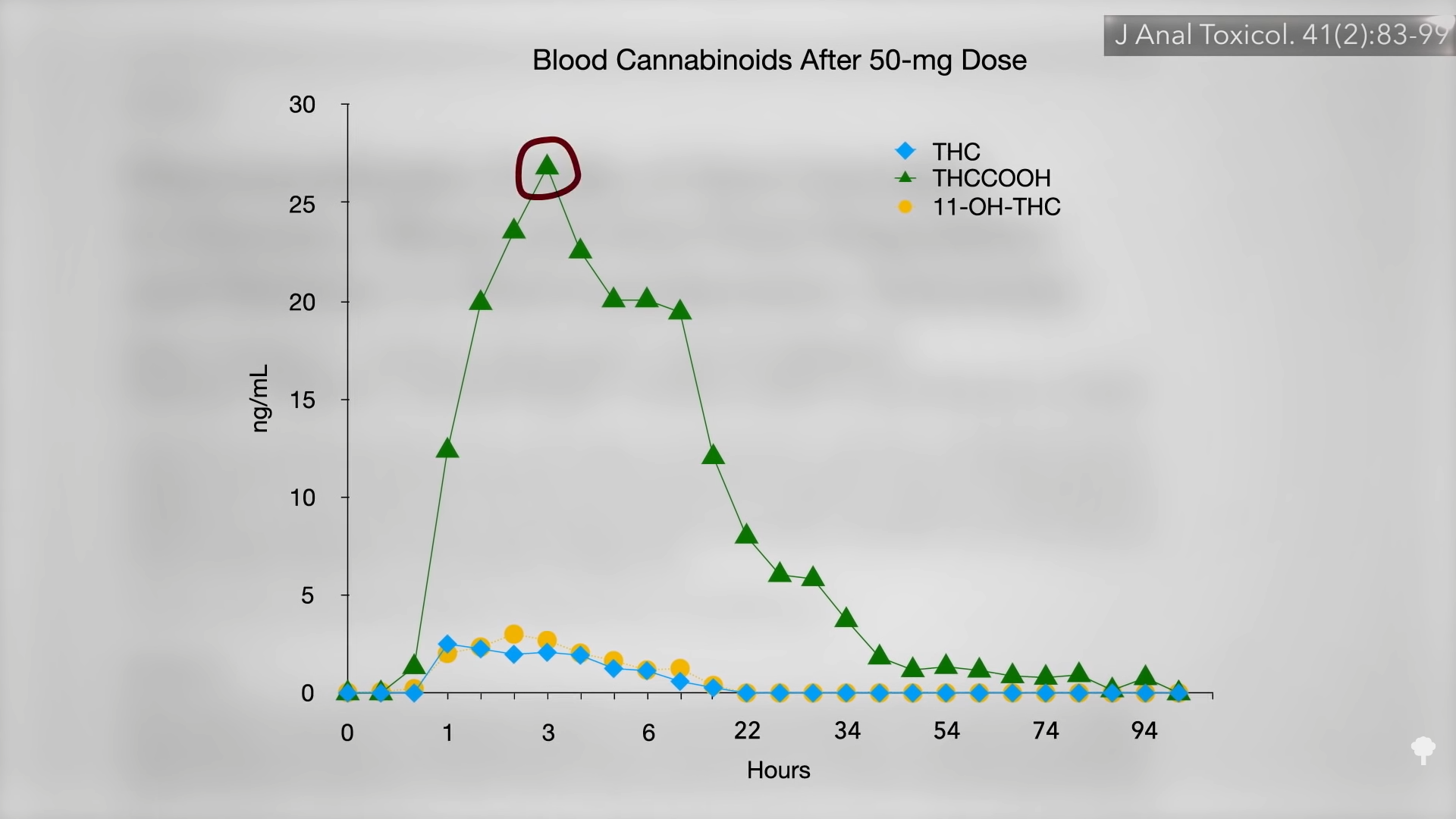
The problem is that you may not feel an effect from edibles for an hour or two after consumption and may not know how much to take, so you might then “overconsume, thinking in the first hour or so after initial consumption that [you] have not ingested enough product to feel an effect.” As you can see in the graph below and at 2:22 in my video, it takes about three hours for cannabis compounds to peak in your bloodstream compared to just ten minutes when you smoke it and at least a full hour before you feel much at all.
This happened right after legalization in Colorado: A 19-year-old died after consuming a marijuana cookie. He had one piece. “Approximately 30–60 minutes later, not feeling any effects, he consumed the remainder of the cookie.” Two-and-a-half hours later, he jumped to his death from a fourth-floor balcony. A month later, a “second man developed hallucinations and rambling speech…and in the midst of an apparent psychotic break, fatally shot his wife while she was calling 911 for help.”

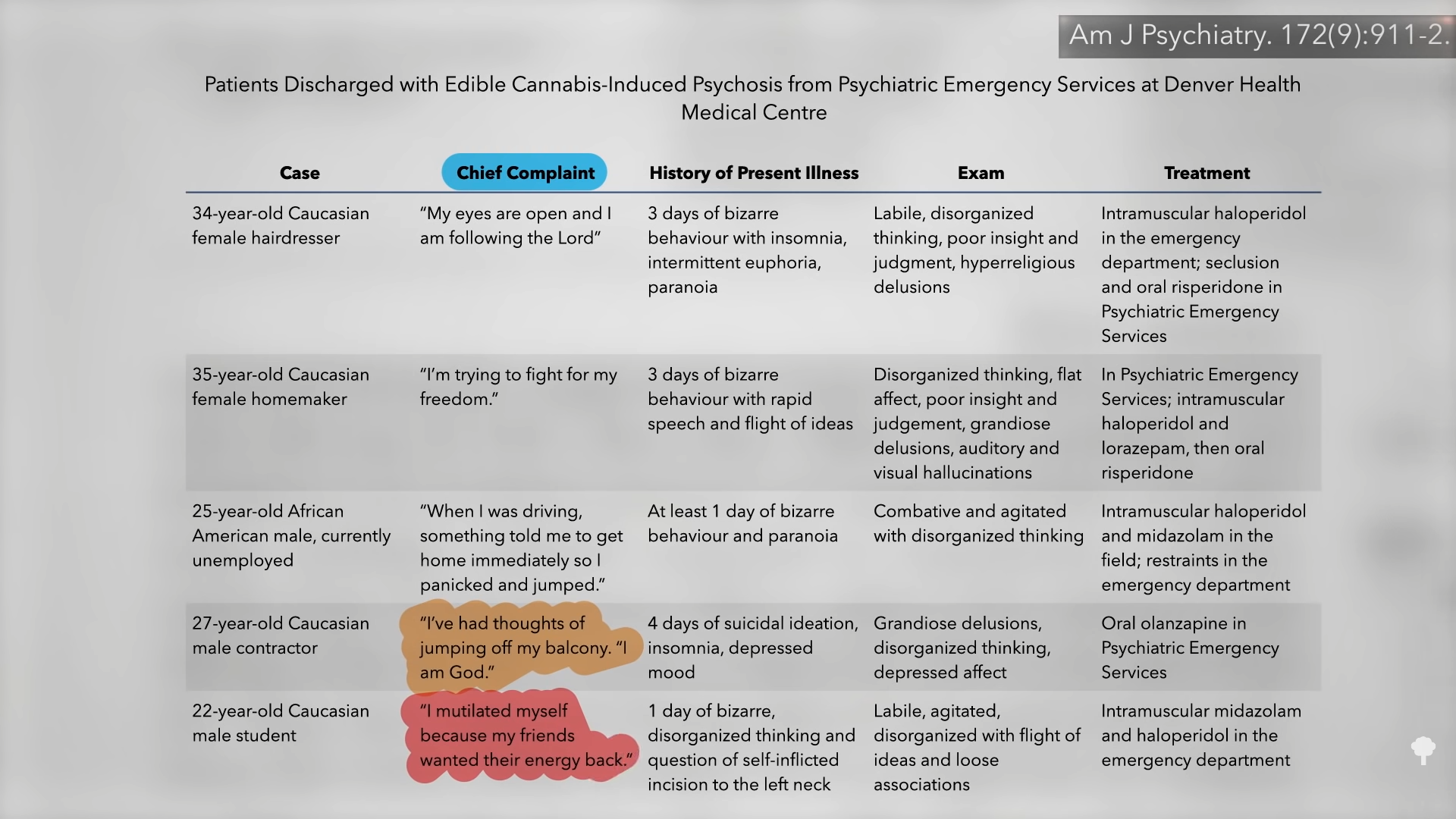
These kinds of cases, as you can see below and at 3:10 in my video, commonly involved someone eating the recommended serving size, feeling nothing, deciding to eat the rest, then ending up restrained in the psych ward, claiming they’re God or mutilating themselves because “friends wanted their energy back.”
The cannabis industry responded by blaming the victims. “No one buys a bottle of Jim Beam and thinks they should consume it all in one sitting.” Maybe not, but people do expect to be able to eat a whole cookie. Who eats just one-tenth of a cookie?

Other over-the-counter products “are required to carry specific labeling for dosing and adverse events. It seems odd, to say the least, that edible cannabis, which contains a known psychoactive substance, is not held to the same standard as a bottle of acetaminophen tablets,” like Tylenol. In 2016, Colorado regulators enacted new rules for labeling edibles, including mandating their THC content be listed right on the label. How accurate are those labels, though? We didn’t know until they were put to the test. Of 75 products purchased, involving 47 different brands of edibles, only 17 percent were accurately labeled, and only about one in six came within 10 percent of the labeled value. The greatest likelihood of obtaining more-than-you-bargained-for products was in Los Angeles, whereas Seattle seemed to tend to overinflate its labels.

It’s hard to study cannabis of any kind due to illegality, but according to a hundred thousand tweets about edibles, most people express a positive opinion. One unexpected benefit arose in a focus group of teens on marijuana edibles: Several students in a high school culinary class were “there to learn how to cook in order to be able to produce edibles.”

I have a whole treasure chest of cannabis videos. If you want to see them all, I put them in a digital DVD that you can stream now.

from NutritionFacts.org https://ift.tt/ifPWrg7
via IFTTT
Ground Beef and Broccoli Stir Fry

This easy Ground Beef and Broccoli stir-fry is perfect when you need a quick weeknight dinner! Ground Beef and Broccoli Stir Fry This easy ground beef and broccoli is so much healthier than take-out! Don’t get me wrong, I love Chinese food. But when I am trying to meet my health goals, cooking meals from

from Skinnytaste https://ift.tt/7aB3rVC
via IFTTT

Roasted Mushrooms with Parmesan

These easy oven roasted mushrooms can be made with any variety of mushrooms – just make sure to keep the slices a similar size so they roast evenly. Roasted Mushrooms with Parmesan Roasting mushrooms intensifies their umami-rich flavor, creating caramelized edges and a meaty, sweet texture, sure to leave you wanting more. This roasted mushrooms recipe

from Skinnytaste https://ift.tt/rPXND3U
via IFTTT

Huevos Pericos

Huevos pericos are a traditional Colombian breakfast dish made with scrambled eggs, tomatoes, and scallions. Huevos Pericos In Colombia, Huevos Pericos is typically served with arepas (corn cakes) or bread, and can be accompanied by hot chocolate, coffee, or fruit juice. This is one of the most popular and delicious breakfast dishes in Colombia. The

from Skinnytaste https://ift.tt/oO3uw4V
via IFTTT

7 Day Healthy Meal Plan (April 17-23)

A free 7-day, flexible weight loss meal plan including breakfast, lunch and dinner ideas and a shopping list. All recipes include macros and Weight Watchers points. 7 Day Healthy Meal Plan (April 17-23) Looking for quick lunch ideas? Try my Tuna Sandwich with Avocado or my Air Fryer Salmon Fish Sandwich. Want to meal prep? Check out my Honey Sriracha Chicken and Broccoli Meal

from Skinnytaste https://ift.tt/cJp1Ldo
via IFTTT

Chicken Satay with Spicy Peanut Sauce

These easy, flavorful Thai-inspired chicken satay skewers are marinated in coconut milk and spices and then grilled and served with a delicious spicy peanut sauce for dipping. Chicken Satay Recipe Anytime we go out for Thai food, we always order the satay! My husband is obsessed with coconut milk and peanut sauce, so I make

from Skinnytaste https://ift.tt/Cs603ae
via IFTTT

Does the Science Say That Butter Is Really Back?

Are butter and other saturated fats bad for you or not?

My video Friday Favorites: Is Butter Really Back? What the Science Says explores the uses and misuses of research on butter consumption and health. Time magazine famously exhorted people to “Eat Butter” and no doubt sold a lot of magazines, but perhaps at the cost of selling the public short. The publication followed up with an article that doubled down, saying that “the case for eating butter just got stronger.” It was based on the study “Is Butter Back? A Systematic Review and Meta-Analysis of Butter Consumption and Risk of Cardiovascular Disease, Diabetes, and Total Mortality” and claimed: “Pooling these studies, each daily serving of butter (14g/d) was associated with a 1% higher risk of death.” Hold on. One percent? That’s the study that’s supposed to make the case to eat butter stronger? Further, the study suggests that swapping just a spoonful or so of oil in place of butter every day might drop the risk of diabetes by 8 percent. “Thus, even with the absence of major health associations in the present investigation, healthier (and less healthy) alternatives may be available.” A 1 percent increase in death is pretty tiny, though. Why didn’t the researchers find a larger effect? Well, butter is just a tiny part of people’s overall diets. It’s illustrative to review the candy literature.

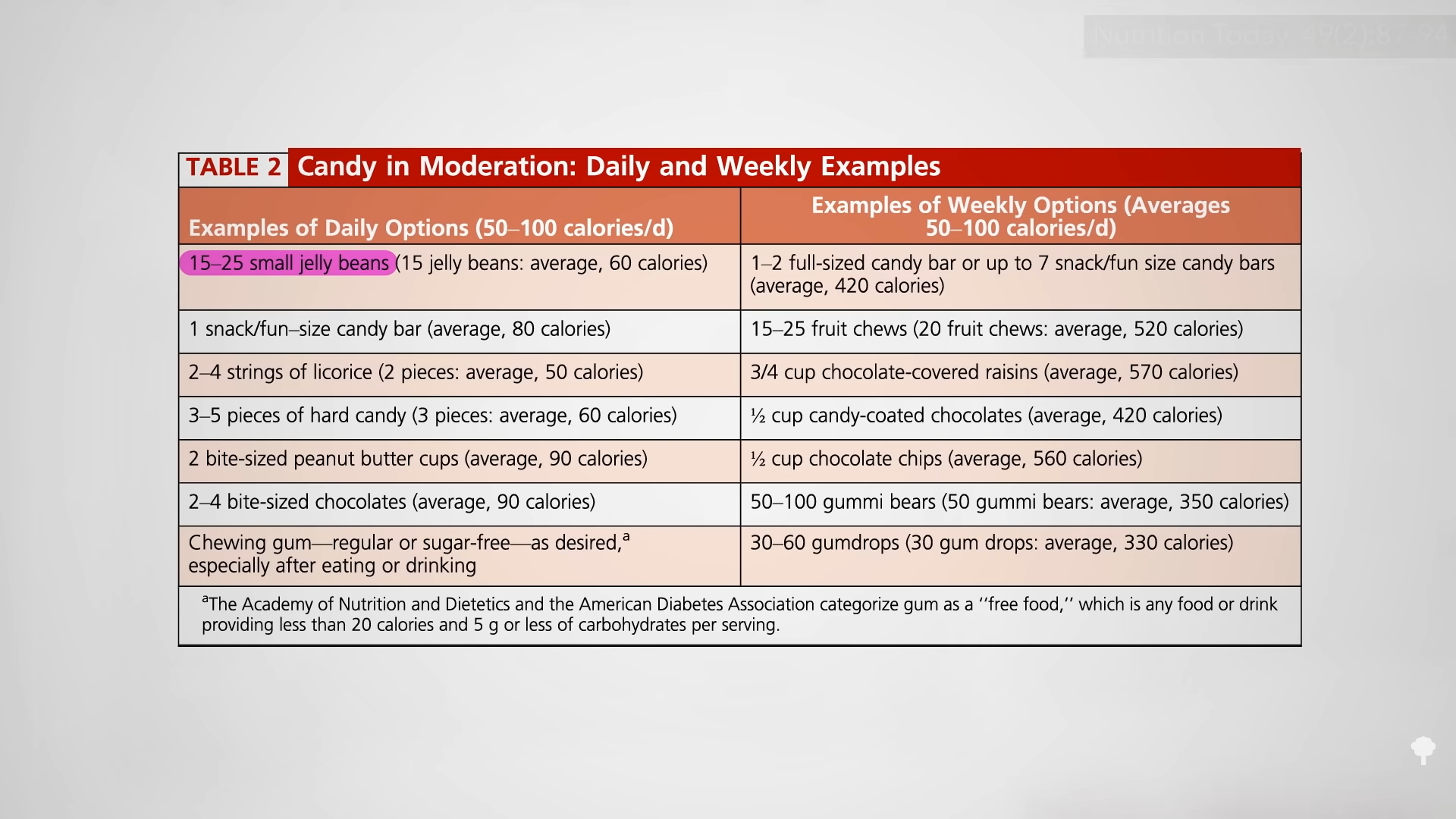
The National Confectioner’s Association is fond of contracting with scientists-for-hire like those at Exponent Inc., a company infamous for shilling for Big Tobacco and chemical companies. As you can see below and at 1:22 in my video, it encourages people to eat candy every day—but “in moderation,” like 15 to 25 jelly beans a day. Parents who restrict foods “in an effort to moderate a child’s intake of calories” are just going to make their kids fat, argue such scientists-for-hire.

See, parents use “coercive practices…to limit children’s access to palatable, energy-dense, or low-nutrient foods, which may include when, how often, or how much can be consumed.” Isn’t it outrageous that parents have the gall to tell their kids when, how often, or how much candy can be consumed? Don’t they know that butter(scotch) is back? “Evidence suggests that it [candy] is not associated with adverse health effects.” Don’t believe me? Ten thousand kids surveyed in one study were asked if they had eaten candy within the last 24 hours, and, after researchers compared those who said yes to those who said no, they concluded: “Current levels of candy consumption were not associated with adverse health parameters in children or adolescents.” And, this was a study in which the authors declared no conflicts of interest—even though it was a study about candy funded by the candy industry. Seems like interests were a bit conflicted.

Do you see how it would be hard to tease out the specific health effects of candy with such a blunt instrument? We don’t need a study, though, because we already know what candy is: It’s candy. It’s mostly pure sugar. We already eat too much sugar and certainly don’t need more. You don’t need to pay off researchers to come up with a study like this about candy or devise one about butter. We already know what butter is: It’s butter. It’s mostly pure saturated fat. We already eat too much saturated fat and certainly don’t need more. Anyway, it gets even wilder. Claimed the scientists-for-hire, “Candy consumers were…less likely to be overweight and obese than non-candy consumers.” Really? Maybe the candy company was right. Pass the Peeps!

“Is candy eating a way to control body weight?” What’s an alternative explanation of why obese children eat less candy? Reverse causation. Perhaps it’s not that cutting down on candy led to obesity, but rather obesity led to cutting down on candy. In other words, the “reported candy consumption…reflects consequences of obesity, not causes,” just like people with heart disease may cut down on butter, clouding the association. And, remember, it was reported candy consumption, which brings up the specter of reporting bias. “In other words, overweight children or adolescents may underreport their intake of confectionery [candy] to a greater extent than do those of normal weight.”

Otherwise, “what would the implications of the finding” be? Do we want to randomize kids to eat more candy to see if it makes them lose weight? “It is doubtful that any ethical committee would be happy about this kind of a proposal,” but you don’t know until you put it to the test. Feed folks extra candy or the same number of extra calories in the form of peanuts, and surprise, surprise: Those who ate all of that extra candy gained more weight.

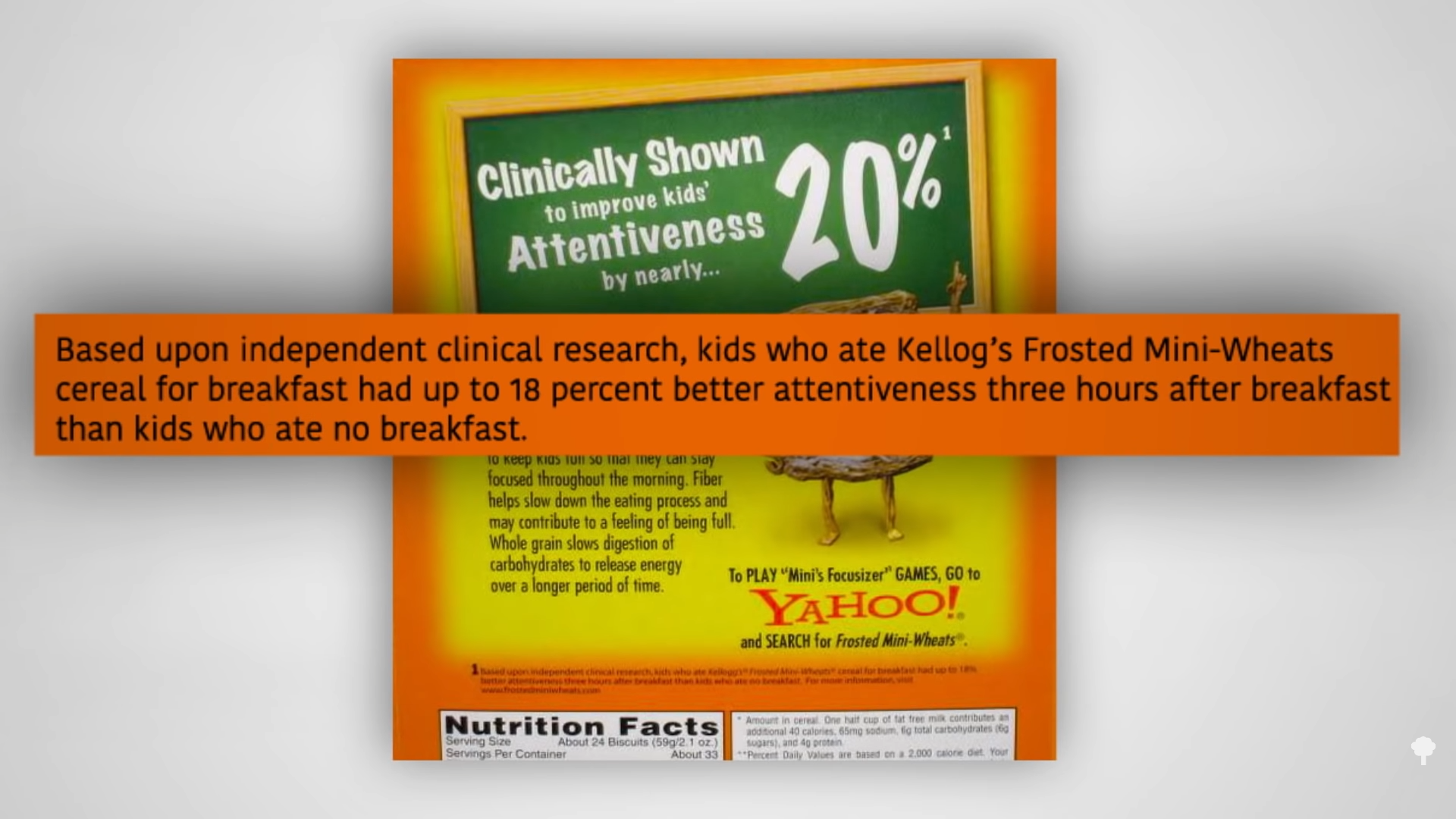
There was an interventional trial that showed that candy can improve ADHD symptoms, though. What’s the story with that? If you’re the Mars candy bar company and want to fund a study showing that candy bars help kids focus, what would you do? The “parents were sent a formal letter instructing them not to feed their child after 10 p.m. and to send them to school without breakfast,” then the children were given a candy bar or an aspartame beverage, basically nothing. And, what do you know? Feeding kids something rather than nothing “enhanced [their] ability to stay on task.” That reminds me of a Frosted Mini-Wheats ad that you can see at 5:08 in my video that boasted the cereal was “clinically shown to improve kids’ attentiveness by nearly 20 percent” with the really fine print explaining that this was compared to kids who ate no breakfast at all.

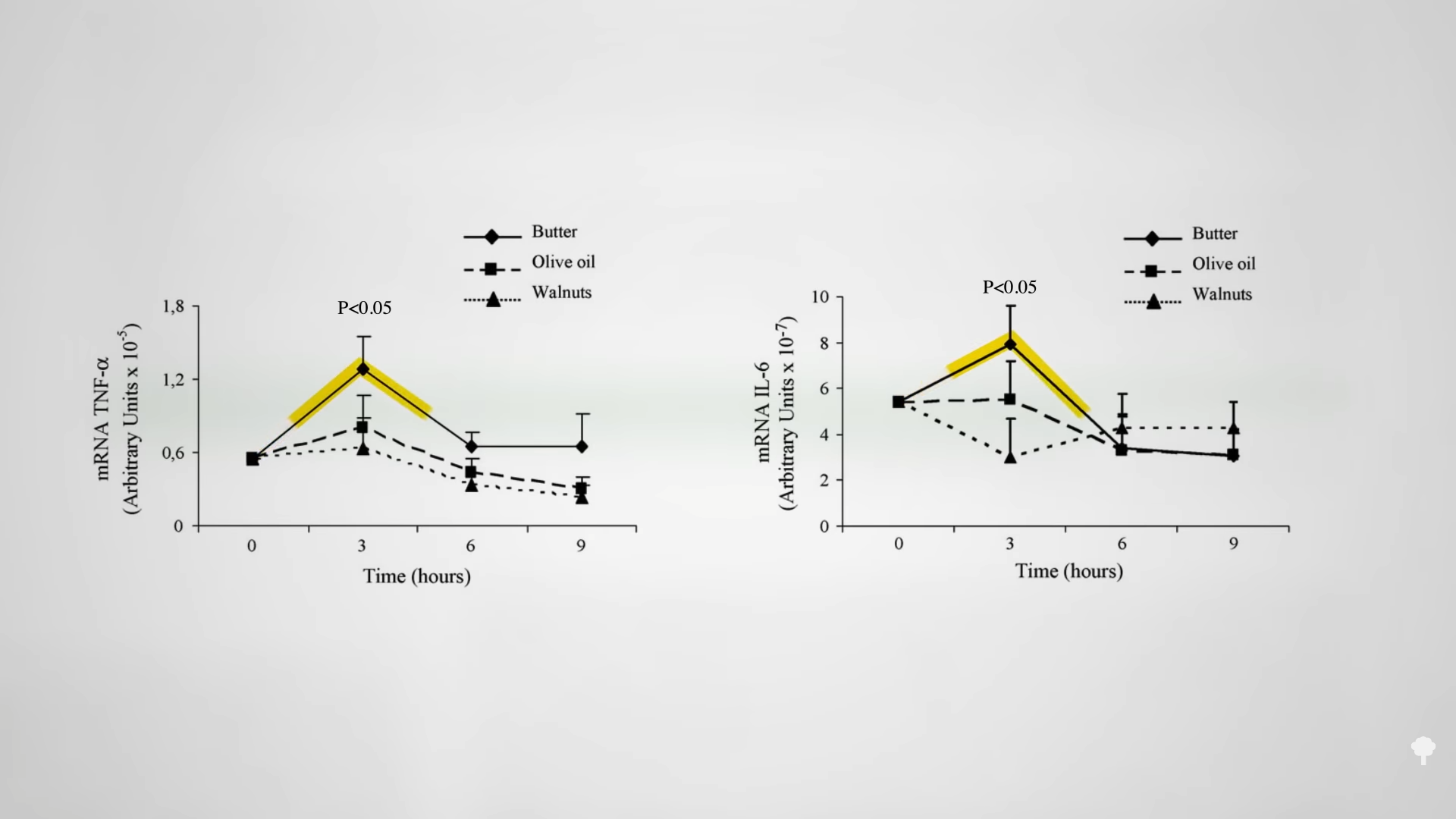
Butter has been put to the test, too. As you can see at 5:29 in my video, give people a single meal with butter, and you see a boost of inflammatory gene expression within just hours of consumption, significantly more than you’d see after they ate the same amount of fat in olive oil or walnuts. You can randomize people to foods made with all sorts of different fats, and butter has been shown to be the worst in terms of LDL cholesterol. Those were short-term studies, though. It’s not as if you can randomize people to eat or avoid butter for years—unless they’re patients in a mental hospital, and that was the case for one study where researchers showed that you can raise or lower their cholesterol and cut coronary events by about 40 percent just by switching diets. The study participants also cut down on meat and eggs, however, so it wasn’t only butter.

You can’t get a whole country to cut down on butter, or can you? A 75 percent drop in butter consumption in Finland helped create an 80 percent drop in heart disease mortality, which was driven largely by the countrywide drop in cholesterol levels, which was largely driven by the countrywide dietary changes to lower saturated fat intake, such as moving away from butter.

The bottom line is that researchers have put it to the test in randomized, controlled trials involving more than 50,000 people and found that the more you decrease saturated fat content, the more your cholesterol drops, and the greater the protection. “Lifestyle advice to all those at risk of cardiovascular disease…should continue to include permanent reduction of dietary saturated fat…” The American Heart Association got so fed up with industry attempts to confuse people that it released a Presidential Advisory in 2017 to make it as clear as possible. “The main sources of saturated fat to be decreased” include butter.

This is the second time I’ve address the obfuscation surrounding saturated fat, part of an industry-wide scheme. Check out The Saturated Fat Studies: Set Up to Fail and The Saturated Fat Studies: Buttering Up the Public.

from NutritionFacts.org https://ift.tt/537HYEO
via IFTTT

Open Faced Tuna Sandwich with Avocado

My favorite way to make a tuna sandwich is open-faced with a veggie-loaded tuna salad topped with avocado and sprouts. A quick and easy healthy lunch idea. Open Faced Tuna Sandwich with Avocado This is the BEST tuna sandwich, it’s so good I crave it often! It’s loaded with protein and veggies and it’s quick

from Skinnytaste https://ift.tt/5bGZAz9
via IFTTT

Is Laetrile (Amygdalin or Vitamin B17) an Effective Alternative Cure for Cancer?

The Mayo Clinic puts laetrile to the test to see if it is an effective cancer treatment.

My video Does Laetrile (Amygdalin or Vitamin B17) Work as an Alternative Cancer Cure? looks at amygdalin and whether it is “quackery or cure.”

A cyanide-containing compound found in apple seeds, amygdalin is ten times more concentrated in the seeds of peaches, apricots, and bitter almonds. It can be sold as a derivative called laetrile, which has been advertised with the misnomer “vitamin B17.” “Amygdalin gained high popularity among cancer patients in the 1970s” as an alternative treatment, but the reason researchers published a review of amygdalin in 2016 and why I’m doing videos about it is that it has “experienced a renaissance,” thanks to the internet.

Back in the 1970s, the FDA could only send out its Bulletin to a million doctors and other health professionals, warning them that laetrile is not only worthless, but dangerous. About ten thousand copies of the alert were posted in U.S. post offices, and The New York Times editorialized that we should be able to choose our own placebo. But laetrile was killing people. Finally, as the New England Journal of Medicine reported it, the “Supreme Court stops the nonsense” with Justice Thurgood Marshall writing the unanimous court opinion that terminally ill patients deserve the same FDA protections against unsafe drugs. At last, laetrile was banned on a federal level.

Rational argument failed to dissuade people, though, so the State stepped in, but that had the opposite effect. “Cancer victims and their families almost universally respond[ed] by accusing organized government and organized medicine of conspiracy.” At an FDA meeting, for example, a physician from M.D. Anderson Cancer Hospital rhetorically asked: “‘You surely cannot believe that the quarter of a million of American physicians are sitting on a cancer cure just so they can get rich?’ He was answered with a chorus of yeses from the audience, many of whom had been borne to the hearings on chartered buses.” Some laetrile advocates were getting rich, though, like the head of the “Committee for Freedom of Choice in Cancer Therapy.” More like committed to the freedom of pocketing millions a year in laetrile sales.

“Laetrile’s proponents consider it to be a ‘natural cancer cure’; whereas opponents consider it ‘the slickest, most sophisticated, and certainly the most remunerative [lucrative and profitable] cancer quack promotion in medical history.’” Which is it? You don’t know until you put it to the test.

“The National Cancer Institute, in response to widespread public interest, undertook a retrospective analysis of Laetrile treatment.” In other words, it sent out a letter to every physician in the country and tens of thousands of other health professionals, and contacted all of the pro-laetrile groups, basically saying, send us the best you got. Although at least 70,000 Americans are estimated to have used laetrile, only 93 cases were submitted for evaluation, and, of those, only six appeared to be legitimate, where taking laetrile was associated with at least some partial improvement.

Now, of course, the people sending in those reports may have gotten things wrong or falsified data, but, maybe those six actually did respond to the treatment. If that’s out of 70,000 treated, though, you’d think maybe that’d just be by chance. Regardless, the fact that so many people tried it should count for something. They may have all just been boondoggled, but maybe there’s something to it. Certainly, the fact that it didn’t seem to help with any of the laboratory animal cancers doesn’t mean it couldn’t work in people. The only way to know for sure is to put it to the test: “a tightly controlled clinical trial performed in competent and experienced hands.” The Mayo Clinic accepted the challenge.

One hundred seventy-eight cancer patients were treated with it and all of the patients died rapidly. “No substantive benefit was observed in terms of cure, improvement, or stabilization of cancer, improvement of symptoms related to cancer, or extension of life span.” There were only adverse effects of cyanide toxicity.

The conclusion? “Amygdalin (Laetrile) is a toxic drug that is not effective as a cancer treatment.”

The books have been closed on this for more than 30 years. “Laetrile doesn’t work.” It is unsafe and ineffective. Researchers “found no sound evidence that laetrile is effective as an anticancer agent.” So, the label “unproven” cancer remedy may be too generous at this point; “it is time to vehemently assert that laetrile cancer therapy has been ‘disproven.’”

What about eating apricot seeds directly? In case you missed my previous video, check out Do Apricot Seeds Work as an Alternative Cancer Cure?.

from NutritionFacts.org https://ift.tt/Knka4F2
via IFTTT

Design a site like this with WordPress.com
Get started