Boiling, steaming, microwaving, air frying, and sous-vide cooking are put to the test for nutrient retention.
I’ve made videos on how not to die from heart disease, how not to die from cancer, and how not to die from other deadly diseases like diabetes, but some of the most popular videos on NutritionFacts.org are on topics like the best way to cook sweet potatoes.
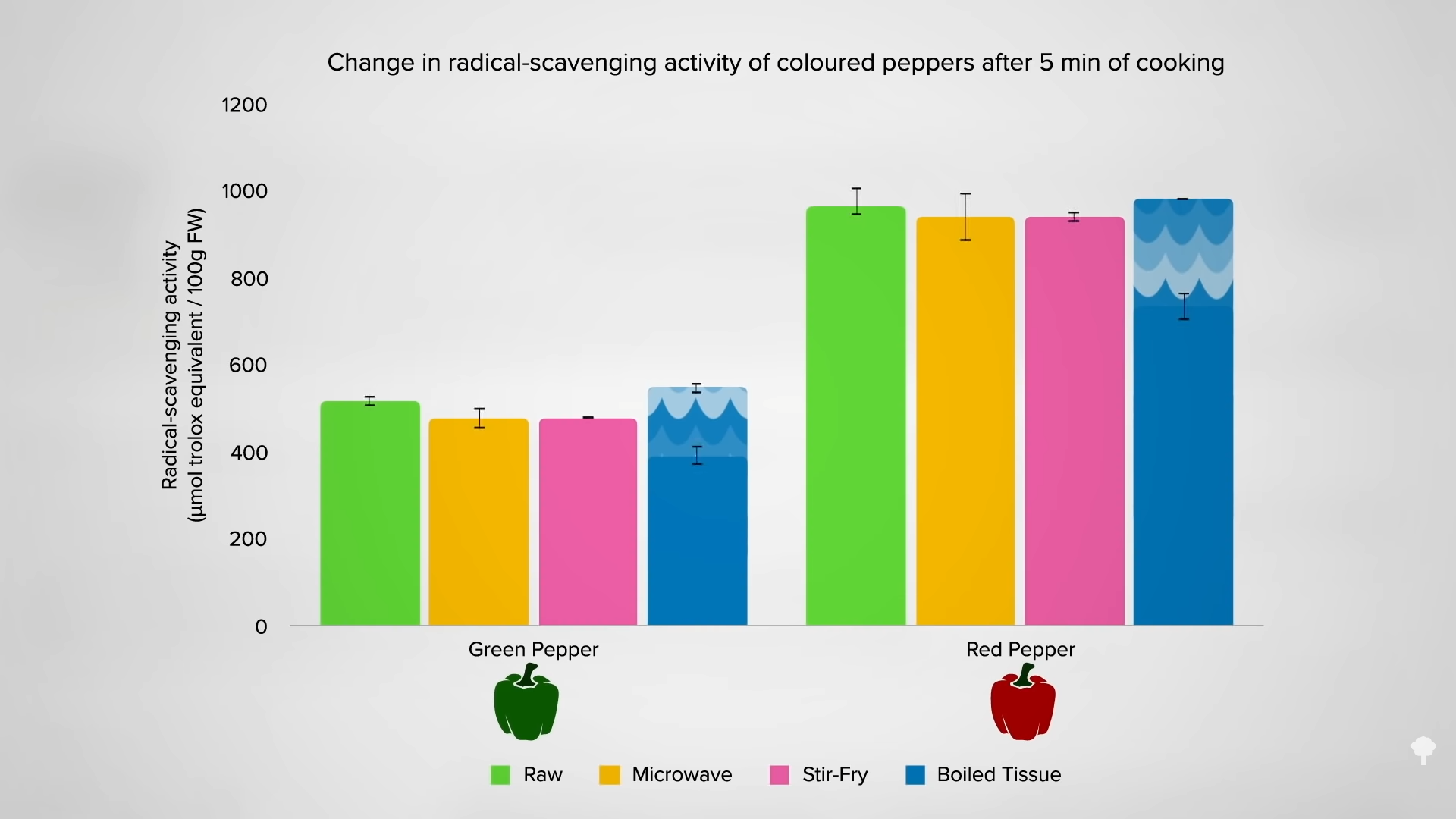
Okay, then! Well, what’s the best way to cook bell peppers? As you can see in the graph below and at 0:28 in my video Flashback Friday: Best Way to Cook Vegetables, you can see a chart illustrating the antioxidant power of raw green peppers and red peppers. Microwaving or stir-frying doesn’t seem to do much, though, with boiling, there’s a drop. If you then measure the antioxidant activity of the leftover boiling water, you’ll find that the antioxidants weren’t destroyed. They were just leached out into the cooking water. So, the researchers’ conclusion is that it’s “vital to consume the water used for boiling in addition to the peppers, as bioactive compounds will be present in the water.” But that’s not the take-away I get from this study. Whether or not you drink the cooking water, red peppers have nearly twice the antioxidant power of green peppers no matter what. So, while both peppers are Green-Light foods, ironically, the red peppers are even greener.
What about mushrooms? It’s probably best not to eat them raw, but what’s the best way to cook them? “Since cooking techniques clearly influence the nutritional attributes of mushrooms, the proper selection of treatments is a key factor to prevent/reduce nutritional losses. Microwaving and grilling were established as the best processes to maintain the nutritional profile of mushrooms.” According to researchers, a “significant decrease was detected in the antioxidant activity especially after boiling and frying, while grilled and microwaved mushrooms reached higher values of antioxidant activity.”
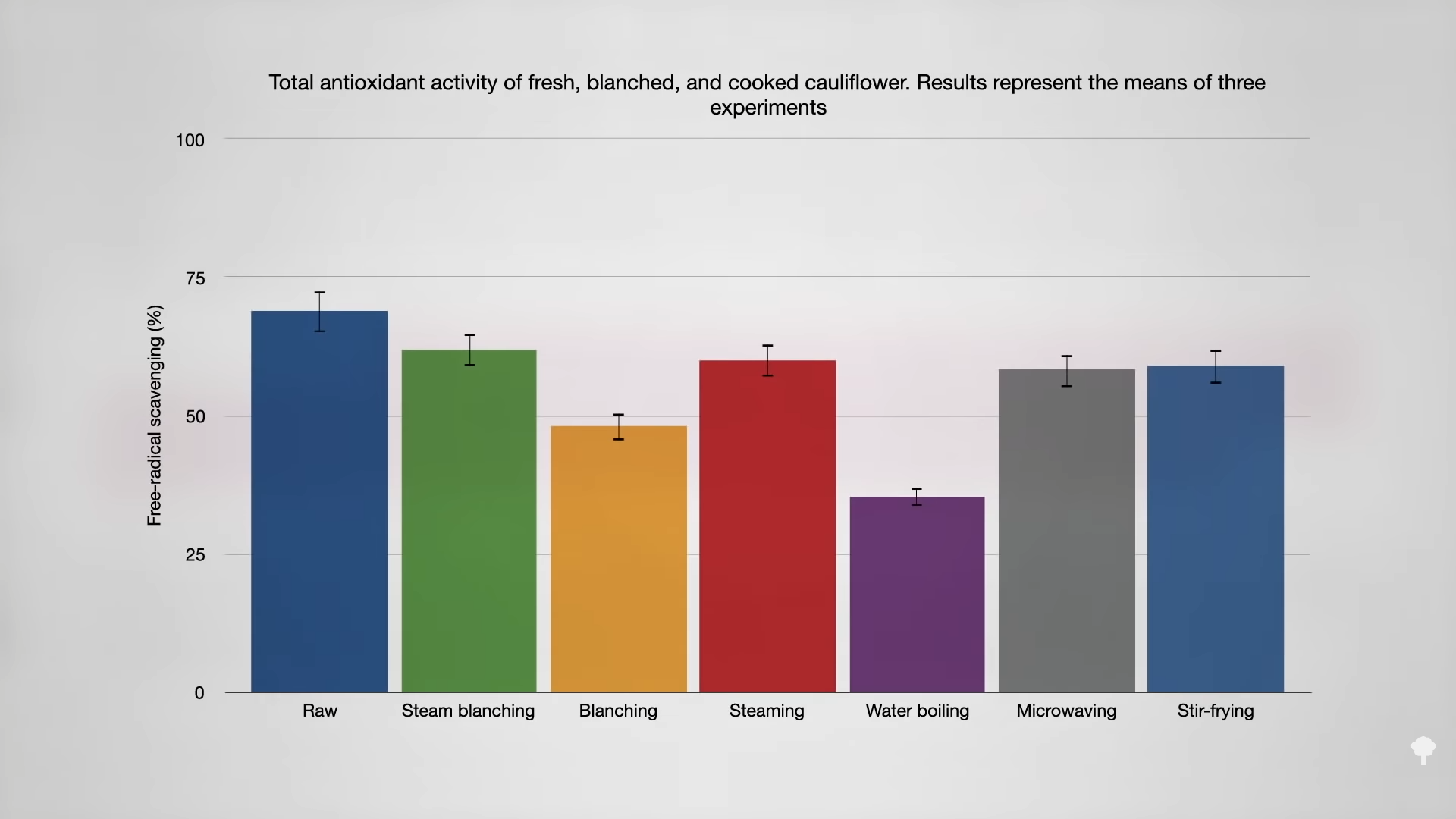
Boiling had a similar negative impact on the antioxidant power of cauliflower, which serves as a kind of rough proxy for how many phytonutrients of potential benefit we might be losing, but, as you can see in the graph below and at 1:56 in my video, blanching was better. Cauliflower was dunked into boiling water for three minutes and then run under cold water to stop it from cooking. I had never heard of steam blanching, but that has the same idea. Steam the cauliflower for three minutes and then cool it off, which appears to be better since you’re not immersing it in water. Note, though, that there isn’t much difference between steaming for six minutes and steaming for three minutes before running the veg under cold water. It’s too bad the researchers didn’t look at roasting. I think that’s how you can really make cauliflower taste really good. In fact, I have two recipes for roasted cauliflower in my How Not to Die Cookbook. (All proceeds from my book sales go to charity, of course.)
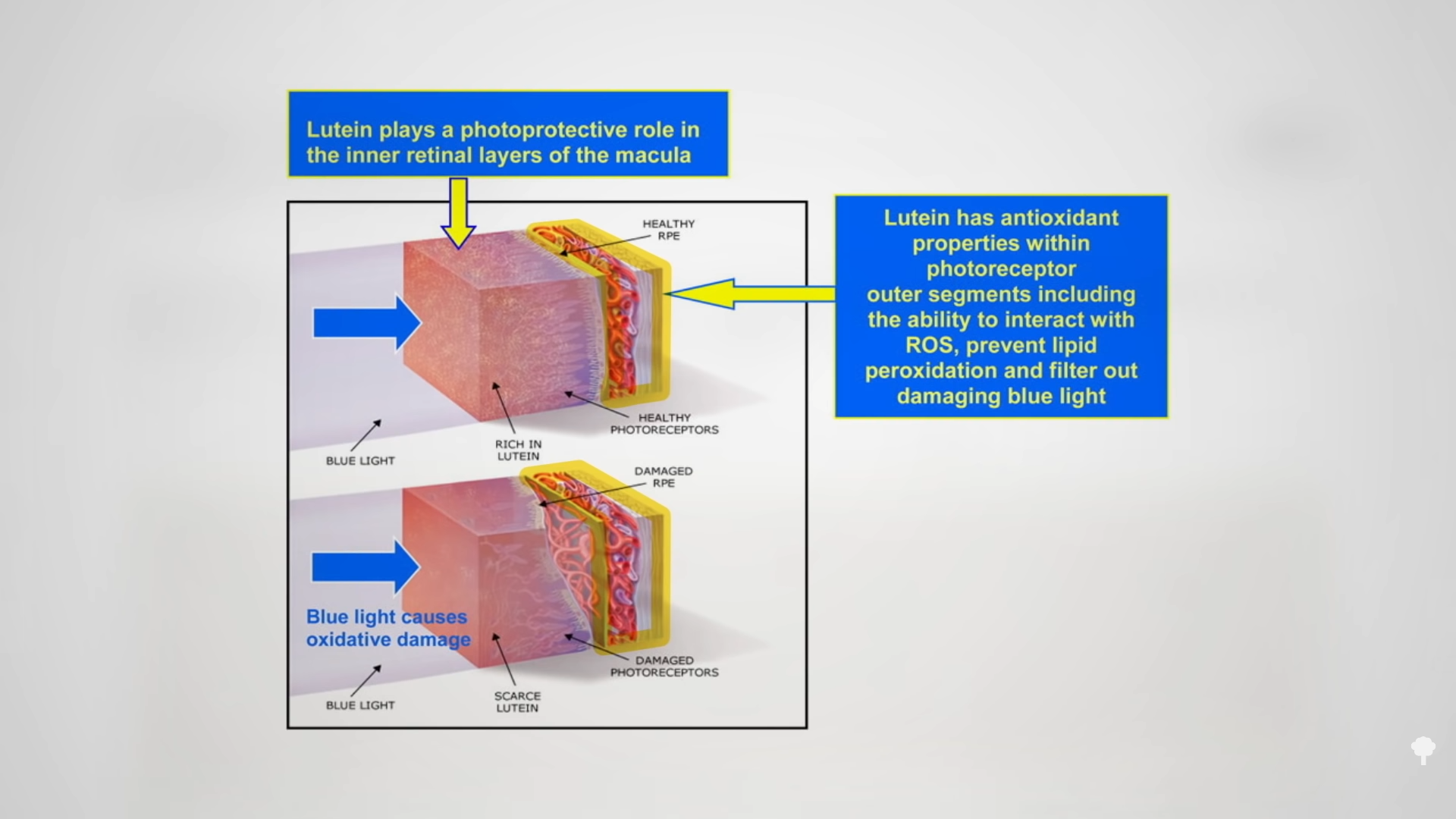
There are certain antioxidants we’re especially interested in, like lutein, which is the eyesight and brain-protecting green vegetable compound. As you can see below and at 2:38 in my video, you can see an image of the back of the eyeball. Lutein protects those sensitive light–sensing nerves in the eye by blocking the high–energy, blue light rays, which helps us see better and may also help us think better.
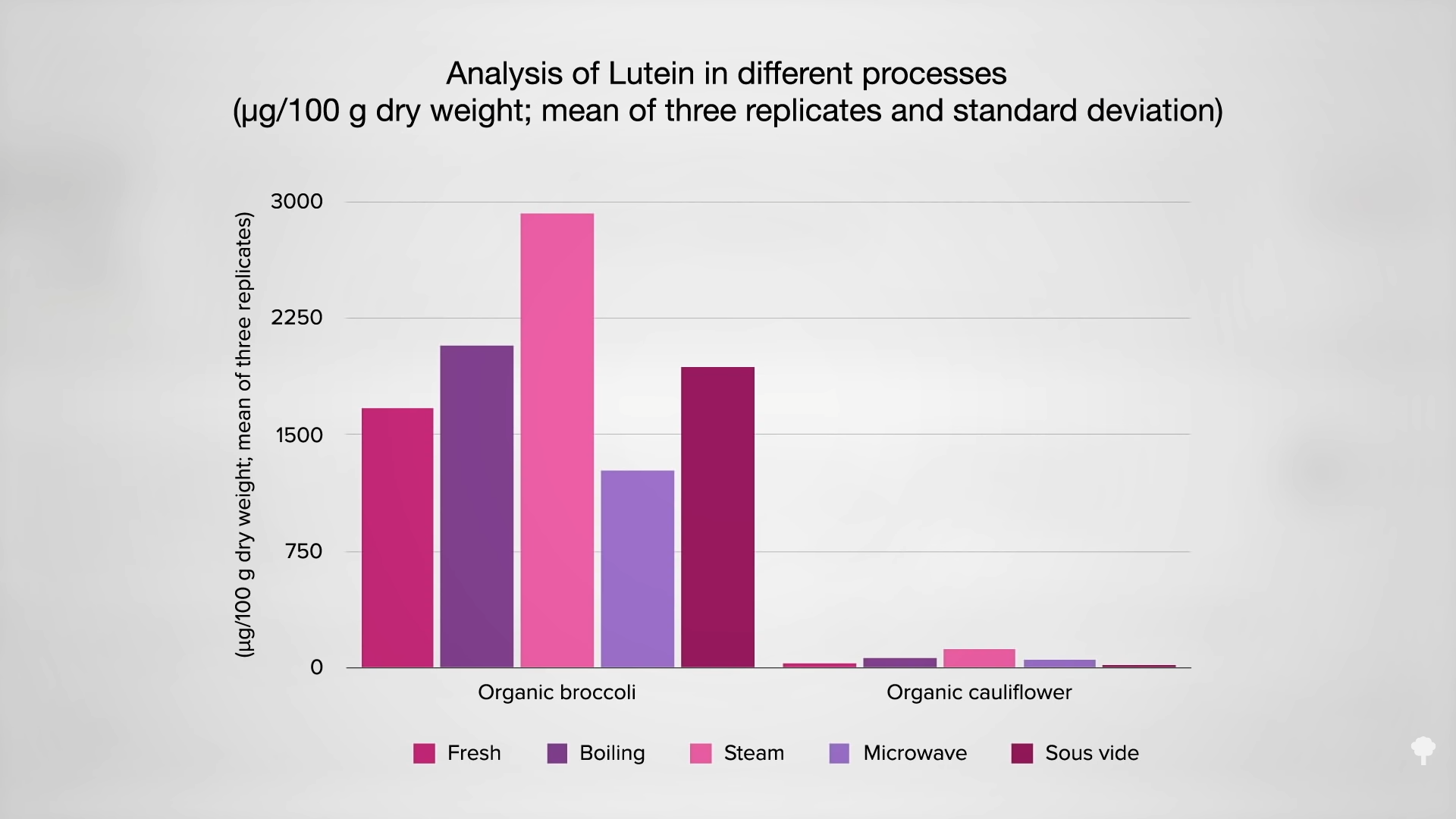
Researchers compared the effects of four different cooking methods on lutein concentrations. If you take a look at the chart below and at 2:51 in my video, the first thing you’ll notice is that broccoli has about 50 times more lutein than cauliflower. This isn’t a surprise since lutein is a plant pigment, and cauliflower is too white. 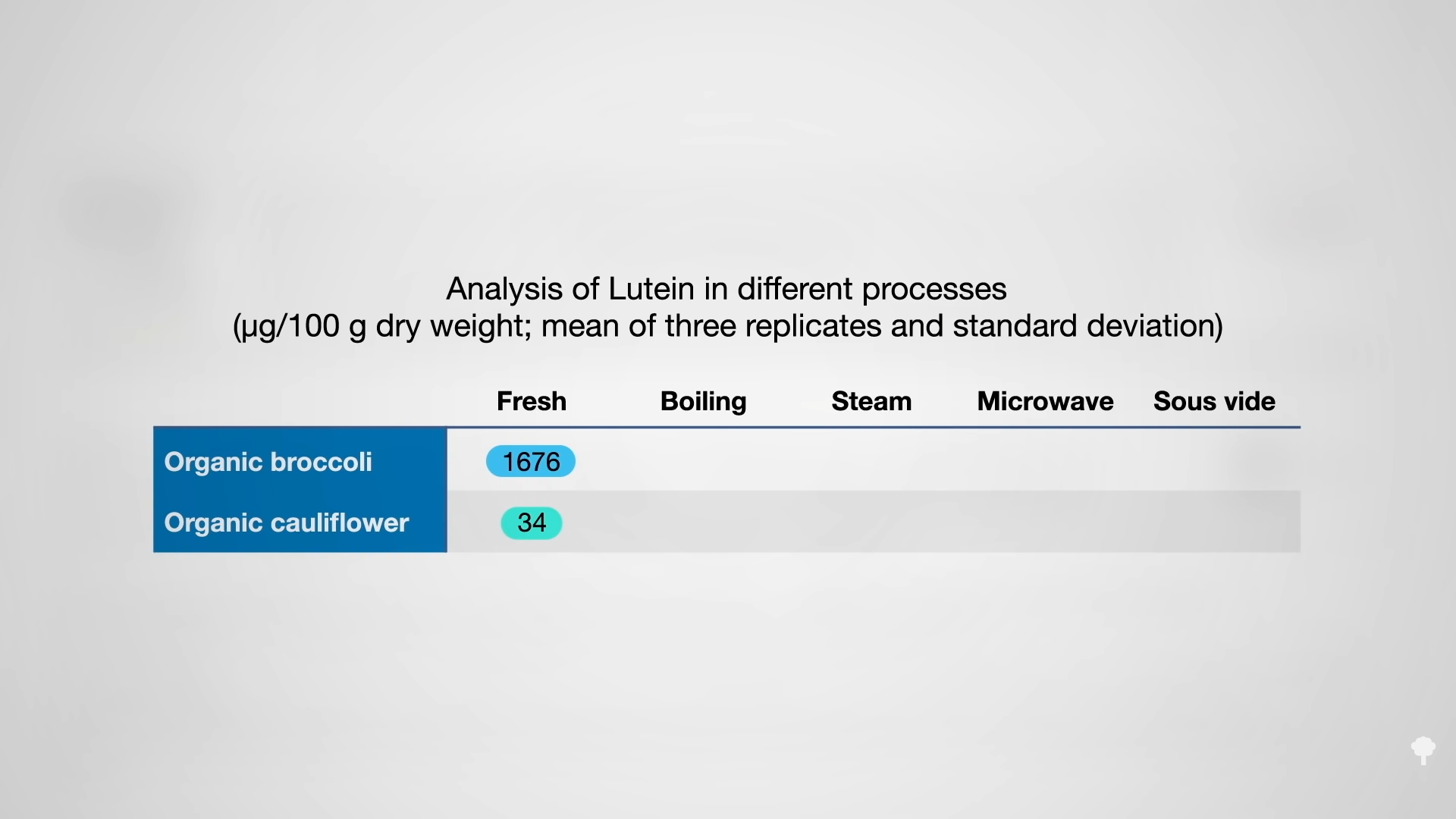
Then the researchers compared boiling, steaming, microwaving, and sous–vide cooking, a fancy term for boiling in a plastic bag. What did they find? Boiling actually made lutein levels go up! How is that possible? Heat “disrupts the cell walls and subcellular compartments that enhance the release of antioxidant compounds.” Sous vide was similar. Microwaving was detrimental, at least for broccoli, and steaming was the superstar, nearly doubling lutein levels, as you can see below and at 3:30 in my video.
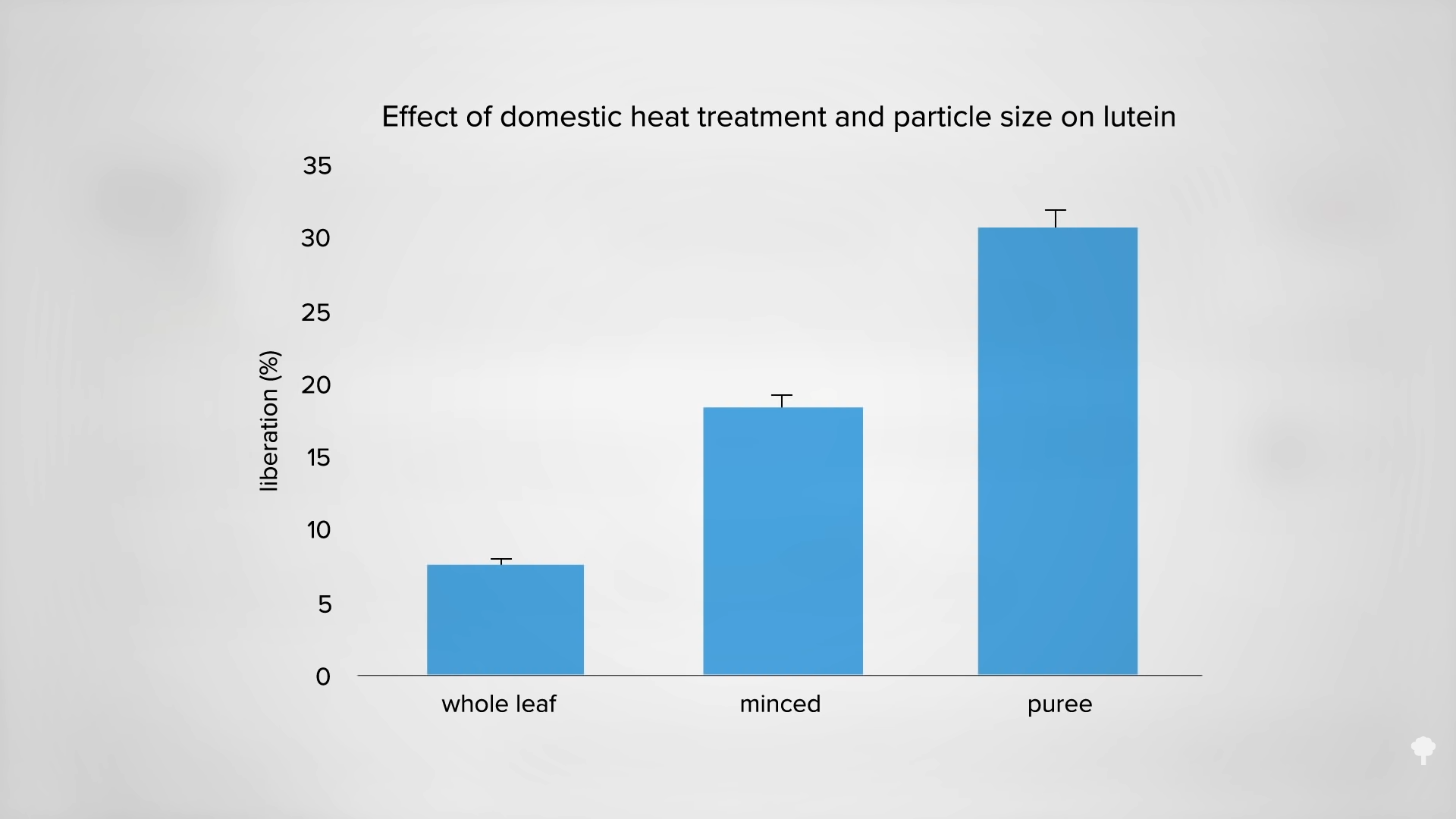
Heat isn’t the only way to liberate lutein from greens. As you can see in the graph below and at 3:43 in my video, if you finely chop spinach, you can double the amount of lutein released during digestion in this experimental model. Make a green smoothie, pesto, or a pureed spinach dish, and you may triple the bioavailability. You have to watch the heat, though. Steaming or boiling is one thing, but cooking at super high heat, like stir-frying, can reduce lutein levels to nearly nothing.
When researchers looked at different cooking methods on the anthocyanin pigments in blue- or purple-flesh potatoes, they found that frying and even air-frying are both bad. Those potatoes just seem sensitive to extremely high heat.
In fact, these special antioxidant plant pigments appear to be sensitive to really high temperatures, so we should try to avoid frying, especially deep frying. That was one of the conclusions of an expert panel on cooking methods: Avoid deep frying foods. Not only because of the nutrient losses, but also all of the added oil, not to mention “the production of toxic compounds” at those temperatures. So, that continues to be a challenge to the food industry. What’s its solution? Forget deep fat frying—let’s try frying in pure molten sugar. It’s like the SnackWell’s cookie phenomenon taken to its logical conclusion. Oh, you want low-fat? We’ll fry in sugar.
Sometimes, we want to leach stuff out of food. See How to Cook Rice to Lower Arsenic Levels.
The lutein video I showed was Prevent Glaucoma and See 27 Miles Farther.
Check out Flashback Friday: Are Microwaves Safe? and The Effects of Radiation Leaking from Microwave Ovens.
Interested in my cookbook? Learn more about it at The How Not to Die Cookbook.
from NutritionFacts.org https://ift.tt/NpuyHjr
via IFTTT
 MyWellCare