Is Cereal or Oatmeal Better for Breakfast?

Beyond nutritional content or composition, the structure of food has a remarkable impact.

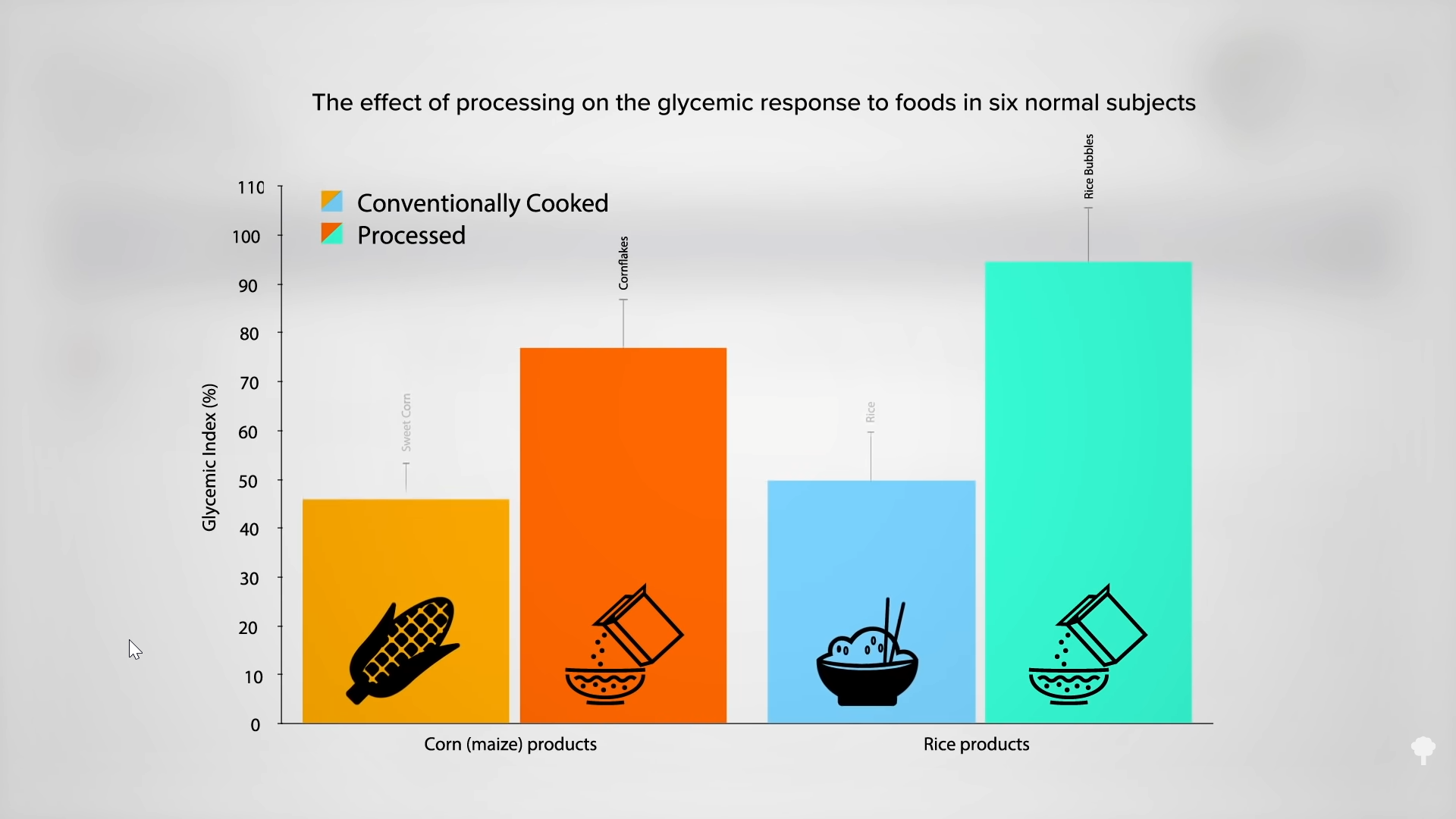
Food structure, not only nutrient composition, may be “critical for optimal health.” As you can see in the graph below and at 0:12 in my video Flashback Friday: Which Is a Better Breakfast: Cereal or Oatmeal?, corn flakes and rice products cause a much greater spike in blood sugars than rice or corn on the cob, but it’s not just because of the added sugar.
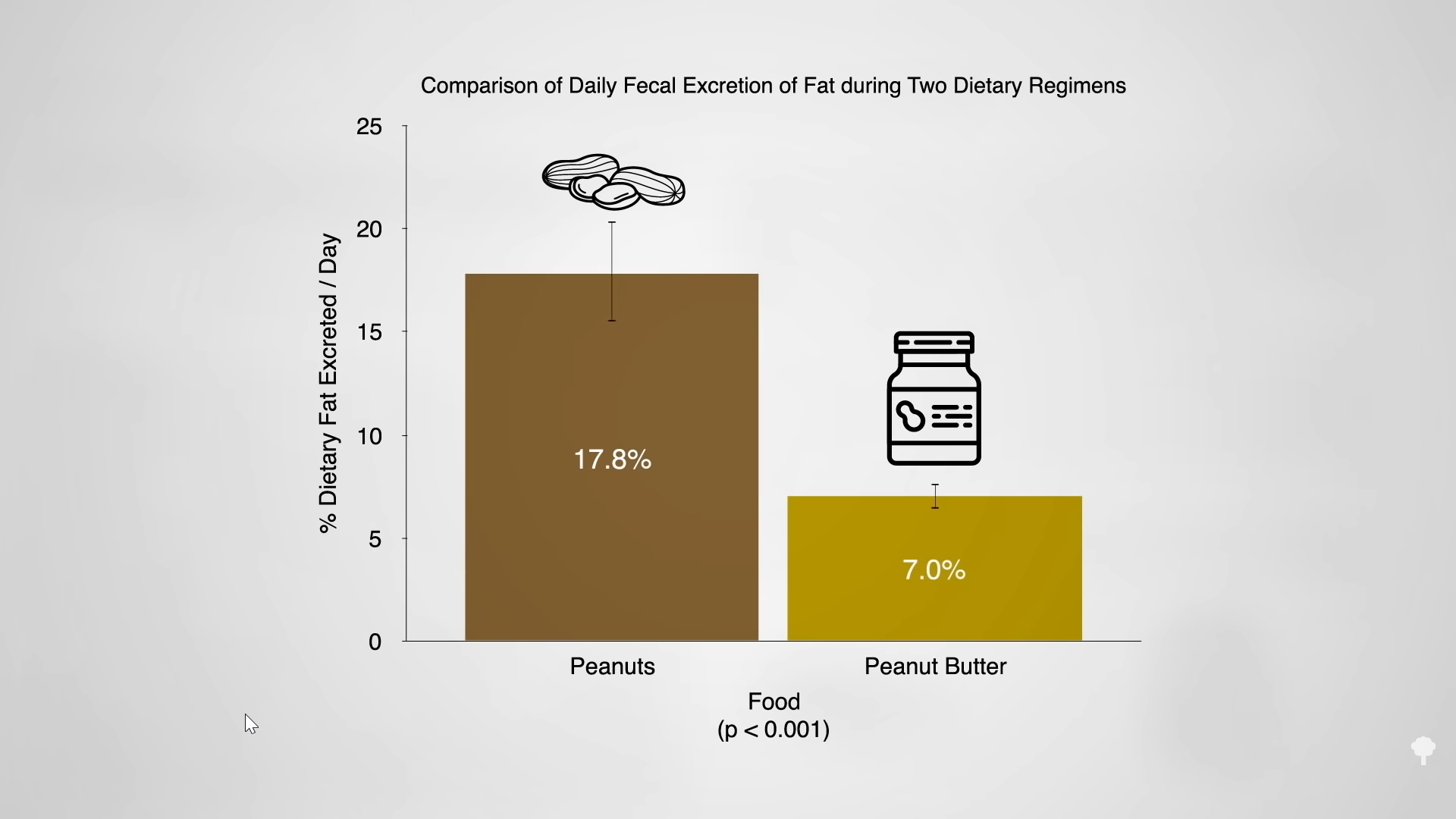
“Even with identical chemistry [the same ingredients], food structure can make a major difference to biological and health outcome.” For example, if you compare the absorption of fat from peanuts versus the exact same number of peanuts ground into peanut butter, you flush more than twice the amount of fat down the toilet when you eat the peanuts themselves. Why? Because no matter how well you chew, small bits of peanuts trap some of that oil that makes it down to your colon, as you can see in the graph below and at 0:35 in my video, and the physical form of food not only alters fat absorption, but it alters carbohydrate absorption, as well.
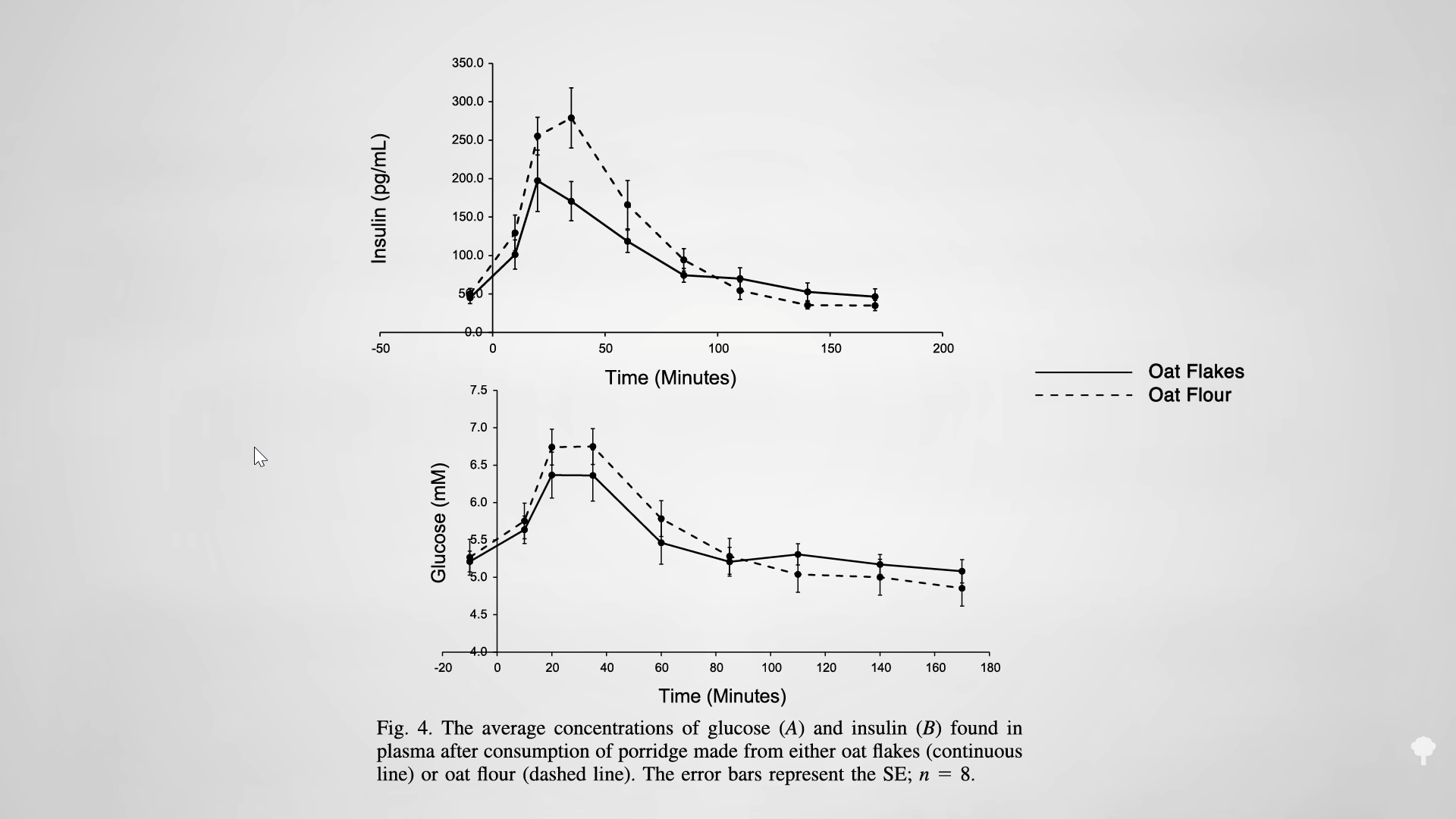
For example, rolled oats have a significantly lower glycemic index than instant oatmeal, which is just oats in thinner flakes, and oat flakes cause lower blood sugar and insulin spikes than powdered oats. They all have the same single ingredient—oats—but in different forms, and they can have different effects, as you can see in the graph below and at 1:02 in my video.
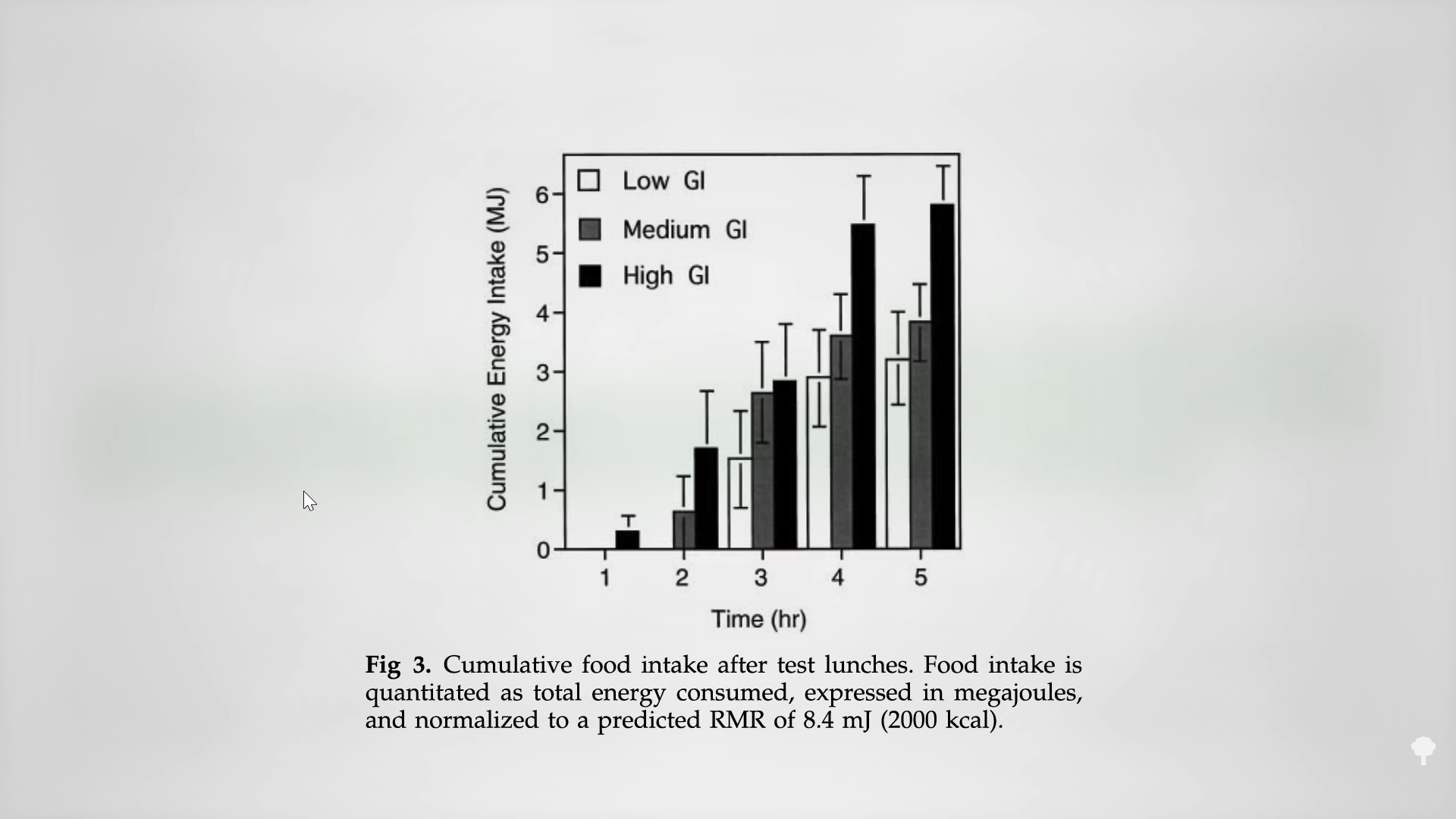
Why do we care? The overly rapid absorption of carbohydrates after eating a high-glycemic index meal can trigger “a sequence of hormonal and metabolic changes” that may promote excessive eating. Researchers fed a dozen obese teen boys different meals, each with the same number of calories, and followed them for the next five hours to measure their subsequent food intake. Those who got instant oatmeal went on to eat 53 percent more than after eating the same number of calories of steel-cut oatmeal. The instant oatmeal group was snacking within an hour after the meal and went on to accumulate significantly more calories throughout the rest of the day, as you can see in the graph below and at 1:41 in my video. They ate the same food but in a different form, with different effects.
Instant oatmeal isn’t as bad as some breakfast cereals, though, that can get up into the 80s or 90s on the glycemic index—even cereal with zero sugar like shredded wheat. The new industrial methods used to create breakfast cereals, such as extrusion cooking and explosive puffing, accelerate starch digestion and absorption, causing an exaggerated blood sugar response, whether they have added sugar or not. Shredded wheat has the same ingredients as spaghetti—just wheat—but has twice the glycemic index.

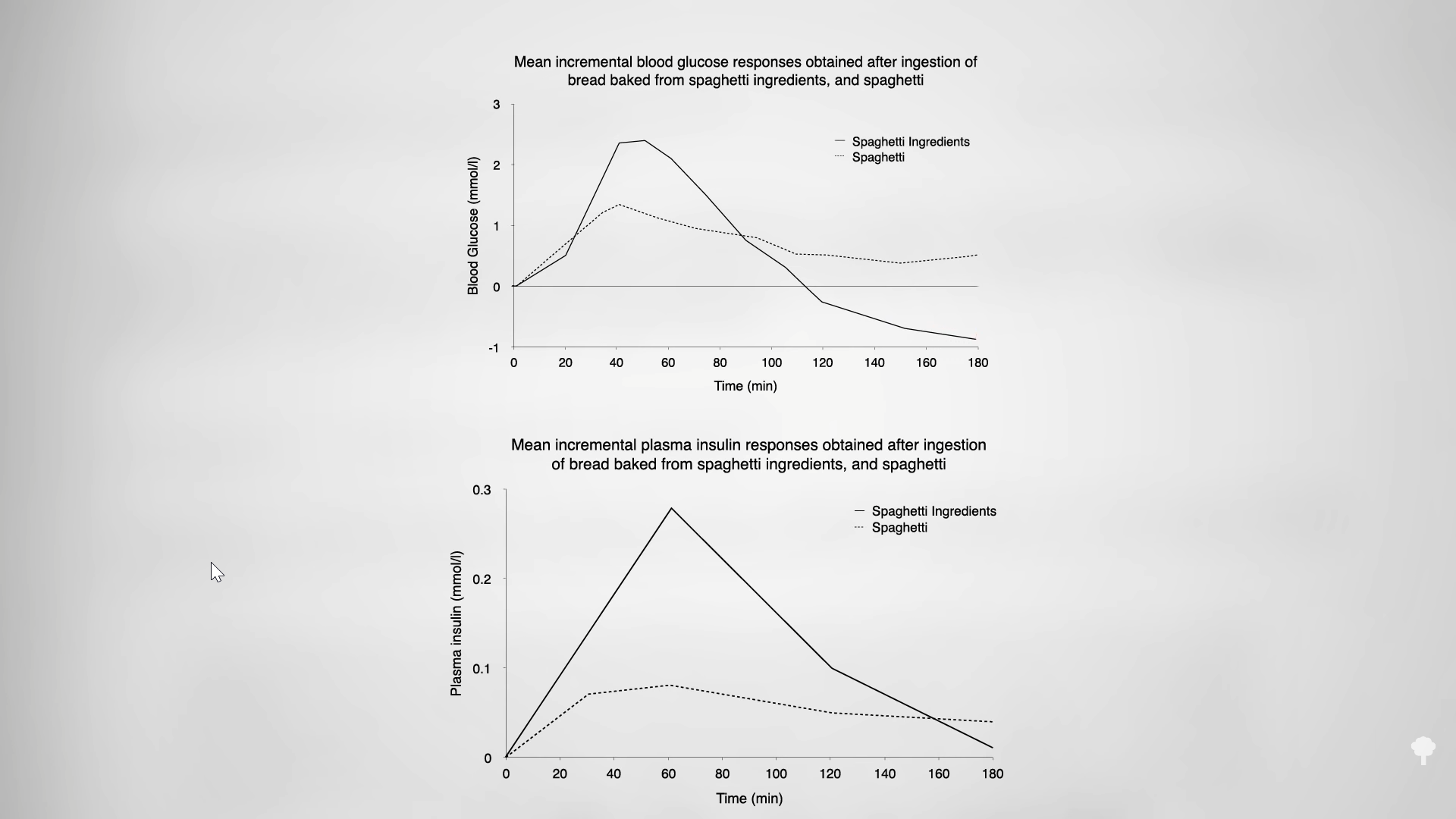
As you can see in the graph below and at 2:23 in my video, when you eat spaghetti, you get a gentle rise in blood sugars. However, if you eat the exact same ingredients made into bread form, all of the little bubbles in the bread allow your body to break it down more quickly, so you get a big spike in blood sugars, which causes your body to overreact with an exaggerated insulin spike, and that ends up driving down our blood sugars below fasting levels, which can trigger hunger. Experimentally, infusing someone with insulin so their blood sugars dip can cause their hunger to spike—in particular, their cravings for high-calorie foods can spike. In short, lower glycemic index foods may help one feel fuller for longer than equivalent higher glycemic index foods.
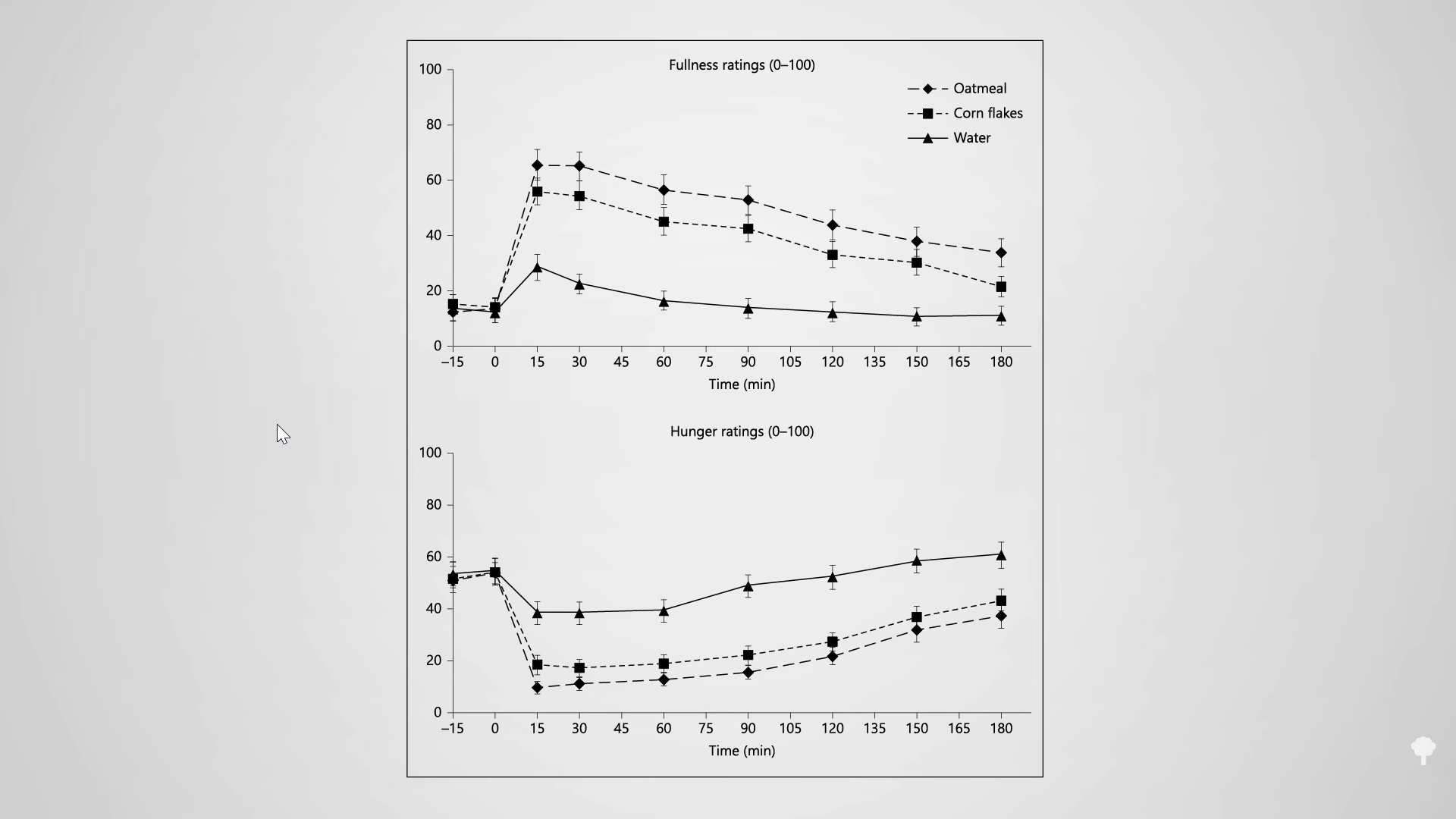
Researchers randomized individuals into one of three breakfast conditions—oatmeal made from quick oats, the same number of calories of corn flakes, or just plain water—and then measured how much they ate for lunch three hours later. As you can see in the graph below and at 3:17 in my video, not only did those who ate the oatmeal feel significantly fuller and less hungry, they also went on to eat significantly less lunch. After eating the oatmeal for breakfast, overweight participants ate less than half as many calories at lunch—hundreds and hundreds of fewer calories. In fact, the breakfast cereal was so unsatiating that the corn flakes group ate as much as the breakfast-skipping water-only group. It’s as if the cereal group hadn’t eaten breakfast at all.
If you feed people Honey Nut Cheerios, they feel significantly less full, less satisfied, and hungrier hours later than those who had been fed the same number of calories of oatmeal. Though both breakfasts were oat-based, the higher glycemic index, reduced intact starch, and reduced intact fiber in the Cheerios seemed to have all conspired to diminish appetite control. The trial was funded by the Pepsi Corporation, makers of Quaker oatmeal, pitted against Cheerios from rival General Mills. An exposé on industry-funded study manipulation later revealed that the study originally included another arm, Quaker Oatmeal Squares. “I am sorry that the oat squares did not perform as well as hoped,” the researcher told Pepsi, which decided to publish only the results about its oatmeal.

In case you missed my previous video on cereal, check out Flashback Friday: The Worst Food for Tooth Decay. It’s wild how the same product can have such different effects on the body based on how it was processed. Whole grains are better than refined ones, but the wholiest of all? Intact grains. Instant oats are better than powdered oats, rolled oats are better than instant, steel-cut oats are better than rolled, and intact oat groats are the best!

Check out this cooking video of my Morning Grain Bowl from the How Not to Die Cookbook.

from NutritionFacts.org https://ift.tt/2SL87vM
via IFTTT
Chicken Burger

This moist and juicy ground chicken burgers are perfect on a bun with all the fixins, in a lettuce wrap for a carb-free meal, or in a bowl with grains and veggies for meal prep! Best Chicken Burger Recipe If you’re in the mood for a burger but trying to eat less red meat, you

from Skinnytaste https://ift.tt/CLAUegr
via IFTTT

A Test for Orthorexia Nervosa?

How do you score on the orthorexia “diagnostic” test? 

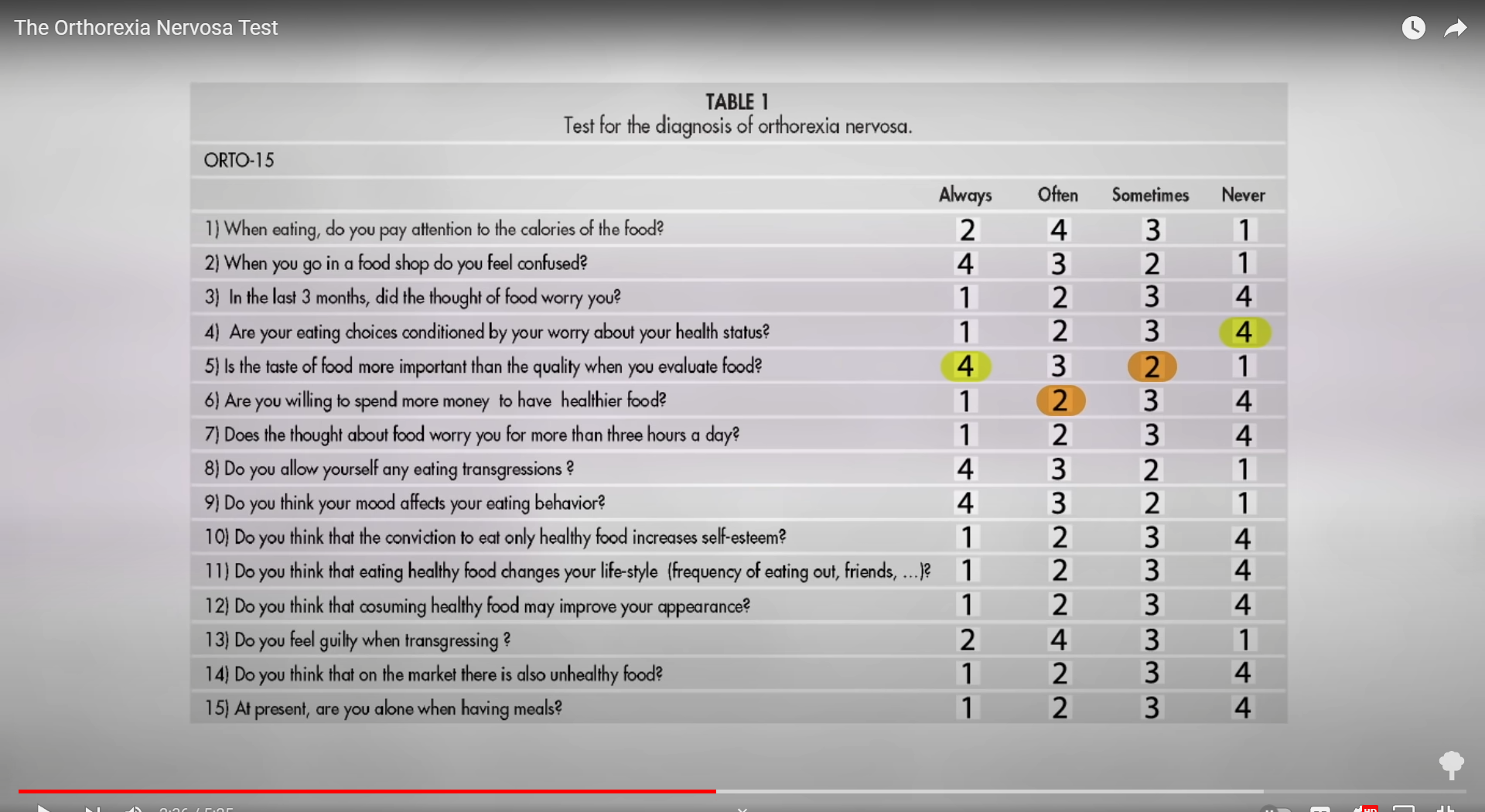
“Orthorexia nervosa is defined as an unhealthy obsession with eating healthy food.” Want to know if you’re orthorexic? The ORTO-15 is the most widely accepted assessment tool used to screen for orthorexic tendencies….” A score of 40 or lower was considered the best threshold for an orthorexia diagnosis. There are 15 questions, scored from one to four, so you can end up with a score of 15 to 60, with a score under 40 denoting orthorexia. So, getting ones and twos and even an occasional three on your answers would mean you may have orthorexia, so lower scores are worse. 

You can take the test yourself. I present the questions in my video The Orthorexia Nervosa Test from 0:44 and below. They start out: When eating, do you pay attention to the calories of the food?” Your choices are always, often, sometimes, or never. According to the test, the healthiest answer is “often,” with the orthorexic answers being “always” or “never.” I can see how always obsessively worrying about calories could hint at a problem, but if you’re eating healthfully enough with a diet centered around whole plant foods, you don’t need to worry about calorie counts or portion control. The healthiest foods, such as fruits and vegetables, don’t even have nutrition labels, but, apparently, if you’re never googling the calories of every apple you eat, you may have a problem. 

Next question: “When you go in a food shop do you feel confused?” Supposedly, the healthiest answer is “always.” You should always be confused, and if you’re not at least often confused, you may end up needing to be drugged. 

Question 3: “In the last 3 months, did the thought of food worry you?” Supposedly, the healthiest way to answer is “never.” You never once worried about what you’re putting into your body. According to the test, it would be healthier if your eating choices were conditioned” worries about your health. Additionally, taste should always” be more important than the quality of your food. According to the test, if you think the quality of food is even sometimes” more important than taste, you may have a mental illness. What if you’re “often” willing to spend more money to have healthier food? Crazy! Are you so delusional that you think “consuming healthy food might improve your appearance?” My favorite, though, has to be question 14: “Do you think that on the market there is also unhealthy food?” You’ve got to be kidding! Finally, question 15 penalizes people who live alone: “At present, are you alone when having meals?” 

If you scored under 40, you are not alone. Using this test, about 50 percent of registered dietitians in the United States are supposedly suffering from a mental illness. The prevalence of orthorexia nervosa “presents as being impossibly high.” Anorexia and bulimia are estimated to be no higher than about 2 percent, so it’s a bit “counterintuitive to believe that a phenomenon of restricting eating that is not well understood” has rates as high as nearly 90 percent. 

It’s no wonder The Diagnostic and Statistical Manual of Mental Disorders (DSM-5), the psychiatry profession’s official diagnostic manual, does not include orthorexia as a psychiatric diagnosis. And psychiatrists love turning things into mental illnesses. The latest edition turned kindergarten temper tantrums into a disorder, and drinking too much coffee or even having bad PMS can be a mental illness. But they’re still not going to go there with orthorexia. “Researchers,” for example, “had a tendency to pick and choose which questions of the ORTO-15 they used and they determined their own cut-off scores for diagnosis,” resulting in an “alarmingly erratic use of the ORTO-15 tool” that was designed to measure orthorexia. The bottom line is that the ORTO-15 test is likely unable to distinguish between healthy eating and pathologically healtful eating”—whatever the latter may be. 

More recently, new criteria have been introduced. Given the “impossibly high prevalence rates,” new emphasis is placed on health problems because of diet, such as “malnutrition, severe weight loss or other medical complications from restricted diet” that would, by definition, make it an unhealthy diet. Take, for instance, the tragic case in which someone had tried to live off of a few spoonsful of rice and vegetables and ended up bed-ridden. If that is what you want to call orthorexia, fine, but one wonders if that case might of have been clouded by some actual psychiatric diagnosis like obsessive-compulsive disorder (OCD). 

If you add in those adverse health criteria, then the prevalence of orthorexia drops to less than half of 1 percent, which seems a little more reasonable. Interestingly, those eating vegan diets had the least pathological scores in the sample. Though this may reflect that they’re just being less serious about healthy eating, reaching for the vegan donut rather than the lentil soup. 

from NutritionFacts.org https://ift.tt/lIXe36L
via IFTTT

20 Must-Haves Kitchen Tools for Healthy Eating

When it comes to healthy cooking, the first step is to find delicious recipes that will make you excited to spend time in the kitchen without depriving you of any flavor. I also find that the best kitchen tools for healthy eating make the cooking process more enjoyable and efficient. That’s why I’m bringing you

from Skinnytaste https://ift.tt/XblOeEB
via IFTTT

Grilled Chicken Sandwich

My favorite Grilled Chicken Sandwich, made with tender, pickle-brined grilled chicken breast with a zesty slaw and spicy mayo – so good!! Grilled Chicken Sandwich Grilled chicken breast can be boring, but if you marinate it and add other flavors and textures, you’ll have a recipe for success. This combination of pickle-brined chicken breast, zesty slaw,

from Skinnytaste https://ift.tt/R5yUhP2
via IFTTT

Grilled Pineapple

This quick and easy Grilled Pineapple with honey, lime juice, and cinnamon is the perfect dessert for summer dinners or backyard parties! Grilled Pineapple Pineapple is delicious, but if you want something quick and simple for dessert this summer, try grilling it. This healthy Grilled Pineapple is made with just 5 ingredients! An excellent treat and also

from Skinnytaste https://ift.tt/F9BYKt5
via IFTTT

Free 7 Day Healthy Meal Plan (June 26-July 2)

A free 7-day, flexible weight loss meal plan including breakfast, lunch and dinner ideas and a shopping list. All recipes include macros and Weight Watchers points. 7 Day Healthy Meal Plan (June 26-July 2) So summer has officially started and I for one couldn’t be happier! Sunny days, warm breezy evenings and everything zucchini! If you are a fan like me, try my Easy

from Skinnytaste https://ift.tt/8jmTQhg
via IFTTT

The Symptoms of Orthorexia Nervosa

Orthorexia nervosa is “an unrecognized psychological eating disorder in which the person becomes obsessed with eating pure, healthy and right kinds of foods to improve health.” Whereas individuals with recognized eating disorders like anorexia are concerned with the quantity of food, orthorexics care about the quality of their food. Many researchers have raised questions about the validity” of orthorexia as an entity, but I always try to give the benefit of the doubt. A medical case report was published on orthorexia in a critical care journal about “eating disorder emergencies.” The article discussed cases of bona fide eating disorders, like a woman with anorexia collapsing from self-induced vomiting and laxative use after years of throat and rectal bleeding—indeed, a tragic eating disorder emergency. But what about  the orthorexic case? 

A 53-year-old man who had had a triple bypass two years prior went in for a check-up. His physician recommended he see a dietitian since his BMI was down to 18.5 or so, which is right on the cut-off for being underweight. Evidently, he had been eating so healthfully that he had lost a significant amount of weight. He stated that “since his diagnosis of coronary heart disease and high cholesterol, he only eats ‘natural and organic foods.’” Therefore, the author concluded, he “probably has orthorexia nervosa,” a psychiatric illness. He clearly is preoccupied with food and judges others based on their food choices,” when, in fact, he very well may have been saving his own life. To me, the most outrageous thing this guy did was get a triple bypass. I mean imagine lying on a psychiatrist’s couch and saying: I know I could switch to bean burritos, but I’d rather pay someone to slice open my chest with a knife, maybe saw my breastbone in half, and put me at risk for stroking out instead of dealing with the underlying cause. What do you think, doc? 

Then, we learn that some orthorexics become evangelical as they share their feelings of disgust or disappointment towards their family, friends, and even children for their normal food choices.” I mean, it’s bad enough they care about their own health, but caring about their family and friends or even their children? Off to the institution you go! 

What we eat is the number one cause of death in the United States, killing hundreds of thousands more Americans every year than cigarettes, and it’s also the number one cause of disability. But, if you’re disappointed your kids are eating multi-colored marshmallows for breakfast, you may have a mental illness? Absurd.

If you recognize these so-called warning signs, what should you do? In my video Orthorexia Nervosa Symptoms, I talk about an article that suggests you should confront the person. I know it’s not easy, but if you see someone obsessively trying to avoid unhealthy foods—and, even worse, trying to get others to do the same—“the most important thing to do is to let them know you’ve noticed.” Confront them. The “possibility of helping them save their own life or get the help they may need far outweighs uncomfortable emotions.” The irony, of course, is that they are trying to save their own life and maybe yours. Imagine if you were able to talk Mr. Triple Bypass out of his healthy eating obsession. You’d probably kill him. 

To his credit, even Steven Bratman, the person who coined the term orthorexia has backed off, saying that he “did not intend to propose a new eating disorder.” As an alternative medicine practitioner, he just wanted his patients to relax the dietary corset and live a little.” Where did people even get this idea that he was trying to “coin” the name for a novel eating disorder? If you go back to his original article, he just said he has “coined the name ‘orthorexia nervosa’” for a novel eating disorder—an eating disorder he saved himself from. “I was eventually saved from the doom of eternal health food addiction” with the help of “tacos, pizza, and a milkshake.” 

One of the directors of the Yale Center for Eating Disorders, Kelly Brownell, expressed his skepticism: “We’ve never had anybody come to our clinic with [orthorexia], and I’ve been working in this field for at least 20 years.” 

“Without research to back his theory, Bratman is simply another guy trying to make a buck off the health-conscious public, Brownell says. ‘They invent some new term, a new diet, a solution to a problem that doesn’t even exist. The burden should fall to the authors to prove that what they’re saying is correct, before they start unleashing advice on the public.’” 

from NutritionFacts.org https://ift.tt/v7oRALH
via IFTTT

Design a site like this with WordPress.com
Get started