Microplastics in Seafood and Cancer Risk

Plastic particles may exacerbate the pollutant contamination of fish. 

“Plastic debris in the marine environment is more than just an unsightly problem.” The concern is not so much discarded bobbing bottles, but the tiny microplastic particles, which raises questions about cancer. What does plastic have to do with cancer? As I discuss in my video Are Microplastics in Seafood a Cancer Risk?, in the 1950s, researchers observed that when they wrapped the kidneys of rats with cellophane (to cause high blood pressure), they inadvertently ended up causing cancer. Cancers started growing around the cellophane. When the researchers tried slipping different plastics under the skin of rodents, they found that each of them could produce malignant tumors. In addition, if you feed rats plastic microbeads, up to 6 percent of the particles end up in their bloodstream within 15 minutes. 

Could all of this microplastics pollution be one of the reasons we’re seeing an increased number of tumors found in wildlife? “Perhaps the global increase in wildlife cancers is a ‘wake-up call’ at the right time.” 

We don’t know if it’s the plastic itself or some of the chemical additives, like bisphenol A (BPA), that are to blame. Maybe having plastic particles stuck in your body causes some sort of mechanical irritation beyond “the chemical impact of the plastics as carriers of possible carcinogens into organisms.” Some plastics may be cancer-causing in and of themselves, but all “[p]lastic debris readily accumulates harmful chemicals,” such as persistent pesticides like dichlorodiphenyltrichloroethane (DDT), polychlorinated biphenyls (PCBs), and flame-retardant chemicals, “increasing their concentration by orders of magnitude. This process is reversible, with microplastics releasing contaminants upon ingestion…” So, plastic debris may act as a vector, transferring persistent, bioaccumulative, and toxic substances “from the water to the food web.” “Plastics are known to concentrate pollution from the water column by factors of up to 1 million times”—PCBs, for example. In fact, one of the ways environmental scientists sample for contamination levels is by using plastic to sponge up pollutants. 

The concern is that the plastic takes up all of these toxins and then deposits them into the aquatic food chain, where they can climb up, possibly, ultimately, into humans. This was all theoretical until researchers confirmed it. Chemical pollutants were found to glom on to microbeads from personal care products that were then ingested by fish and accumulated in the animal. The longer you feed polluted microbeads to fish, the higher the levels of contamination in their flesh. As you can see in the graph below and at 2:31 in my video, pollutant levels can concentrate up the food chain with maximum exposure in the apex predators, like killer whales or people. The herring eats a bunch of brine shrimp. The cod eats a bunch of herring. The halibut or tuna eats a bunch of cod. And, finally, humans eat the halibut and tuna. 
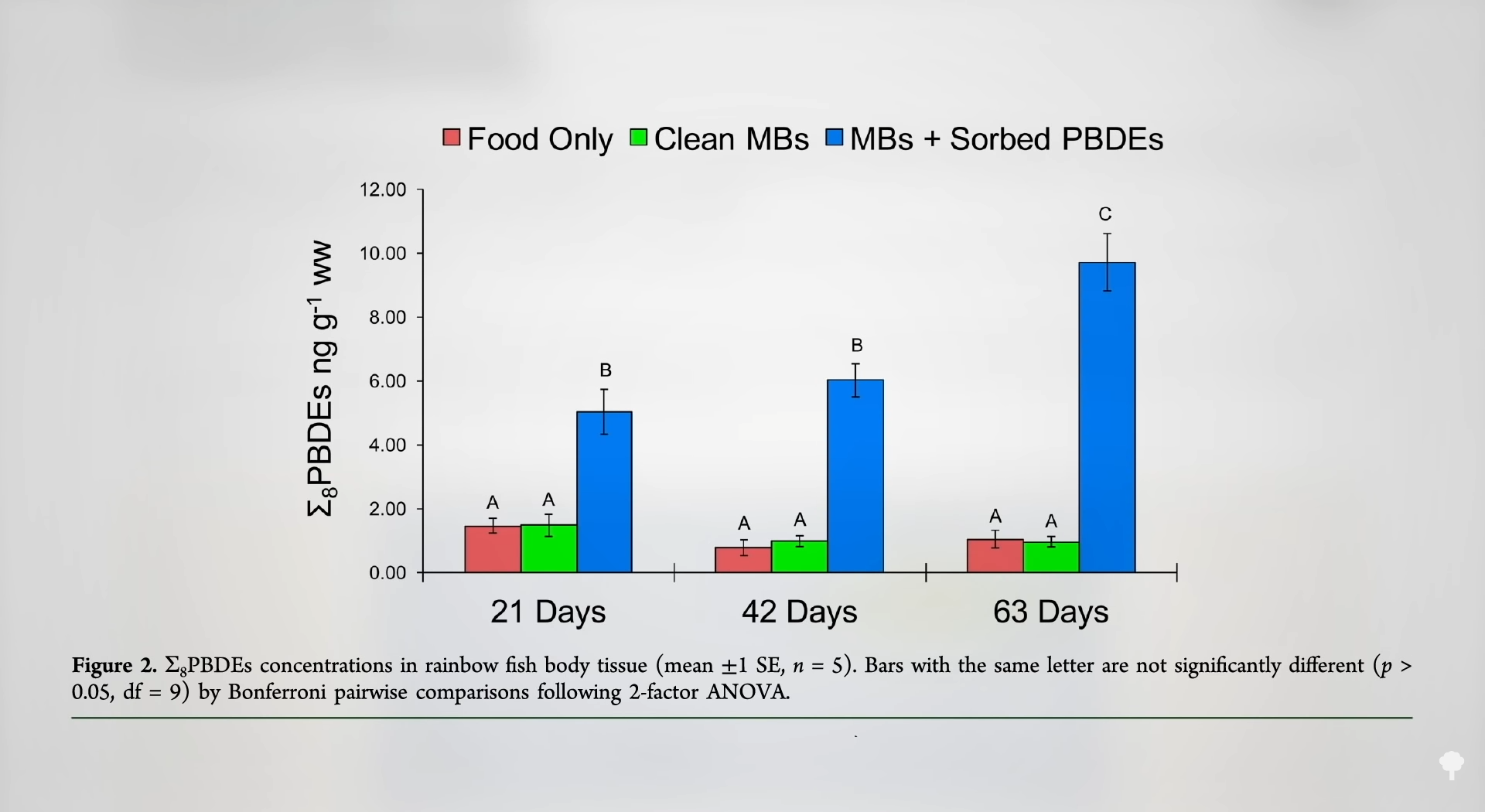
We know ingested plastic can transfer hazardous chemicals to fish, which then accumulate and can cause liver toxicity and pathology in the fish, but what happens in people? We know that in the United States, of all food categories, fish have the highest levels of PCBs, dioxins, and other pollutants. We don’t eat a lot of fish in this country, though, so is it really a problem? 

It’s hard to come up with a tolerable daily intake of these kinds of chemicals, but the World Health Organization (WHO) recommends staying under one to four units a day (measured in picograms of toxic equivalents). The European Union came up with a smaller number: no more than two units a day on average. In the United States, we’re already past that, “so there is some concern for toxicity from PCBs at current levels of PCBs and plastic debris polluting the ocean. There is no ‘room’ for additional PCB burden,” so what can we do about it? 

We can practice the three Rs by reducing, reusing, and recycling plastic items—for example, shopping with reusable tote bags. On a policy level, we could ban the use of plastic microbeads in cosmetics and personal care products. Ideally, all countries would do it, since plastic debris dropped anywhere on earth may end up being transported to the ocean, where it can travel around the world. “Whatever strategies are adopted, international cooperation will be critical in limiting the risk to the oceans and the risk to humans from eating seafood.” 

To learn more about microplastic pollution, see my videos Microplastic Contamination and Seafood Safety and How Much Microplastic Is Found in Fish Fillets?. 

from NutritionFacts.org https://ift.tt/9fkKjvD
via IFTTT
Chicken Quesadillas

These easy chicken quesadillas are a complete meal in one! Loaded with chicken, veggies, avocado-mango salsa and cheese, they’re very filling and so delicious! Chicken Quesadillas I made this healthy chicken quesadillas recipe for dinner with my leftover avocado mango salsa and some sauteed onions and peppers. They are very satisfying, with almost 38 grams of protein

from Skinnytaste https://ift.tt/m7XQ9Af
via IFTTT

Free 7 Day Healthy Meal Plan (July 10-16)

A free 7-day, flexible weight loss meal plan including breakfast, lunch and dinner ideas and a shopping list. All recipes include macros and Weight Watchers points. 7 Day Healthy Meal Plan (July 10-16) As the summer heats up- we don’t want our kitchen to as well! Keep it cool with air fryer recipes like Perfect Air Fryer Shrimp, Chili-Lime Air Fryer Salmon or my

from Skinnytaste https://ift.tt/v1j49eb
via IFTTT

Is Seafood Safe from Microplastic Contamination?

Can ingested plastic particles from fish get into our bloodstream? 

In 1869, a patent was taken out for a new substance to replace elephant ivory in the production of billiard balls, and the plastics industry was born. Ironically, what started out as a conservation-minded measure has turned into an environmental problem. Hundreds of thousands of tons of trillions of tiny plastic particles are now floating on the surface of the sea. These particles come from plastic objects, like water bottles, that get worn down into tinier and tinier pieces or from plastic microbeads flowing into the sewers from our sinks. 

“Plastic microbeads are often used as a scrubbing agent in personal care and cosmetic products (PCCPs), such as facial cleanser, shower gel and toothpaste.” And, “up to 94,500 microbeads could go down the drain in a single wash.” Then, when you trawl the oceans, you can find the same beads you find in the facial scrubs. Billions are emitted into aquatic habitats every day in the United States. “This equals 2.9 trillion beads per year. If you line these microbeads up end to end…the United States emits enough microbeads to wrap around the planet >7 times.” 

As I discuss in my video Microplastic Contamination and Seafood Safety, the reason this may be a problem is that the plastic accumulates toxic compounds from the water and then shuttles them, along with any chemicals originally in the plastic, into marine organisms, concentrating up the food chain and eventually ending up on our plates. As such, the potential hazardous effects on humans evidently include “alteration in chromosomes which lead to infertility, obesity, and cancer.” 

Let’s take a step back and review the evidence. Plastic gets into the oceans, but does it actually get into the fish? Yes, microplastics have been shown to be ingested by fish and other aquatic animals. But, are we then actually eating plastic-ingesting fish? “Yes, we are eating plastic-ingesting fish.” But don’t we just poop out the plastic? 

Small enough microparticles may actually be able to get absorbed through our intestinal wall and enter into our bloodstream. This “uptake of ingested microparticles into small intestinal tissues and on to secondary organs has moved from being an anecdotal phenomenon to a recognized and quantifiable process”—but that was in rodents. Just because it’s been demonstrated across a variety of lab animals, doesn’t meant it happens in people. You don’t know until you put it to the test. The closest we have involves human placentas after childbirth. Researchers found that plastic microparticles could indeed cross the placental barrier from the maternal bloodstream. So, if the particles could get into a pregnant woman’s circulation, they might get into her baby’s circulation, too. 

This is concerning because that plastic debris can be a source of toxic chemicals—both the chemical additives in the plastic itself and also the pollutants the plastic sucks up from the water that then can be released into the body. Bisphenol A (BPA) is one of the chemical additives that can originate from the plastic itself. Given that BPA concentrations have been measured in plastic debris, microplastics may be a major source of BPA in seafood. No one’s really looked into it—until now: a study investigating BPA levels in the edible parts of seafood. 

Yes, fish and other seafood present one of the highest BPA contamination levels, but is that just because the study was looking at canned fish products, like tuna and sardines? Manufacturers may use BPA in the lining of food cans directly, but “BPA may leach from the plastic in oceans, causing a direct contamination of fish.” In fact, some argue that this BPA environmental contamination in fish could be worse than the BPA from the cans themselves. You don’t know until you put it to the test. 

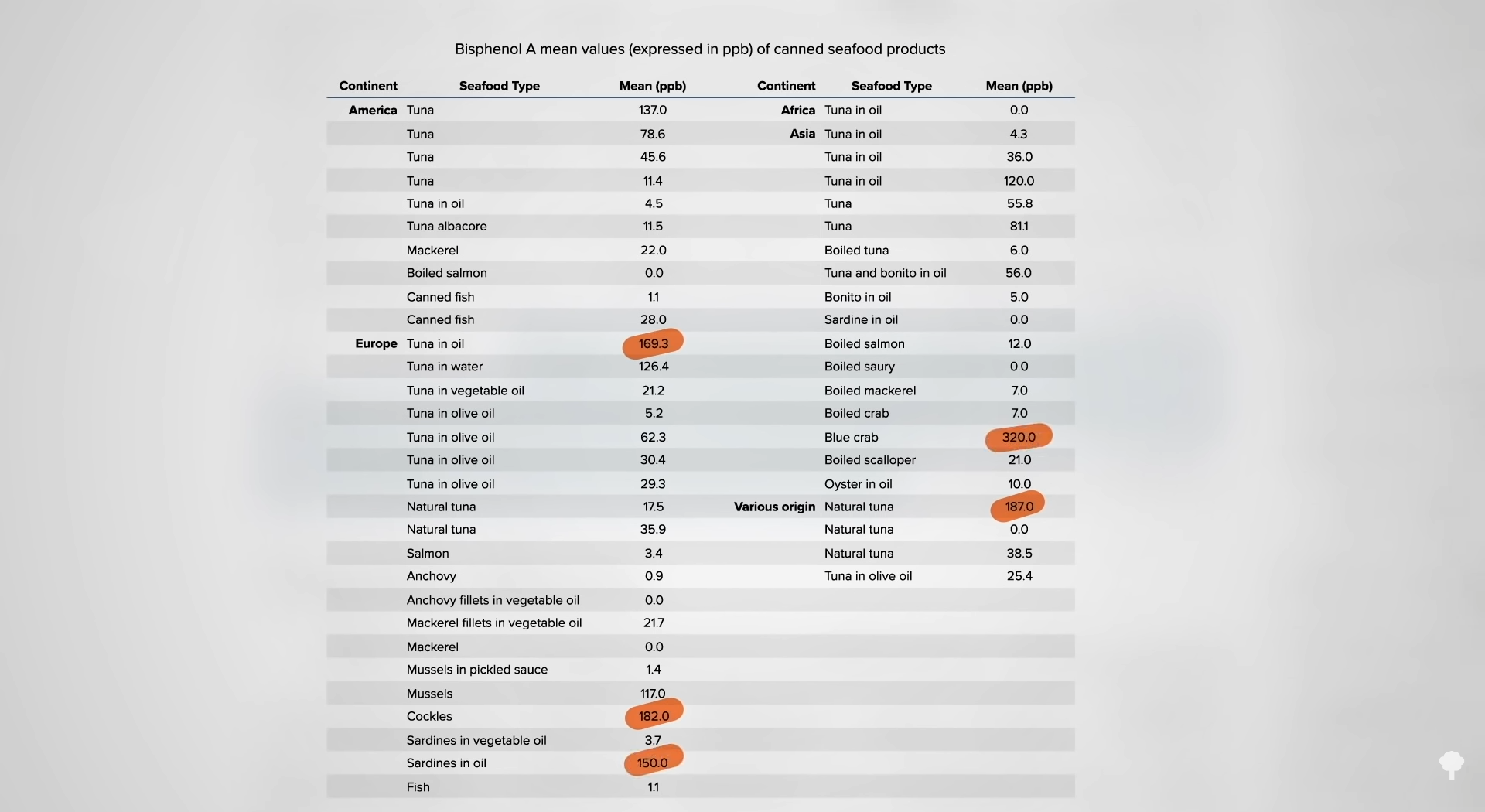
At 3:56 in my video and shown below, you can see a chart with the BPA levels found in canned seafood. The highest levels were found in tuna, cockles, sardines, and blue crabs, but since those were all canned, you don’t know how much is from the can versus the animal until you look at non-canned seafood. The study sometimes found even higher levels in some fresh mollusks, clams, flounder, and cod. 

That’s not good, since chemicals in plastics such as BPA are known endocrine disruptors—that is, known hormone disrupters. And, besides that, fat-soluble pollutants from the seawater can glom onto the microplastic surfaces and potentially present additional risk. 

For more on microplastics, see my videos Are Microplastics in Seafood a Cancer Risk? and How Much Microplastic Is Found in Fish Fillets?.

from NutritionFacts.org https://ift.tt/gfXNTiZ
via IFTTT

Homemade Ferrero Rocher (Hazelnut) Date Balls

Healthy Chocolate Hazelnut Date Balls, inspired by Ferrero Rocher are made with hazelnuts, dates, pumpkin puree, and cocoa powder. Homemade Ferrero Rocher (Hazelnut) Date Balls These are so fun! Naturally sweetened date balls are a no-bake sweet snack or dessert made primarily from dates. They’re popular for their simplicity and nutritional value and are easily

from Skinnytaste https://ift.tt/5UrJxiM
via IFTTT

Attempts by Big Sugar to Manipulate the Science

“Corporations are legally required to maximize shareholder profits and therefore have to oppose public health policies that could threaten profits.” That’s just how the system is set up. “Unequivocal, longstanding evidence shows that, to achieve this, diverse industries with products that can damage health have worked systematically to subvert the scientific process.” As I discuss in my video Flashback Friday: Sugar Industry Attemtps to Manipulate the Science, internal documents showed that Big Sugar was concerned that health food “faddists” were becoming an active menace to its industry. Sugar was under attack, “and many of the poor unfortunate public swallow the misinformation broadcast by the propagandists.” For example, in his book Pure, White and Deadly, John Yudkin says, “All of the propaganda, inspired or otherwise, [says]…that sugar is a non-essential food.” How dare anyone say sugar is a non-essential food! Next, they’ll be saying sugar isn’t really food at all. The sugar industry’s line? “Sugar is a cheap, safe food,” and that came from the founder and chair of Harvard’s nutrition department, Fredrick Stare, long known as “Harvard’s sugar-pushing nutritionist.” 

Not only did the sugar industry try to influence the direction of dental research, but it did the same with research on heart disease, paying Stare and colleagues to write a review that was published in the New England Journal of Medicine in 1967 to help downplay any risk from sugar. Now, to be fair, that was five years before we even realized triglycerides were also an independent risk factor beyond just cholesterol. The main reason that attention stayed focused on saturated fat is not because of the might of the sugar industry. There just weren’t as much data to support sugar’s role in heart disease. In fact, the even more powerful meat and dairy industries loved the anti-sugar message. Who do you think sponsored Yudkin? In fact, in the acknowledgements at the beginning of Pure, White and Deadly, he thanks all of the food and drug companies that had provided him with such constant generous support. Who paid for Yudkin’s speaking tour? The egg industry, of course, to try to take some heat off of cholesterol. 

Hegsted, one of the co-authors of the funded review, wasn’t exactly an industry cheerleader. He recommended people cut down on all of the risky stuff and eat “less meat, less fat, less saturated fat, less cholesterol, less sugar, less salt, and more fruits and vegetables, unsaturated fat and cereal products—especially whole grain cereals.” But, it wasn’t the sugar industry that got him fired for speaking truth to power—it was the beef industry. 

The sugar industry was able to conceal its funding because the New England Journal of Medicine didn’t require disclosure of conflicts of interest until 17 years later. These muckraking researchers suggest that “policymaking committees should consider giving less weight to food industry–funded studies,” but why is the food industry funding studies at all? When it comes to the corporate manipulation of research, “ultimately, conflicts of interest need to be eliminated, not just managed” and disclosed.  

“Change will not occur until public health researchers refuse to take money from the ultraprocessed food industry.” Period. “It worked for tobacco,” and many prestigious medical and public health institutions have instituted bans on tobacco-industry funding.  

Can’t scientists remain objective and impartial even in the face of all of that cash, though? Apparently not, as industry-funded research has been shown to be up to 88 times more likely to produce outcomes favorable to funders. What a surprise. Do we think corporations are in the business of just handing out free money? 

The classic example is the American Academy of Pediatric Dentistry, which accepted a million-dollar grant from Coca-Cola. Before the grant, its official position was that “frequent consumption of sugars in any beverage can be a significant factor in the…initiation and progression of dental caries [cavities].” After receiving the grant, it changed to: “Scientific evidence is certainly not clear on the exact role that soft drinks play in terms of children’s oral disease.” As Center for Science in the Public Interest’s Integrity in Science Project put it, “What a difference a million dollars makes!”

from NutritionFacts.org https://ift.tt/kpuPVmz
via IFTTT

20 Best Burger Recipes

I’m sharing my Best Burger Recipes for grilling season and beyond. From juicy turkey burgers to satisfying veggie burgers, beef burgers, salmon burgers, and more, these healthy homemade burgers are ready for all your cookouts! My Favorite Easy Burger Recipes Nothing says summer like a nice, juicy hamburger. There are so many ways to prepare

from Skinnytaste https://ift.tt/TtU1XKw
via IFTTT

Free 7 Day Healthy Meal Plan (July 3-9)

A free 7-day, flexible weight loss meal plan including breakfast, lunch and dinner ideas and a shopping list. All recipes include macros and Weight Watchers points. 7 Day Healthy Meal Plan (July 3-9) Happy Fourth of July! I hope you all have a safe and fun day full of grilling, swimming, and enjoying time with family and friends! Need a great party appetizer? Try

from Skinnytaste https://ift.tt/j7aTSiE
via IFTTT

Grilled Pesto Chicken and Tomato Kebabs

Grilled Pesto Chicken and Tomato Kebabs SCREAM summer! Made with chunks of boneless chicken breasts, basil pesto, and cherry tomatoes, they are great as an appetizer or dinner. Grilled Pesto Chicken and Tomato Kebabs I grow tons of basil in my garden all summer, so I make a lot of pesto and use it in many dishes.

from Skinnytaste https://ift.tt/hSu7Upb
via IFTTT

Design a site like this with WordPress.com
Get started